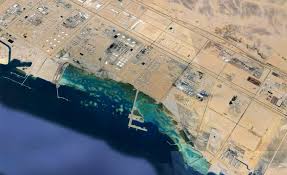
Hormuz bypass pipelines will not end the Gulf’s reliance on the strait, the International Energy Agency (IEA) says. Even if Gulf producers spend an estimated $40 billion on new routes, their exports would stay vulnerable to disruption. In the IEA’s most extreme diversification case, about 2 million barrels a day would still pass through Hormuz in 2035.
What the IEA says about Hormuz bypass pipelines
The warning comes as the Iran war drags on. The IEA counts about 7 million barrels a day of new pipeline capacity under construction or being considered. It says those projects could add roughly $2 a barrel to the cost of Middle East oil exports.
The IEA’s 2035 case is deliberately extreme. It assumes every project gets built, producers outside the Gulf pump more, and importers cut demand. Even then, 2 million barrels a day would still use the strait.
Importers can lower their exposure over time, the IEA says, but the same does not apply to the Middle East as a whole.
Which routes already bypass the strait?
Two pipelines carry most of the load today. Saudi Arabia’s East-West line runs from Abqaiq to the Red Sea port of Yanbu. The UAE’s Habshan-Fujairah line, with a capacity of about 1.8 million barrels a day, reaches the Gulf of Oman. The UAE expects a $3 billion expansion of its Fujairah route to come online in 2027.
Others have no way around. Kuwait, Qatar, and Bahrain have no bypass pipelines, and together they sent about 4 million barrels a day of oil through the strait in 2025. Iraq sent 3.63 million barrels a day. In addition, about 93% of Qatar’s LNG exports pass through Hormuz, with no alternative route.
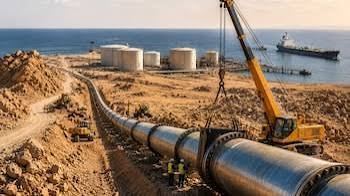
What it means for Gulf pipeline projects
The gap is large. Oil flows through the Strait fell from about 20 million barrels a day before the war to an average of about 3 million between March and May. Pipelines cannot refill that gap, and analysts say they are exposed too. For example, loading facilities, pumping stations and terminals could be attacked.
Even so, the building push continues. IEA chief Fatih Birol wrote on November 18 that perceptions of risk around the strait have changed for good. In a separate scenario, the IEA says about $240 billion in pipelines and alternative production could cut flows through the strait by more than 90%, lifting bypass capacity to about 15 million barrels a day. Birol described that path as difficult but possible.
For contractors, the signal is clear: more pipeline and terminal work is likely, but it will arrive over years, not months. An end to the crisis could bring a buyers’ market for oil and gas, with downward pressure on prices.
The IEA has also called for a major new pipeline from Iraq to Turkey’s Mediterranean port of Ceyhan.
Other projects
In February 2026, the U.S. Maritime Administration (MARAD) issued a final license for Sentinel Midstream’s Texas GulfLink, a deepwater port off Freeport, Texas, designed to export up to 365 million barrels of crude oil annually. The facility sets a new environmental benchmark for U.S. Very Large Crude Carrier (VLCC) operations by utilizing advanced, 96% efficient vapor capture technology to significantly reduce emissions. By integrating Best Available Control Technology (BACT) and eliminating carbon-intensive “reverse lightering,” the project redefines industry standards for offshore infrastructure. This development enhances the competitiveness of American energy while advancing environmental stewardship in global energy markets.
Fact Sheet
Topic: Gulf bypass pipelines around the Strait of Hormuz
Estimated spend: about $40 billion
New capacity planned or under construction: about 7 million barrels a day
IEA 2035 extreme case: about 2 million barrels a day still through Hormuz
Added export cost: roughly $2 a barrel
Key existing lines: Saudi East-West (Abqaiq-Yanbu); UAE Habshan-Fujairah (about 1.8 million bpd)
UAE expansion: $3 billion, expected 2027
No bypass pipelines: Kuwait, Qatar, Bahrain
Pre-war strait flows: about 20 million barrels a day



Leave a Reply