
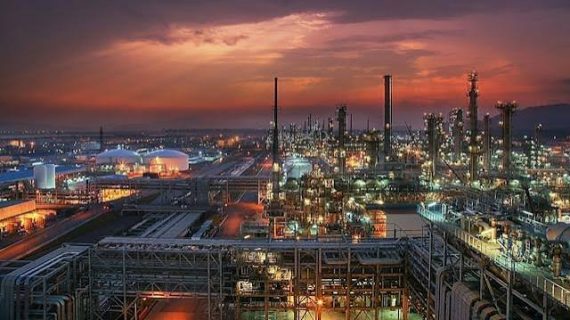
The Huizhou Phase 3 Ethylene project is advancing through construction as CSPC expands its petrochemical manufacturing capacity in Guangdong Province, China. The development forms part of an estimated $8 billion investment covering a new ethylene complex and a separate polycarbonate manufacturing facility.
Importantly, the project reached a major construction milestone in May 2025, when civil construction and installation began on its 1.6-million-tonne-per-year ethylene plant. Meanwhile, the polycarbonate development targets completion by the end of 2026. The wider ethylene expansion aims to enter operation in 2028, strengthening China’s domestic supply of high-performance chemicals.
Huizhou Phase 3 Ethylene Project Advances Construction
The development involves CNOOC and Shell Petrochemicals Company Limited (CSPC), a 50:50 joint venture between China National Offshore Oil Corporation (CNOOC) and Shell.
The partners reached a final investment decision on January 15, 2025. Subsequently, the project entered its full construction phase, covering an ethylene cracker, downstream processing facilities and supporting infrastructure.
In May 2025, the project commenced civil construction and installation works for its new ethylene plant. The facility will produce approximately 1.6 million tonnes of ethylene annually.
Additionally, the wider Phase 3 development includes 16 downstream chemical production units and associated utilities. Seven production units will deploy Shell’s proprietary technologies.
Upon completion, the expansion will increase CSPC’s ethylene production capacity from approximately 2.2 million to 3.8 million tonnes annually. Furthermore, the facilities will supply more than five million tonnes of chemical products annually.
The development targets China’s growing demand for specialized materials used in manufacturing, construction, healthcare and consumer products.
Huizhou Phase 3 Ethylene Project Integrates Polycarbonate Facilities
The wider investment also includes a dedicated polycarbonate manufacturing complex within the Daya Bay Petrochemical Industrial Park.
The facility comprises three major production units and supporting research and development infrastructure. These include a 260,000-tonne-per-year polycarbonate unit, a 240,000-tonne bisphenol A unit and a 220,000-tonne diphenyl carbonate unit.
CSPC targets completion of the polycarbonate facilities by the end of 2026. The development will produce approximately 320,000 tonnes of high-performance specialty chemicals annually.
Meanwhile, the products will serve several industrial applications, including transportation, construction, healthcare and consumer goods. Polycarbonate materials offer impact resistance and lightweight properties for various manufacturing applications.
The project also introduces technologies intended to improve production efficiency and reduce emissions. According to CSPC’s project information, electrifying large compressor units and optimizing the project scope will reduce overall carbon dioxide emissions by approximately 20%.
The partners also expect the development to strengthen integration between existing petrochemical operations and Huizhou’s refining facilities.
Huizhou Petrochemical Expansion Strengthens Industrial Supply Chains
The investment also supports CSPC’s transition towards higher-value chemical manufacturing. In January 2026, the company inaugurated a new product innovation centre in Huizhou’s Daya Bay Petrochemical Industrial Park.
The 7,000-square-metre facility contains more than 170 pieces of advanced testing and pilot-scale equipment. It will support research into specialty polyether polyols, high-end polyolefins and advanced polycarbonate materials.
Furthermore, CSPC introduced three product brands targeting high-end manufacturing, new energy and healthcare markets. The centre will help translate research into commercial production and support the company’s capacity expansion.
The Huizhou development also reflects wider investment in energy and industrial infrastructure. Similar investment is supporting Saudi Arabia’s expanding gas-processing capacity. For instance, Saudi Aramco’s Shedgum gas expansion project, which has attracted four prospective international contractors, demonstrates how energy infrastructure development supports downstream industrial growth.
Together, these developments highlight the importance of expanding feedstock supplies and processing infrastructure. They also demonstrate the growing construction investment supporting global petrochemical manufacturing.
CSPC: A CNOOC-Shell JV
The world’s largest mobility retailer by number of sites, Shell, and China National Offshore Oil Corporation (CNOOC) formed the CNOOC-Shell JV in 2000. The duo has been involved in petrochemical projects in China and around the world.
This latest financial investment decision will see the CNOOC-Shell JV not only expand the two petrochemical projects in Huizhou, South China, but also increase their influence in the “high-end new material” markets.
Huizhou Phase 3 Ethylene Project
The third phase of the project broke ground in May 2023. It consists of 18 sets of processing units, and an ethylene plant. The plant will produce 1.6 million tons per annum of high quality, green, chemicals products. The petrochemical project also reports to apply sustainable practices in the production process. There is ample focus on decarbonization, and the mentioned “green” petrochemical products.
The $8bn investment by the CNOOC-Shell JV will also strengthen the Daya Bay Petrochemical Industry Park indirectly as projected market speculations point to.
The third phase of Huizhou Ethylene Project follows the phases 1 and 2 that currently produce 2.2 million tons of petrochemical products per annum.

The Polycarbonate Project in China
The $8bn investment by CSPC will also see the building of three mega units plus R&D facilities. The three units will produce 260,000 t/a, 240,000 t/a, and 220,000 t/a of Polycarbonate, Bisphenol (A), and Carbonate Disphenyl Ester respectively. The completion date of the Polycarbonate project in China is slated for 2026.
The broader picture
The $8bn investment by CNOOC-Shell JV to expand the two petrochemical projects in South China will also serve a visionary purpose.
According to CSPC’s CEO, Gao Yu, this investment on the expansions will “enhance the operational and energy efficiency of integrated refining and chemical operations”. This will further help CNOOC-Shell JV, CSPC, leverage the “Banyan Tree Effect”. The banyan tree is often associated with stability and longevity in many cultures, predominantly in Asian cultures.
Progress on the two petrochemical complexes in well on track with completion set to feature “high-standards” for what will become the best petrochemical company in China.
The oil and gas industry is the backbone, if not one of the most important, of all the other industries in the world. It finds its touch in consumer goods, medicine, housing, construction, transportation, and nearly every other major sector in the world. The petrochemical sector is the banyan tree of the oil and gas industry, and that is not changing soon.

Leave a Reply