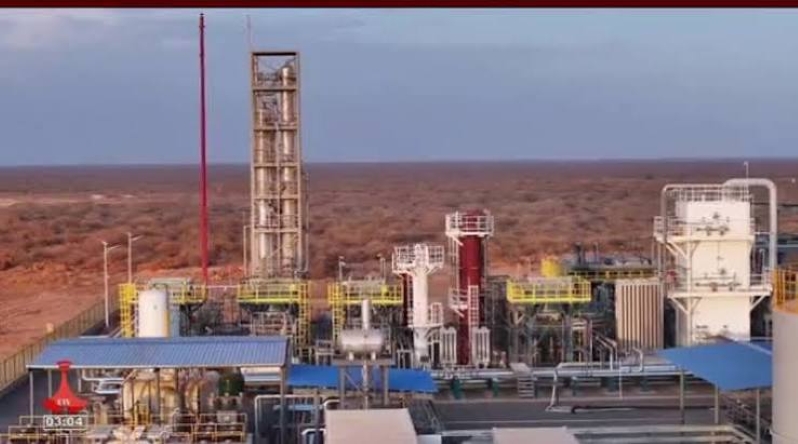
Ethiopia has taken another step toward expanding its natural gas processing capacity after China’s GCL Group and Jurong Group signed a contract to advance the second phase of the Ogaden liquefied natural gas (LNG) project in the country’s Somali Region.
The agreement was signed on October 16, 2026, at Ethiopia’s Ministry of Mines, bringing together GCL Energy Investment Co., Ltd., a subsidiary of GCL Group, and Jurong Group (Holdings) Co., Ltd. The contract covers construction and entrusted processing services for the LNG development based on the Calub gas field in the Ogaden Basin.
The signing was witnessed by Ethiopian government officials. Fu Zhidong, president of GCL’s liquefaction and refining business division in Ethiopia, and Yi Min, vice president of Jurong Group, signed on behalf of the respective companies. The Ministry of Mines has called for construction of the first module under Phase II to begin as soon as possible.
The agreement follows a strategic cooperation framework signed by the two companies in May 2026. It is intended to advance construction of the gas liquefaction facilities. This is while strengthening supporting infrastructure, storage, transportation and potential international trading channels.
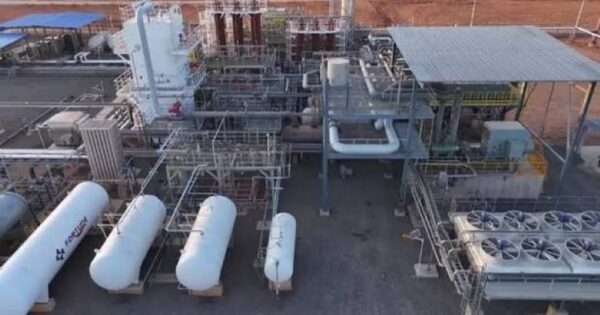
Second phase of Ogaden LNG project to expand Ethiopia’s LNG production
The latest agreement builds on the first phase of the Ogaden LNG project. GCL commissioned Calub’s first phase in Ethiopia’s Somali Region on October 2, 2025. The initial modular plant was designed to process approximately 200,000 cubic meters of natural gas daily. It was also set to produce about 50,000 tons of LNG annually.
The facility marked a milestone in Ethiopia’s efforts to develop its domestic natural gas resources and supply industrial customers with locally produced fuel. The first phase primarily targets industrial parks and other domestic end users. On the other hand, the second phase is intended to support expanded production and access to international export markets.
The Phase II development was launched alongside other oil and gas initiatives in October 2025. This includes natural gas-fired power generation and oil refining projects. However, the latest agreement does not disclose the contract value. It also does not disclose the additional LNG production capacity covered by the contract, or a completion date.
Infrastructure development central to the project
Beyond the liquefaction plant itself, the second phase is expected to require supporting infrastructure. This will be used for handling, storing and transporting natural gas and LNG. Additionally, Jurong Group has indicated that it will contribute expertise in liquefaction infrastructure and project management. The company will also contribute to storage, transportation and international trade, working alongside GCL to develop the wider project infrastructure.
These components will be important. They will determine how effectively Ethiopia can move beyond producing natural gas to supplying larger domestic markets and potentially reaching overseas buyers.
The development also fits into GCL’s broader plans for Ethiopia’s oil and gas sector. This includes natural gas processing, power generation and downstream industrial applications. The company has also positioned the Ogaden Basin LNG project as a foundation for developing an integrated domestic gas value chain. This is alongside the US$660 million refined petroleum products Ethiopia-Djibouti pipeline project launched in September 2026.
Ogaden gas development linked to Ethiopia’s industrial ambitions
Ethiopia is seeking to use its natural gas resources to support industrialization and improve domestic energy supply. The country also seeks to reduce reliance on imported energy products. The Ogaden Basin’s Calub and Hilala gas fields are central to these ambitions.
One related initiative is the planned fertilizer complex in Gode, Somali Region. In March 2026, GCL and Dangote Group announced a 25-year natural gas supply agreement valued at approximately US$4.2 billion to support the proposed fertilizer facility. The arrangement also includes plans for a dedicated 108-kilometre gas pipeline linking the Calub gas field to the fertilizer production base in Gode.
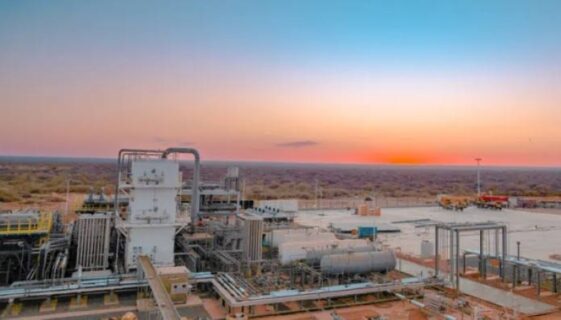
The proposed fertilizer plant is also designed to produce approximately three million tons annually. It is expected to begin operations in 2029. If delivered as planned, the project could establish a major domestic market for Ethiopian natural gas. This is while supporting fertilizer production and agricultural supply chains.
The LNG expansion and fertilizer development therefore represent complementary parts of Ethiopia’s wider strategy to turn its gas resources into industrial output, energy supplies and export revenue.
Outlook for the Ogaden LNG project
The signing of the Phase II contract marks a further step in moving Ethiopia’s Ogaden gas development. It sets pace for the project to advance from initial production toward larger-scale processing and commercialization. The immediate priority is to advance construction of the first module and establish the infrastructure required to support the expanded project.
However, the development’s eventual contribution will depend on construction progress and financing. Gas supply, transport infrastructure and the establishment of reliable markets also factor in. International LNG sales will also require commercially viable logistics and export arrangements, details of which have yet to be fully disclosed.
If the expansion proceeds successfully, the Ogaden project could become an important component of Ethiopia’s emerging natural gas industry. It would connect domestic gas resources with power generation, manufacturing, fertilizer production and potential international markets.
Ogaden Basin Liquefied Natural Gas (LNG) Project Fact Sheet
Location: Calub gas field, Ogaden Basin, Somali Regional State
Technology: Modular, skid-mounted LNG liquefaction plant
Phase I status: Commissioned October 2, 2025
Phase I capacity: Designed to process 200,000 cubic meters of natural gas daily and produce approximately 50,000 tons of LNG annually
Second phase scope: Additional LNG liquefaction facilities, construction and entrusted processing services. Supporting infrastructure, storage and transportation systems are also included.
Second phase status: Construction and processing contract signed October 16, 2026. The Ministry of Mines called for the first module to be advanced as quickly as possible.
Phase II capacity: Not confirmed in the latest contract announcement. Earlier Ethiopian government reporting described an intended increase equivalent to 1.33 billion liters of LNG annually.
Primary market: Phase I supplies Ethiopian industrial parks and other domestic end users.
Expansion objective: Increase LNG production and enable access to international export markets.
Project Team
Project developer: GCL Group
Ethiopian operating entity: GCL Energy Investment Co., Ltd., Ethiopia branch
Phase II construction and processing partner: Jurong Group (Holdings) Co., Ltd.
Government authority: Ethiopian Ministry of Mines
Regional stakeholder: Somali Regional State administration



Leave a Reply