Argentina LNG RIGI Approval: $29B First Phase Clears Key Hurdle Before Final Decision
The Argentina LNG RIGI approval has arrived. Argentina’s evaluation committee approved the project for its Large Investment Incentive Regime (RIGI) on November 20, Economy Minister Luis Caputo announced. YPF, Eni, and XRG now aim to take their final investment decision on November 30, a step that would commit the money and start construction.
What the Argentina LNG RIGI approval unlocks
RIGI offers long-term legal, fiscal, customs, and foreign-exchange provisions for large projects. YPF chief executive Horacio Marín has said the project would not have been possible without it. The formal resolution has not yet appeared in the official gazette, so the approval is not fully published.
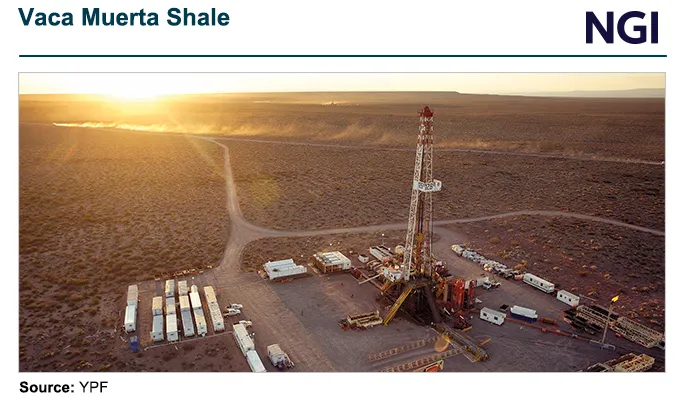
The numbers are big. The first phase is about $29 billion through 2031, and about $24 billion of that goes to midstream work. That includes pipelines, two floating liquefaction units, and processing infrastructure. The rest goes to upstream drilling in the Vaca Muerta shale. Over its life, investment reaches about $50.75 billion through 2050, which makes it the largest private investment in Argentina’s history.
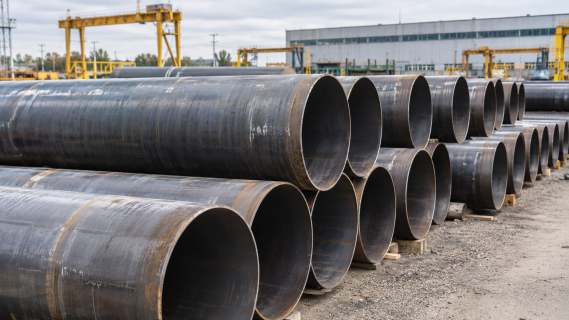
The scope is wide. Two parallel pipelines will run about 527 kilometers from Vaca Muerta to Sierra Grande in Río Negro, one 48-inch gas line and one 24-inch liquid line. In addition, YPF plans a large integrated gas treatment plant in Neuquén, and it has chosen a SACDE-Tecnimont consortium to advance detailed engineering.
Who is building it, and how will it be paid for?
YPF, Italy’s Eni and XRG, the investment arm of ADNOC, are the partners. Eni and XRG each hold 32% of the upstream blocks, and YPF holds 36%. YPF’s board approved the plan on November 16.
The funding plan leans on banks. About $25 billion is due between 2027 and 2030, with roughly 70% from international financing and 30% from the partners. In addition, the US Export-Import Bank has made a non-binding proposal of up to $6 billion, subject to board approval.
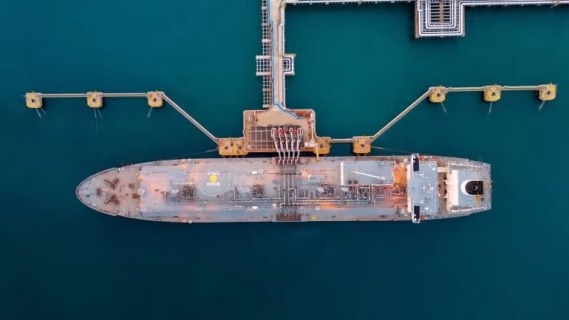
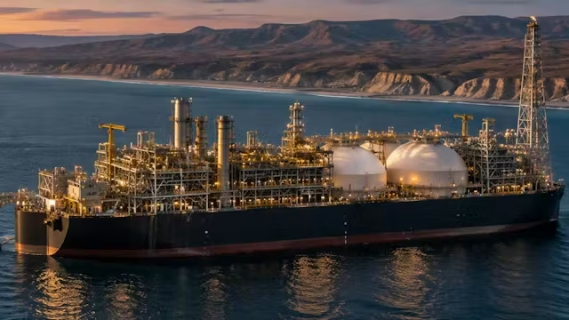
The plant is designed for 12 million tonnes a year from two floating LNG units off Río Negro in the Gulf of San Matías, with the first LNG targeted for 2031. The partners expect about $10 billion a year in export revenue over two decades.
Contractors are already moving. For example, Tenaris won the 24-inch pipe order of about 100,000 tons, and a group of Pumpco, Bonatti, and Contreras Hermanos holds a $1.2 billion civil works contract. The wider pipe purchase is worth about $2 billion.
What happens next?
The investment decision is the big date. The partners first targeted November 26, then said November 26 and 30, and now say November 30. Construction is expected to run from 2027 to 2030, and it could begin as early as February 2027.
Two things could still change the picture. The gazette must publish the RIGI resolution, and the lenders must finalize their commitments. Meanwhile, the RIGI portal already lists 21 projects worth $46.7 billion, a total that Argentina LNG alone exceeds.
US LNG is advancing too. Federal regulators approved Cheniere’s Sabine Pass expansion of 20 million tonnes a year on November 19.
Other projects
The state-owned South African NECSA will soon launch the next phase of a tender for a new $710 million multipurpose research reactor. The tender aims to maintain South Africa’s position as a top global exporter of medical isotopes. The isotopes are used to diagnose and treat disorders such as cancer and heart disease. Moreover, they are created in small nuclear reactors dedicated to science and training rather than energy generation.
The reactor is expected to replace the current Safari-1 nuclear reactor, which has been operational since 1965. Previous reports indicated a cost of around R12 billion ($710 million) to replace the Safari-1 reactor, according to e-mc2.gr and Leads 2 Business. After issuing the request for proposals, NECSA aims to have a new 20-30 megawatt plant operational by 2032/33, CEO Loyiso Tyabashe said during an interview

Leave a Reply