Constructionreview

Blog

  • Construction Underway on $175M Amway Stadium in Downtown Grand Rapids

    Construction Underway on $175M Amway Stadium in Downtown Grand Rapids

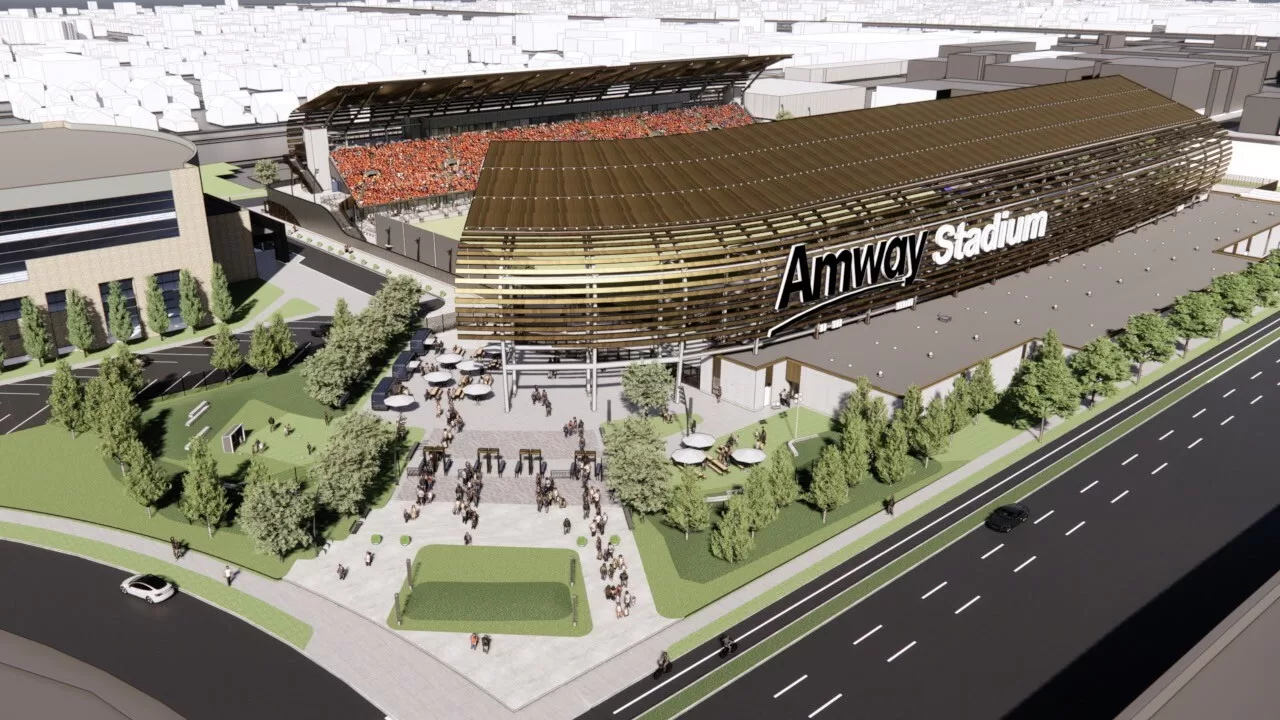
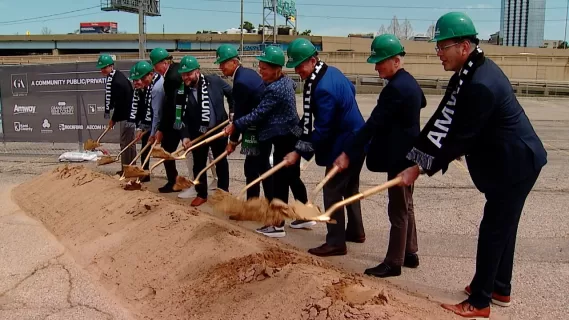
    Construction is officially underway on new Amway Stadium, a major undertaking that will transform downtown Grand Rapids. Ground was broken ceremonially in the corner of Pearl Street and Mt. Vernon Avenue, marking the start of a $175M project to bring an 8,500-seat soccer stadium to the city core.

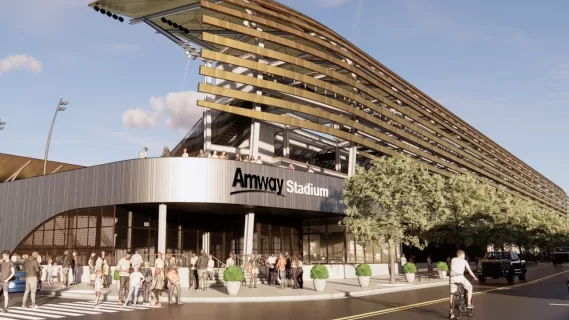
    Constructed as the prospective future home of a Major League Soccer Next Pro team—the stadium will not just host professional matches but a variety of community-focused events, including concerts and other sporting tournaments.

    The ambitious project is being funded through a combination of public and private donations. Amway will contribute $33 million for naming rights, as well as contributing towards funding costs through the increase in Kent County’s hotel tax. Construction of the building is planned to be complete by 2027.

    “This is another pivotal moment for the west side of Grand Rapids,” said Dick DeVos, co-chair of Grand Action 2.0. “What we’re seeing is a continued reimagining of the area—now with soccer taking center stage as part of its evolving identity.”

    Amenities

    Upon completion, the stadium will boast state-of-the-art amenities such as a team store, private suites, and an on-site restaurant. It will host around 17 home games annually, with room on the calendar for an estimated 50 other events.

    Read also: Sacramento Republic FC Reveals Latest Rendering for $321M Railyards Stadium

    The New Amway Stadium in Grand Rapids: Ownership and economic impact

    Operation and ownership will fall to the Grand Rapids-Kent County Convention/Arena Authority. Based on estimates by Grand Action 2.0, the facility has the potential to bring up to 160,000 visitors downtown annually. The future economic prospects over the long haul are also enormous, with the creation of 330 jobs and over $400 million in economic impact expected to be seen within the next thirty years.

    Construction team

    Though the soccer team’s official name has yet to be disclosed, anticipation of the team is growing as the ground breaks. Led by Rockford with AECOM Hunt, the building does some serious heavy lifting—literally. The designs require 12 million pounds of concrete, 678,000 pounds of rebar, 118,000 tons of structural steel, 175 miles of wire and cable, and more than 10 miles of HVAC piping. Topping it all off will be a massive three-story scoreboard.

    As the construction of Amway stadium gets underway, so too does anticipation for a new generation of professional soccer—and city vitality—in Grand Rapids.

    Read also: CSG Unveils Plans for $50M South Gateway Soccer Stadium in Downtown Cleveland
    <yoastmark class=

    Construction underway on Amway Stadium: Project Factsheet

    Project Overview: New 8,500-seat soccer stadium in downtown Grand Rapids at Pearl Street and Mt. Vernon Avenue

    Cost: $175 million

    Timeline: Construction breaking 2025, completion planned by 2027

    Funding: Public-private partnership including $33 million from Amway for naming rights and partial funding through increased Kent County hotel tax

    Purpose: Future home for MLS Next Pro team (working name “West Michigan Soccer”) plus community events, concerts and sporting tournaments

    Economic Impact:

    330 jobs created

    Projected $400 million economic impact over 30 years

    Expected to bring 160,000 annual visitors downtown

    Read also: PDP Unveils Rendering of the Proposed MLB Stadium in Portland

    New Amway Stadium construction in Grand Rapids: Facility Features

    Team store

    Private suites

    On-site restaurant

    Three-story scoreboard

    Management: Grand Rapids-Kent County Convention/Arena Authority
    <yoastmark class=

    Construction Team:

    Rockford 

    AECOM Hunt

    Read also: $2.1B Highmark Stadium Hits 50% Completion with Topping Out Ceremony
  • Google’s Push for Carbon-Free Operations in Taiwan, Asia Pacific

    Google’s Push for Carbon-Free Operations in Taiwan, Asia Pacific

    Google signed its first offshore wind power purchase agreement (PPA) in the Asia-Pacific region with Copenhagen Infrastructure Partners (CIP) for supply from Fengmiao 1 offshore wind farm in Taiwan. The deal represents part of Google’s face looking forward to 24/7 clean energy supply for its operations.

    Google Taiwan Goes Carbon Free with First Windpower PPA in Asia Pacific

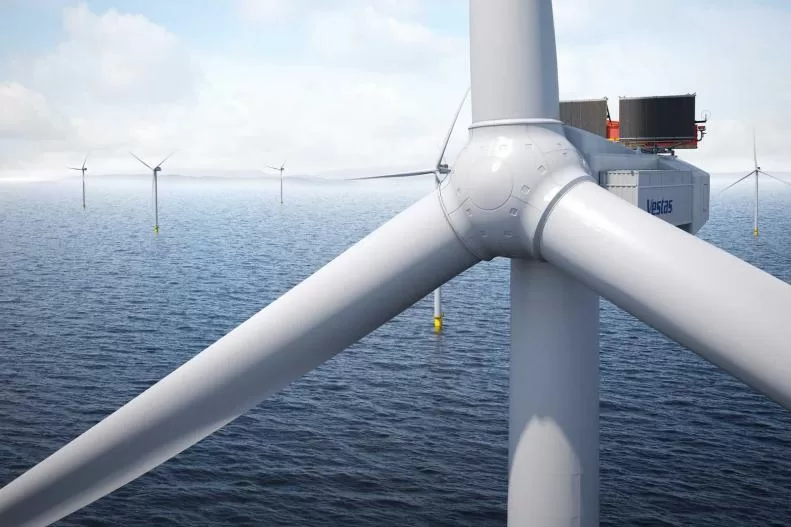
    Reported September 16, 2025 – Google has announced its first offshore wind power purchase agreement (PPA) in the Asia Pacific region. This is a significant milestone in its global commitment to clean energy. The Google Taiwan offshore windpower project will source renewable energy from the Fengmiao I offshore wind farm. Fengmiao is being developed by Copenhagen Infrastructure Partners.

    This project is the first from Taiwan’s Round 3.1 offshore wind auction to reach financial close. It is a landmark moment for the country’s renewable energy sector. Scheduled to be operational by 2027, the wind farm will provide clean, reliable power to support Google’s operations in the region. These include data centers, cloud services, and office operations in Taiwan. Taiwan has also geared up its efforts to develop offshore wind power to meet demand and the Formosa 4 scheduled to be commissioned in 2028 will add 490MW to the grid.

    Fengmiao 1 offshore wind farm project in Taiwan

    Also read: Google’s $10 Billion Nuclear Reactors Project

    Strengthening Google’s Clean Energy Footprint in Taiwan

    The Google Taiwan offshore windpower initiative builds on the company’s expanding renewable energy portfolio in the region. Google recently signed Taiwan’s first corporate geothermal energy agreement, tapping into the island’s untapped geothermal potential. Previously, the company also pioneered Taiwan’s first corporate solar power PPA. They also helped support the construction of 1 gigawatt of solar infrastructure.

    “As the first project from Taiwan’s Round 3.1 auction to achieve financial close, it’s an important catalyst for the local offshore wind sector,” said I-Chun Hsiao, Google’s APAC Senior Lead of Energy and Infrastructure.

    “This milestone builds on our existing portfolio of energy technologies in Taiwan, including solar and geothermal, which provide reliable, cost-effective energy to meet rising demand and bring us closer to running on 24/7 carbon-free energy on every grid where we operate.”

    A Global Vision for 24/7 Carbon-Free Energy

    The Google Taiwan offshore windpower deal is a critical step toward Google’s global goal of operating on 24/7 carbon-free energy (CFE) by 2030. Around the world, the company is investing in innovative clean energy solutions.

    One of the most ambitious is in Chile, where Google has partnered with AES Andes to power its Santiago data center. Google will use a hybrid system of solar, wind, and battery storage. This setup delivers carbon-free energy nearly around the clock, demonstrating how regional solutions can contribute to global sustainability targets. The tech giant also recently signed a solar power pact in Malaysia to supply renewable energy to its data centers.

  • The latest on the 2 GW Sadawi Solar Project one of the worlds largest solar projects

    The latest on the 2 GW Sadawi Solar Project one of the worlds largest solar projects

    Updated 19th August 2025 – Masdar, in partnership with GD Power and Korea Electric Power Corporation (KEPCO), has successfully reached financial close on the 2 GW Al Sadawi solar PV project. Valued at approximately US$1.1 billion, the development is being funded through arrangements with eight major regional and international financial institutions. Once completed, Al Sadawi will be among the largest solar power facilities worldwide. Located in Saudi Arabia’s Eastern Province, the project will follow a Build, Own, and Operate (BOO) model under a 25-year Power Purchase Agreement with the Saudi Power Procurement Company (SPPC), finalized in late 2024. The plant is expected to begin initial power generation before entering full commercial operation in 2027.

    April 2025 – China’s Shanghai Electric has signed partnership agreements with Masdar and Mawarid Group for the 2 GW Sadawi solar project in Saudi Arabia, and a wind energy project in Oman. The signings come at a critical time in Saudi’s and Oman’s sustainability initiatives. Saudi Arabia’s Vision 2030 and Oman’s Vision 2040 initiatives are aimed at making sustainability and technological transformations in the Middle East. These transformations will ripple their effects to various sectors and industries in the region, and the latest tri-lateral collaboration is only testament to its importance.

    Sadawi Solar Project Factsheet

    Location: Dumat Al Jandal, Kingdom of Saudi Arabia

    Developer: Masdar (Abu Dhabi Future Energy Company)

    EPC contractor: Shanghai Electric

    Solar farm area: 40 km2

    Installation capacity: 2 Gigawatts (GW)

    Annual producion: 6 billion kWh

    Project commissioning date: August 2027

    * Early generation at full capacity by May 2026

    More on the Sadawi solar project

    Saudi Arabia’s plans for the 2 GW Sadawi solar project also sets the bar high for the Chinese contractor. This is so far, Shanghai Electric’s largest engineering, procurement, and construction (EPC) project in the world.

    Once commissioned, Saudi’s Sadawi solar project will not only cut CO2 emissions from the West Asian country by 3 million tons, but also supply 700,000 homes in the Kingdom with clean solar energy. This tallies with the annual supply value from the 2 GW solar farm estimated to be at 6 billion kWh. The Sadawi solar project also holds a special part in the Kingdom’s energy portfolio as it features in its National Renewable Energy Program.

    Also read: World’s Largest BESS Project in Saudi Arabia Announces Prequalified Bidders: 8GWh Battery Storage

    China’s Saudi and Oman partnership

    At the signing, the 2 GW Sadawi solar project was described as a “benchmark demonstration project”. The project according to Wu Lei will, “contribute more to the global energy transition”. Wu Lei is Shanghai Electric’s chairperson.

    Speaking of the duo’s future relationship, Masdar’s CEO, Mohamed Jameel Al Ramahi, courted the idea of more project partnerships with Shanghai Electric especially in Saudi’s renewable energy sector. “[Masdar] … looks forward to further deepening cooperation with them [Shanghai Electric] in wind power, photovoltaics, energy storage, and other fields in the future to jointly promote the transformation of the global energy structure.”, said Al Ramahi.

    The same sentiment was also echoed by Oman’s Minister of Energy and Minerals, Salim Al Aufi. Wu Lei was also enthusiastic of the idea. Especially for the creation of a “new chapter in China-Arab energy cooperation”.

    Also read: Orascom, Técnicas JV bags construction contract for Saudi’s 3GW QIPP Power Plant expansion

  • Kenya signs deal with China to build new Ministry of Foreign Affairs headquarters

    Kenya signs deal with China to build new Ministry of Foreign Affairs headquarters

    Kenya has signed a deal with China to build a new Ministry of Foreign Affairs headquarters in Nairobi. The project will expand Kenya’s diplomatic capacity and replace the offices on Harambee Avenue. It also deepens China’s role in Kenya’s development.

    Project factsheet

    • Project: New Ministry of Foreign Affairs Headquarters
    • Location: Nairobi (Exact site yet to be revealed)
    • Partners: Government of Kenya & People’s Republic of China
    • Financing: Partial funding through Chinese grants
    • Status: Feasibility study ongoing
    • Expected features: Spacious, modern diplomatic facility with advanced infrastructure
    • Timeline: Construction to commence post-feasibility and final agreement

    The announcement comes as President William Ruto continues his state visit to China. During the visit, he is expected to sign several multi-billion-shilling deals with Chinese President Xi Jinping, including the agreement to build the new Foreign Affairs complex.

    Foreign Affairs Principal Secretary Korir Sing’oei confirmed the plans during an interview in Beijing, stating that discussions around the project are in advanced stages.

    “This is a conversation we will have before the groundbreaking. At this point, the project is undergoing a feasibility study.”

    The existing Foreign Affairs offices, located on Harambee Avenue, are said to be outdated and undersized, given Kenya’s increasing diplomatic activities. The new facility aims to reflect the country’s growing international role.

    New Ministry of Foreign Affairs headquarters to strengthen Kenya–China diplomatic and development ties

    This agreement marks 60 years of diplomatic relations between Kenya and China. The two countries first established ties in 1963, with China emerging over time as a key development partner.

    In May 2024, a Chinese technical team visited Nairobi to begin design work for the proposed headquarters. The project also signals deepening cooperation between the two nations.

    During the visit, President Ruto will also launch the Kenya–China Business Forum and commission the Kenya Tea Holding Centre in Fujian province. Additionally, two major county hospital deals are expected to be signed.

    READ ALSO: Tengyuan to build new copper and cobalt plant in the DRC with $134M investment

    China’s role in Kenya’s growth

    China has funded several large-scale projects in Kenya. These include:

    • Standard Gauge Railway (SGR): A US$3.6 billion project connecting Mombasa to Nairobi, backed by Chinese loans.

    • Lamu Port: Part of the LAPSSET Corridor, supported by Chinese companies.

    • Nairobi Expressway: A KSh 88 billion toll road financed and operated by the China Road and Bridge Corporation (CRBC).

    • Thika Superhighway: A flagship infrastructure project completed with Chinese aid and technical support.

    Beyond transport, China has also helped modernise Kenya’s power infrastructure and built several learning institutions, including the Confucius Institute at the University of Nairobi.

    Speaking ahead of the deal, Sing’oei noted that the visit is not only about transactions but also about “developing a shared future.”

    He reassured Chinese investors of Kenya’s fair investment environment, noting strong legal structures, reliable banking systems, and protection of foreign investments.

  • Morocco to Commence Tendering Process for Nador LNG Terminal

    Morocco to Commence Tendering Process for Nador LNG Terminal

    Morocco is expected to put out an expression of interest for the construction of an offshore liquefied natural gas terminal off the coast of the city of Nador. The remarks were noted by Energy Minister Leila Benali, who informed the parliament on Monday. The new terminal will be part of the Nador West Med deepwater port that is being developed. It will also be a floating storage and regasification unit (FSRU). According to Benali, the initial phase will kick off soon, with tenders in days. Furthermore, it aligns with the government’s plans to meet the growing gas demand while reducing reliance on coal.

    The Nador LNG Terminal will be linked to the country’s current infrastructure, for instance, a pipeline already receiving 0.5 billion cubic meters of gas from Spain. The terminal will also be linked to large industrial zones around Kenitra and Mohammedia. The project is part of Morocco’s broader energy plans. The country has a goal of raising its contribution of renewable energy to 52% of installed capacity by the year 2030, compared to the current 45%.

    Also read:

    Morocco’s $335 Million Nador West Med Port Expected to Facilitate Trade Between Two Continents as First Phase Nears Completion.

    The Significance of Morocco’s Nador LNG Terminal

    The development of Morocco’s Nador LNG Terminal is instrumental in providing energy security for Morocco. It seeks to promote the transition from coal to cleaner sources of fuel. The demand for natural gas in Morocco is also projected to rise to 8 billion cubic meters by 2027 from 1 billion at present. This sudden increase highlights the necessity of boosting infrastructure on schedule. Morocco’s Nador LNG Terminal will also enhance economic activity in the area. Moreover, it will encompass large industrial estates and stimulate private investment.

    Nador LNG Terminal
    Morocco is expected to put out an expression of interest for the construction of an offshore liquefied natural gas terminal off the coast of the city of Nador.

    Its floating notion ensures flexibility and quick deployment. Furthermore, the project complements Morocco’s power plan. ONEE, the state electricity utility, on the same day endorsed a plan for raising capacity by 15 gigawatts in 2030. Of them, 13 gigawatts will be clean energy. The plan will require an investment of 120 billion dirhams. As Morocco pushes forward with its energy policy, Morocco’s Nador LNG Terminal is a key location. It is a milestone on the road to long-term energy security.

    Also read:

    First LNG terminal with FSRU in Morocco for Construction at Mohammedia Port

    Nador West Med port complex project receives funding from AfDB

  • First Plans Filed for Ball Arena Redevelopment

    First Plans Filed for Ball Arena Redevelopment

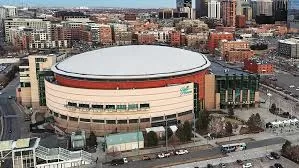
    KSE has filed the first official plans for the Ball Arena redevelopment, aiming to transform surface parking into a high-density, mixed-use area. On Monday, April 21, 2025, Kroenke Sports & Entertainment (KSE) officially submitted the first round of detailed plans—the first formal step of the project that will convert huge parking lots to a high-density mixed-use neighborhood.

    Put forth to the city of Denver, these initial proposals—”Phase 1A”—are aimed at a 3.7-acre property currently called the Tundra parking lot located at 1000 Chopper Circle. Proposed is a 13-story, 244-room hotel with ground-level retail and restaurant space; two 12-story residential high-rises consisting of 300 units in the range of studio to three-bedroom penthouses; and also a four-story, 173,500-square-foot indoor performance center paired with restaurants and a parking garage.

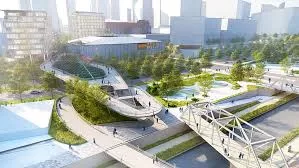
    Also included under Phase 1A is a pedestrian bridge over Speer Boulevard to further connect the new community to Denver’s Lower Downtown (LoDo).

    It’s all part of the Ball Arena Redevelopment Infrastructure Master Plan—a master plan for revitalizing 55 acres of surface parking as a lively new downtown district. The bigger vision doesn’t end in buildings: over 20 percent of the ground will be devoted to public park and open space. However, a planned three-acre signature park will be a hub for concerts, performances, season activities, and game-day celebrations—bringing recreation amenities to an area of downtown that has historically lacked them.

    Additionally, Denver rezoned nearly 70 acres last year, including the Ball Arena location, thus establishing the groundwork for high-density, mixed-use development. Monday’s submission of Phase 1A marks the first real milestone toward transforming that vision into reality.

    Read also: Oklahoma City, Thunder Agree to $950M New Arena Development Deal

    Read also: $2.1B Highmark Stadium Hits 50% Completion with Topping Out Ceremony
    First Plans for Ball Arena Redevelopment Filed – Phase 1A Factsheet

    Kroenke Sports & Entertainment (KSE) submitted formal plans for Phase 1A of the Ball Arena district transformation on April 21, 2025.

    Project Location:

    3.7-acre Tundra parking lot at 1000 Chopper Circle, Denver

    KSE has filed the first official plans for the Ball Arena redevelopment, Phase 1A
    KSE has filed the first official plans for the Ball Arena redevelopment, Phase 1A

    Phase 1A Components:

    13-story hotel with 244 rooms and ground-floor retail/dining

    Two 12-story residential towers with 300 units

    Four-story indoor performance venue (173,500 sq ft) with restaurants and parking

    Pedestrian bridge spanning Speer Boulevard, connecting to Lower Downtown (LoDo)

    This submission represents the first formal development phase in KSE’s larger plan to transform the Ball Arena area.

    Read also: KSE 55-Acre Development Around Ball Arena

    Read also: $670M Redevelopment Plan for St. Louis’ Long-Vacant Millennium Hotel Site