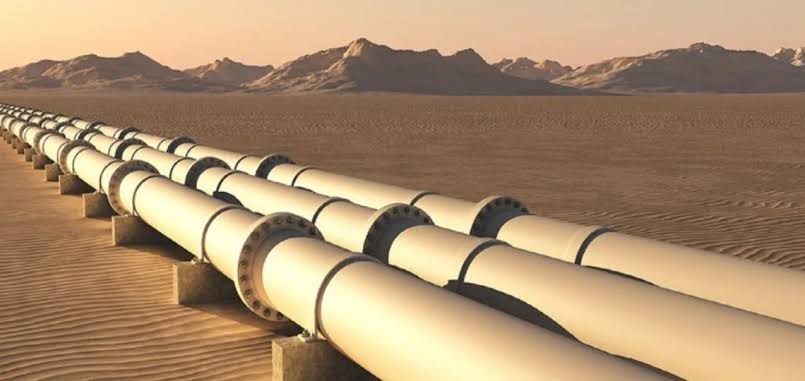
The Pakistan Saudi gas pipeline proposal could unlock an estimated US$25 billion to US$30 billion investment in cross-border energy infrastructure, including natural gas transmission pipelines, LNG facilities and gas processing infrastructure.
Pakistan’s state-owned Inter State Gas Systems (ISGS) and Saudi Arabia-based Delta Energy Saudi (DES) signed a memorandum of understanding on November 17, 2026, to jointly assess the feasibility of the proposed development. The programme aims to diversify Pakistan’s gas supply sources and strengthen regional energy connectivity.
The proposed infrastructure follows major investments in gas development across the Middle East, including the US$100 billion Jafurah Gas Development in Saudi Arabia, where Saudi Aramco has commenced production from a major unconventional gas field.
In Pakistan, the proposed network would connect the country’s western border with the coastal city of Gwadar, while potentially extending towards its eastern border near India. However, the new agreement remains at the feasibility assessment stage and does not represent a final investment decision or confirmed construction commitment.
Pakistan Saudi Gas Pipeline Scope and Proposed Infrastructure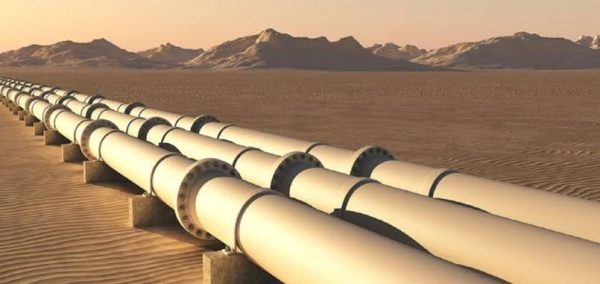
The Pakistani government’s announcement describes a proposed pipeline originating in Turkmenistan, passing through Afghanistan and entering Pakistan near Chaman. From there, the network would cross Balochistan towards Gwadar, where an LNG terminal is also planned.
The wider programme includes possible gas processing facilities, storage infrastructure and export terminals. A further pipeline connection from Chaman towards Fazilka, near the Indian border, is also under consideration.
The proposed infrastructure could involve high-pressure steel pipelines, compressor stations, gas metering facilities, pressure regulation equipment, block valve stations and pipeline monitoring systems.
The Gwadar component could require LNG storage, marine handling facilities, cryogenic transfer systems and associated terminal utilities. However, the companies have not announced pipeline length, diameter, transportation capacity or the LNG terminal’s proposed throughput.
There is also an important difference between the government’s description and Delta Energy’s explanation of potential gas supplies. Pakistan’s official announcement identifies Turkmenistan as the proposed source.
Delta Energy, however, has identified Afghanistan’s Kashk gas concession and other Afghan resources as potential supplies. The company says its programme is separate from the Turkmenistan-Afghanistan-Pakistan-India (TAPI) pipeline and does not depend on Turkmen gas. This supply question will need clarification as feasibility work progresses.
Engineering Requirements and Regional Construction Opportunities
If implemented, the programme could generate substantial demand for pipeline engineering, civil construction, mechanical installation, electrical systems and LNG terminal development.
Contractors could be required to undertake route surveys, geotechnical investigations, right-of-way preparation, trench excavation, pipe welding, coating, pressure testing and commissioning. Marine engineering companies could also participate in the development of Gwadar’s proposed LNG handling infrastructure.
The project could strengthen Pakistan’s energy security by introducing additional gas supply routes and expanding its coastal energy infrastructure. It could also support industrial consumers and create opportunities for gas processing and regional energy trading.
However, these benefits depend on securing reliable gas supplies and establishing commercially viable transportation arrangements.
Several challenges remain before construction can proceed. The proposed pipeline would cross Afghanistan and Pakistan’s Balochistan region, requiring international agreements, land access and security arrangements.
The developers must also establish gas sourcing, environmental approvals, technical specifications and financing. No EPC contractor, engineering consultant or pipeline supplier has been publicly appointed.
The November 17 agreement therefore represents an initial step towards evaluating a major regional energy infrastructure programme. Feasibility studies, financing arrangements, government approvals and final investment decisions will determine whether the proposed US$25 billion–US$30 billion network advances into construction.
Project Fact Sheet
Name: Pakistan Cross-Border Gas Pipeline and Gwadar LNG Infrastructure Programme.
Type: Natural Gas Transmission, LNG, Gas Processing and Storage Infrastructure.
Location: Proposed route from Chaman through Balochistan to Gwadar, Pakistan, with a possible extension towards Fazilka, India.
Estimated investment: US$25 billion–US$30 billion.
Development partners: Delta Energy Saudi and Inter State Gas Systems (ISGS).
Status: Memorandum of Understanding signed November 17, 2026; feasibility assessment stage.
Key infrastructure: Cross-border gas pipelines, compressor stations, processing facilities, storage infrastructure and a proposed LNG terminal.
Gas supply: Turkmenistan identified in Pakistan’s announcement; Delta Energy separately identifies Afghan resources as potential supplies.
Construction timeline, capacity, employment and EPC contractors: Not yet announced.
Project Team
Saudi Development Partner: Delta Energy Saudi (DES).
Pakistani Development Partner: Inter State Gas Systems (ISGS).
Parent Group: Delta International Group.
Government Facilitation: Special Investment Facilitation Council (SIFC).
Pakistani Government Oversight: Petroleum Division, Ministry of Energy.
Cross-Border Stakeholders: Relevant authorities in Afghanistan and Turkmenistan, depending on the final gas supply route.
Potential Extension Stakeholder: Government of India, subject to bilateral agreements.

Leave a Reply