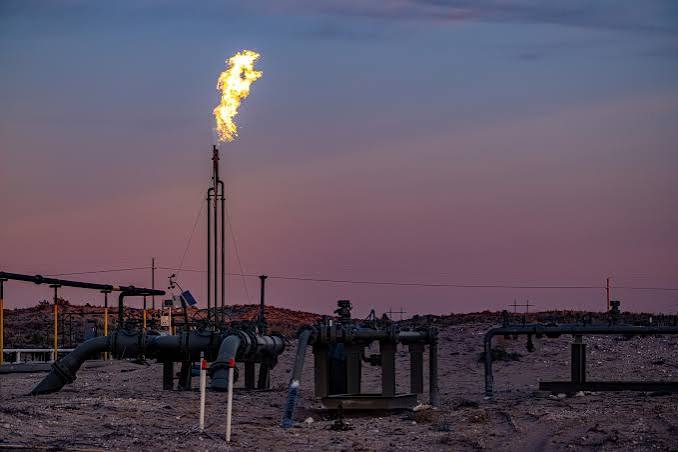
Permian gas flaring falls to its lowest level in three years as new pipelines open. Flaring in the Permian Basin is averaging about 268 million cubic feet a day this month, the lowest monthly level since November 2023. New pipelines now carry surplus gas out of West Texas, easing a bottleneck that pushed local prices deeply negative earlier this year.
Why Permian gas flaring falls
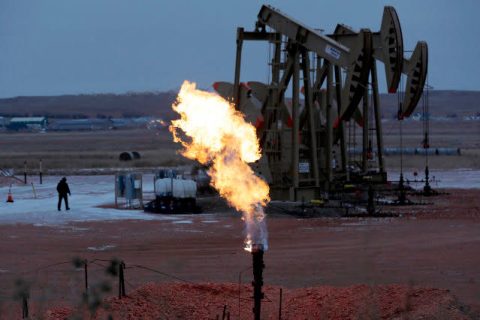
Producers in the Permian mainly drill for oil, and gas comes up with it. When pipelines are full, operators must either burn the gas or cut oil output. The new lines remove that choice. They ship the gas to East and South Texas, so producers can keep oil flowing without burning as much fuel at the wellhead. The bottleneck had been severe. Waha hub gas prices averaged about minus $2.19 per million British thermal units in the first half of 2026. They hit a record low of minus $7.95 in late April. In mid-2025, analysts estimated flaring at nearly 500 million cubic feet a day, so today’s level is about half that.
Flaring matters for the climate. It releases carbon dioxide and wastes a saleable fuel. As a result, moving the gas to market helps both the environment and producers’ revenue.
Which pipelines are carrying the gas?
Energy Transfer’s Hugh Brinson Pipeline is a key piece. The 42-inch line runs about 440 miles from the Waha hub to Maypearl, south of Dallas–Fort Worth. Energy Transfer placed Phase I into full service on September 1, ahead of schedule. Phase II remains on schedule for the first quarter of 2027, and the company expects the full project to come in under budget. The pipeline will reach 2.2 billion cubic feet a day when complete.
Other projects add capacity. The Blackcomb Pipeline would carry 2.5 billion cubic feet a day from the Permian to Agua Dulce in South Texas, and developers targeted a start in the second half of 2026. The Gulf Coast Express expansion adds more. Together, these three projects add about 5.3 billion cubic feet a day of takeaway capacity from the Waha area.
What happens next for Permian gas?
Relief will take time. Producers said in the summer that the constraints would take several quarters to ease, and some expected takeaway limits to persist into 2027. Gas production could also grow again. If oil prices stay high, producers may drill more, and that would add more associated gas.
Watch three things. First, check whether Waha prices stay positive. Second, watch whether flaring keeps falling as Phase II of Hugh Brinson arrives. Third, track whether new pipelines fill up as quickly as earlier ones did. Pipeline building continues elsewhere in Texas and beyond. For example, Energy Transfer took a final investment decision this month on the 215-mile South Mississippi Pipeline, a 36-inch line with a planned capacity of 1.2 billion cubic feet a day and an expected cost of about $1.6 billion.
Other projects
Origis Energy has fully commissioned and launched operations at its 500 MWdc Swift Air Solar complex in West Texas, completing the final phase of the three-project portfolio delivered in late 2025 and now supplying dedicated renewable power to Occidental’s regional operations, including its STRATOS Direct Air Capture facility.

Leave a Reply