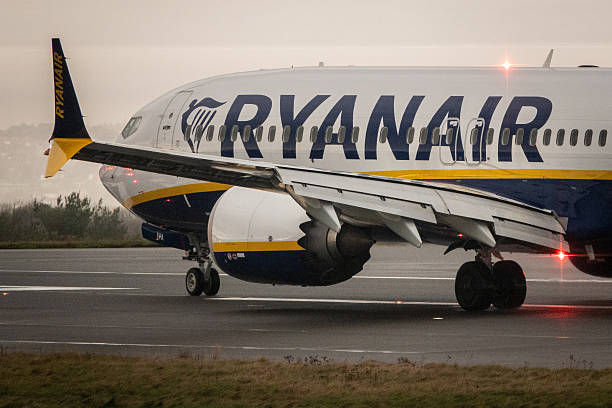
Ryanair will build its first in-house aircraft engine maintenance, repair and overhaul (MRO) facility at the Port of Seville in Andalusia, Spain. The airline put the investment at about €500 million (roughly $548 million) on November 17, 2026. Construction of the 28,000-square-meter plant is due to start in early 2027, with opening targeted for 2029.
The Dublin-based carrier announced the choice after what it described as a competitive tender among European locations. According to the Ryanair announcement, the facility will maintain, repair and overhaul the CFM56-7B engines that power its Boeing 737-800 fleet and the LEAP-1B engines on its 737 MAX aircraft. Ryanair said the project will create more than 600 skilled jobs and will be the first aircraft engine MRO facility in Andalusia.
What the Seville Engine Shop Is Built to Do
Seville is the first of two engine shops Ryanair intends to build. The airline said in its November 17 release that the second location will be confirmed in 2027, and that together the two plants will be able to perform about 400 full engine overhauls a year. That capacity is meant to support a fleet engine pool of up to 2,000 engines by 2034, when Ryanair expects to operate 800 aircraft and carry 300 million passengers a year.
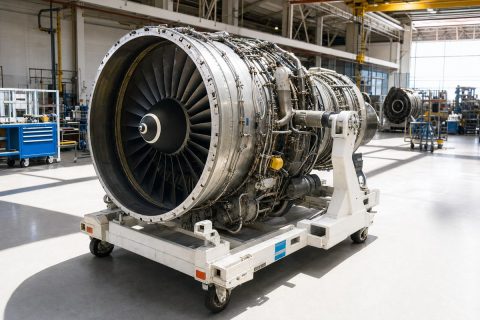
The shift is strategic. Ryanair already runs heavy and line maintenance bases at Prestwick, Shannon, Wroclaw, Kaunas, Dublin and Seville, but as TRAVEL Extra reported in August 2026, none of them overhauls engines in-house. Engine work is currently bought from third-party providers. Earlier project descriptions filed with the regional environmental process set out the full cycle the plant would handle: disassembly, cleaning, repair, testing and reassembly.
Fleet mix explains the urgency. Ryanair expects its fiscal 2034 fleet of about 800 aircraft to include 300 MAX 10s, 210 MAX 8-200s and around 290 older 737s, according to fleet figures compiled by AirData News in November 2026. That means two engine families running side by side for most of the next decade, with the LEAP share rising each year.
Ryanair also said it will open an Engineering Academy in Seville to recruit and train aircraft technicians and engineers for the new plant.
From €290 Million to €500 Million
The headline figure has nearly doubled during the year. When the project first surfaced publicly in April 2026, The Olive Press reported a €290 million budget, 600 direct jobs and a throughput of about 200 engines a year.
That €290 million figure was still in use in August, when the Junta de Andalucía granted the project a Unified Environmental Authorization (Autorización Ambiental Unificada). TRAVEL Extra reported at the time that the approval covered a site of more than 94,000 square meters in the port’s Free Trade Zone, projected about 950 jobs in total including 600 direct positions, and gave Ryanair up to four years to complete construction, with operations expected around 2030.
The November announcement changes several of those numbers. Investment rose to about €500 million, the opening date moved forward to 2029, and the facility was described as 28,000 square meters. Ryanair has not published a reconciliation. The most likely reading is that the 94,000-square-meter figure refers to the plot and the 28,000-square-meter figure to the building, but neither the airline nor the port authority has confirmed this, and the reasons for the €210 million increase have not been disclosed.
How Seville Won the Contest
Seville faced serious competition. Earlier in 2026, TRAVEL Extra reported that Poland was the front runner among contenders in the Baltic states, Italy, Portugal and Spain, and that Ryanair was then targeting an opening before the end of 2028. Belfast was also in the running, and AeroTime reported that the Andalusian capital ultimately beat 12 other cities.
Poland’s case rested on an established base. Ryanair’s Wroclaw Aircraft Maintenance Services already handles heavy maintenance there, and GE Aerospace partner XEOS operates a LEAP engine maintenance facility in the same city. Poland remains a candidate for the second engine shop.
Seville’s advantage was an existing aerospace cluster and a site ready for permitting. Ryanair has run a heavy maintenance hangar at Seville Airport since 2019, and the city hosts Airbus final assembly activity. Securing regional environmental authorization months before the site decision gave the Port of Seville option a clear lead in timing. Ryanair DAC chief executive Eddie Wilson said Seville won on engineering talent, aerospace experience and industrial base, as reported by Euro Weekly News. Seville’s mayor called it one of the largest industrial investments in the city in recent decades.
The engine plant adds to a wider round of capital spending in the city, which is also extending its rail transit network. Construction on the third section of Seville Metro Line 3 North, a €173 million contract for a 1,013-meter underground stretch beneath the Virgen Macarena Hospital, is underway under the Andalusian Regional Government.
How the Plant Compares With Ryanair’s Hangar Network
The Seville engine shop is far more capital-intensive than anything else in Ryanair’s maintenance estate. A week before the Seville decision, on November 10, 2026, Ryanair opened a €40 million maintenance facility at Porto Airport covering 4,900 square meters, with a two-bay line maintenance hangar and component workshops. That works out at roughly €8,200 per square meter. At €500 million for 28,000 square meters, the Seville engine plant runs at about €17,900 per square meter, more than double the Porto rate.
The gap is wider still against the airline’s existing Seville Airport hangar. Ryanair said in December 2021 that it had invested more than €30 million in that five-bay, 20,000-square-meter facility since 2019, about €1,500 per square meter. The difference reflects what engine overhaul requires: specialized tooling, clean disassembly areas, component repair shops and engine testing capability that airframe hangars do not need.
Other Ryanair projects show the scale of the shift. The airline announced a €50 million, four-bay hangar and engineering academy at Shannon Airport, and in October 2026 warned that planning delays could push that investment to Poland. The Seville engine shop alone is worth roughly ten times the Shannon project.
For Spain, the plant joins a run of large private industrial commitments, including the BarMar subsea hydrogen pipeline linking Barcelona and Marseille.
Open Questions Before Ground Is Broken
Several matters remain unresolved. Ryanair has not named a design firm or main contractor, and no tender for the works has been published. The airline has also not explained the rise from €290 million to €500 million, or whether the earlier environmental authorization, granted for a project described at different cost and capacity figures, will need amending.
Capacity allocation is also unclear. Ryanair’s April figure of about 200 engines a year for Seville alone matches half of the 400-overhaul total now attributed to both shops, but the airline has not said how work will be split once the second site opens.
Ryanair’s relationship with Spanish airport operator Aena is another variable. The airline remains in a long-running dispute with Aena over airport charges, even as it commits its largest maintenance investment to Spain. The engine plant sits on port land rather than airport property, which places it outside Aena’s control.
The schedule, as stated by Ryanair, calls for site preparation and construction from early 2027 and the first engines through the shop in 2029.


Leave a Reply