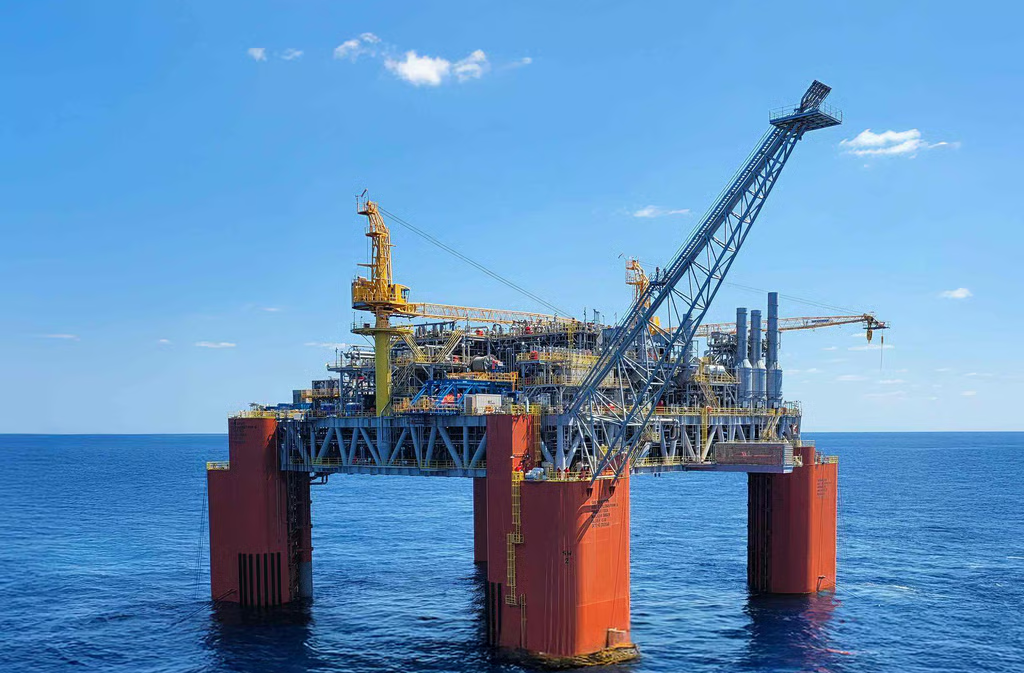
The Falklands oil field project is gaining momentum as developers pursue a major expansion of the Sea Lion development. The expansion could add 125,000 barrels of oil production each day. Navitas Petroleum plans to acquire a second floating production, storage and offloading vessel (FPSO). The company estimates the wider development could require investment approaching $3 billion.
The expansion would build on Sea Lion’s first production phase, which targets first oil in March 2028. The initial development will use the Aoka Mizu FPSO. It has a production capacity of 55,000 barrels per day.
The proposed second FPSO would support later development phases beyond the Northern Development Area’s initial phases. Navitas signed a non-binding memorandum of understanding for the additional vessel in May 2026.
Falklands oil field project expands offshore infrastructure
The proposed expansion centers on additional offshore production infrastructure and subsea development. The second FPSO could add approximately 125,000 barrels per day to Sea Lion’s production capacity.
Consequently, the project would accelerate development of resources that current plans do not include. Navitas says the additional vessel could support subsequent production phases.
The Times reports that the vessel and required upgrades could cost about $1.15 billion. Meanwhile, the wider central field development could reach roughly $3 billion.
The proposed FPSO would therefore complement the infrastructure already planned for Sea Lion. The development will require offshore wells, subsea equipment, flowlines and production facilities.
Navitas already plans 11 subsea wells during Phase 1. It expects another 12 wells during Phase 2.
Phase 2 should begin approximately three years after first oil. The staged approach allows the developers to expand production alongside field performance.
Falklands oil field project moves toward higher production
The expansion comes after Sea Lion secured its final investment decision in December 2025. Navitas and Rockhopper Exploration approved financing arrangements for Phase 1.
Rockhopper reported that Phase 1 has secured funding and remains targeted for first oil during the first quarter of 2028. The company holds a 35% interest in Sea Lion. Navitas holds the remaining 65% working interest and operates the development.
Furthermore, Sea Lion contains substantial resources that could support future production. Navitas reports 216 million barrels of oil equivalent in 2P reserves. It also reports 603 million barrels of oil equivalent in 2C resources.
Rockhopper’s independent assessment also reclassified resources within Northern Development Area Phases 1 and 2. Those volumes moved into the reserves category.
However, the second FPSO proposal remains subject to due diligence and binding agreements. Therefore, the 125,000-barrel-per-day expansion remains a planned capacity increase.
The project could also strengthen the Falkland Islands’ energy economy. Taxes and royalties could generate public revenues once production begins.
Argentina continues to dispute sovereignty over the Falkland Islands. That geopolitical issue remains an important consideration surrounding offshore resource development.
The project follows a similar offshore development model to the UK’s Rosebank project. Rosebank combines subsea wells with a repurposed FPSO for offshore production.
The Rosebank development also involves major offshore construction, including subsea production systems, umbilicals, risers and flowlines.
Similarly, Sea Lion will require extensive subsea infrastructure and FPSO facilities as developers expand production capacity. The two projects therefore highlight growing investment in complex offshore oil infrastructure.
Project Fact Sheet
Name: Sea Lion oil field development.
Location: Approximately 220 kilometers north of the Falkland Islands.
Development area: North Falkland Basin, including licenses PL032 and PL004b.
Project status: Under development.
Operator: Navitas Petroleum Development and Production Ltd.
Working interest: Navitas 65%; Rockhopper Exploration 35%.
First oil target: March 2028.
Initial FPSO: Aoka Mizu.
Initial production capacity: 55,000 barrels per day.
Additional proposed FPSO capacity: Approximately 125,000 barrels per day.
Proposed additional FPSO: OSX1, subject to transaction completion.
Estimated additional vessel and upgrade cost: Approximately $1.15 billion.
Potential wider central field development cost: Up to approximately $3 billion.
Phase 1 drilling: 11 subsea wells.
Phase 2 drilling: 12 additional subsea wells.
Production outlook: More than 30 years.
Navitas reported 2P reserves: 216 million barrels of oil equivalent.
Navitas reported 2C resources: 603 million barrels of oil equivalent.
Project Team
Developer: Navitas Petroleum
Operator: Navitas Petroleum Development and Production Ltd.
Partner: Rockhopper Exploration
Government: Falkland Islands Government
FPSO Provider: Aoka Mizu
Reserves Consultant: Netherland, Sewell & Associates Inc.

Leave a Reply