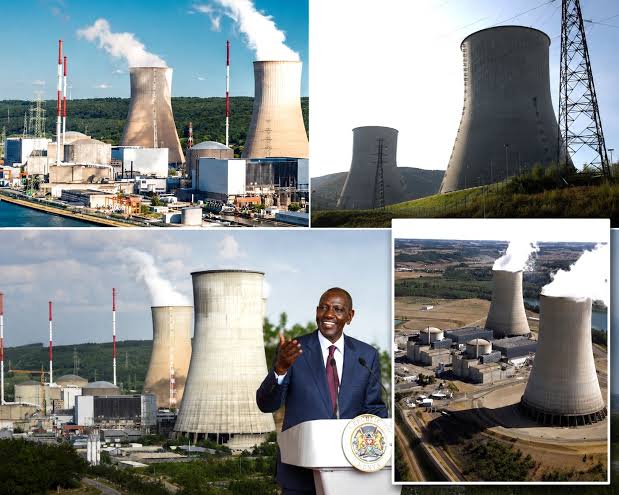
President William Ruto has announced that Kenya plans to generate between 2,000MW and 5,000MW of nuclear power from a plant as he continued his development tour of Nyanza. This plant will be established in Siaya. Moreover, this project comes in as East African countries like Uganda race to develop nuclear power in bid to boost power supply.
Speaking in Kisumu on Monday, Ruto said the planned nuclear power generation would position Nyanza among Kenya’s regions producing electricity for supply to the national grid.
“We have agreed that here in Siaya, we will generate between 2,000MW and 5,000MW using nuclear power. This will make Nyanza to become one of the regions producing electricity for supply to the rest of Kenya,” Ruto said.
Also, the announcement comes as the President’s four-day tour of Nyanza moves to Siaya, with energy, roads, water, housing and other infrastructure among the projects being highlighted by his administration.
Kenya has been advancing plans to introduce nuclear power into its energy mix as it seeks to increase electricity generation capacity to meet growing demand.
Timeline
In March, Ruto announced plans to begin construction of a 2,000MW nuclear power plant in Siaya in 2027, with commissioning targeted for 2034.
Furthermore, he stated then that Kenya intended to increase its installed electricity capacity from about 3,300MW to at least 10,000MW within five to seven years, with 3,000MW expected to come from nuclear energy.
The proposed Siaya project has since moved through further preparatory stages, with the government targeting a 2027 groundbreaking and 2034 start of electricity generation.
Key Developers
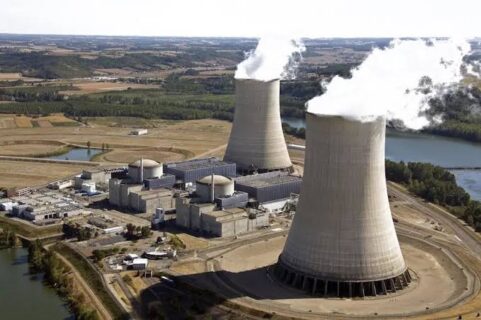
The Nuclear Power and Energy Agency has also been working with the Kenya Electricity Generating Company and international partners as Kenya prepares for the country’s first nuclear power plant.
Additionally, Kenya has been seeking further technical support from the International Atomic Energy Agency as it works to advance the nuclear programme.
Also, Ruto said that the wider expansion of electricity generation was part of efforts to support economic growth and industrialisation.
Lastly, he also highlighted ongoing electricity connections and rural electrification projects in Nyanza. He said that improved power supply would help the region participate more fully in economic production.
Project Factsheet
Project Name: Proposed Siaya Nuclear Power Plant
Location: Siaya County, Nyanza Region, Kenya (Candidate sites in Bondo and Rarieda sub-counties near Lake Victoria)
Executing Agency: Nuclear Power and Energy Agency (NuPEA) in partnership with KenGen
Target Capacity: 2,000 MW initial target (expandable up to 5,000 MW total grid capacity)
Estimated Cost: KSh 500 Billion (approx. $3.8 Billion USD)
Construction Start: March 2027 (Groundbreaking)
Target Commissioning: 2034 (Start of generation)
Economic Impact: 7,000–10,000 construction jobs; 1,000–2,000 permanent operational jobs
Technical Assistance: International Atomic Energy Agency (IAEA)
Project Team
Key Entities and Executing Organizations
- KenGen (Kenya Electricity Generating Company PLC): Designated as the official owner-operator of the power plant. KenGen will oversee project financing, technical procurement, construction management, and operational maintenance.
- NuPEA (Nuclear Power and Energy Agency): Acts as the project’s implementing agency under the Ministry of Energy. Responsible for site characterization, policy development, public engagement, and initial project coordination.
- Kenya Nuclear Regulatory Authority (KNRA): The independent government body overseeing safety compliance, nuclear licensing, radiation protection, and environmental safeguards.
International Technical Partners & Prospective Vendors
- International Atomic Energy Agency (IAEA): Providing international technical guidance, safety infrastructure reviews, and capacity building via the Integrated Work Plan.
- Korea Atomic Energy Research Institute (KAERI) & KEPCO (South Korea): Signed technical cooperation and graduate training agreements to support nuclear research infrastructure and capacity development.
- China General Nuclear Power Corporation (CGN): Previously signed strategic MoUs covering early site selection, technical training, and baseline feasibility studies.
- Rosatom (Russia): Maintained bilateral cooperation agreements with Kenya regarding nuclear technology transfer and infrastructure framework.

Leave a Reply