
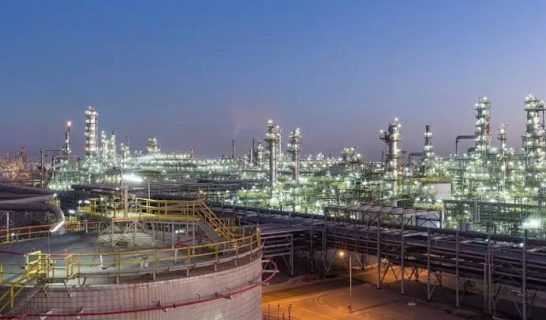
The Sohar refinery improvement project has completed its major construction and commissioning program, increasing Oman’s refining capacity to 198,000 barrels per day. The $2.7 billion investment upgraded the existing refinery in Sohar, approximately 230 kilometers northwest of Muscat. It added 82,000 barrels per day of processing capacity to the original 116,000-barrel facility. Consequently, the development strengthened Oman’s ability to process heavier domestic crude and produce higher-value petroleum products.
Oman Oil Refineries and Petroleum Industries Company (ORPIC), now operating within OQ’s refining business, developed the project. The facility achieved completion milestones in 2017, followed by successful performance testing in December 2017. Oman officially inaugurated the upgraded refinery in April 2019. The completed project represented a major milestone in the country’s downstream petroleum infrastructure development.
Sohar Refinery Improvement Project delivers expanded processing infrastructure
The construction program introduced five major processing units to improve the refinery’s operational capabilities. These included a crude distillation unit (CDU), vacuum distillation unit (VDU), delayed coker, hydrocracker and bitumen-blowing unit.
The new 82,000-barrel-per-day crude distillation capacity increased the refinery’s total throughput to 198,000 barrels daily. Furthermore, the upgraded configuration improved the processing of heavier Oman Export Blend crude. It also enabled the refinery to increase production of higher-value light and middle distillates.
The project also incorporated supporting infrastructure for water treatment, utilities and environmental management. Three multiple-effect distillation thermal vapour compression units formed part of the desalination facilities. Their combined design capacity reached approximately 5,352 cubic meters daily.
Additionally, the development included fractional electro-deionization systems for producing demineralized boiler-feed water. Vapour-phase carbon adsorption systems supported emissions control. Two sulphur recovery trains also handled acid gas streams from refinery operations.
The refinery upgrade improved production across several petroleum product categories. Diesel output increased by approximately 90%, while gasoline production rose by 37%. Kerosene and jet fuel production each increased by approximately 93%. LPG production rose by 91%, while naphtha increased by 175%. Propylene production also recorded a 44% increase.
Sohar Refinery Improvement Project supports Oman’s downstream energy strategy
The upgraded refinery strengthened OQ’s position in Oman’s petroleum processing and supply chain. Its increased capacity supports domestic fuel requirements while creating opportunities for exports and petrochemical feedstock production.
The development also generated employment and supported local suppliers during construction. Earlier project estimates identified approximately 300 permanent jobs, 900 indirect positions and 2,400 contract jobs for Omani workers. These opportunities contributed to the project’s local economic impact.
Meanwhile, OQ has continued pursuing improvements at the operating Sohar refinery. In November 2025, Worley secured a front-end engineering and design (FEED) contract for a separate refinery decarbonisation project.
The proposed engineering program targets improved energy efficiency and greater heat recovery. It also seeks to reduce emissions from existing refinery operations. Worley’s Oman team will undertake the technical work alongside its global integrated delivery team in India.
The decarbonisation initiative represents a subsequent improvement program, rather than unfinished construction under the original US$2.7 billion expansion. Its development reflects OQ’s continued efforts to improve the environmental performance of its operating assets.
Oman’s downstream investment strategy also reflects a wider regional focus on strengthening energy infrastructure. Saudi Arabia is pursuing additional gas processing capacity through the Jafurah fifth expansion phase, which involves three planned gas compression plants. Although the projects target different hydrocarbon products, both demonstrate continued investment in large-scale Middle Eastern energy infrastructure.
Also Read: Construction of Hutchison Ports Sohar Solar Powered Integrated Inspection Facility in Oman Begins
Additional Sohar Refinery improvement project works
There will also be three fractional electro-deionization (FEDI) demineralization units that will each boast a capacity of 3,360 m3 a day of pure water intended for boiler feed as well as integration of four VSC-2000 units, eight Vent-Scrub VSC-200 units and two VSC-8000 vapour phase carbon adsorption systems. In addition to the aforementioned, two identical parallel Sulphur recovery unit (SRU) trains will be added and installed to facilitate the processing of amine acid gas and sour water stripper acid gas, as well as separate acid gas feedstock.
Set to be constructed in compliance with both local and EU environmental regulations for the enhancement of environmental performance as well as the reduction of emissions from capacity pressure, these additional facilities and units will add 82,000 barrels a day (bbl/d) to the current 116,000 capacity of the refinery. Therefore, the overall capacity of the refinery will be boosted by 198,000 barrels a day.
Project expectations and team
The Sohar Refinery improvement project is expected to create economical benefits for the Oman government and local businesses, as well as generate approximately 300 permanent jobs, 900 indirect jobs and 2,400 Omani contract jobs throughout its lifetime.
Evoqua Water Technologies is responsible for the provision of Vent-Scrub vapour-phase carbon adsorption systems for the project while Black & Veatch is responsible for the provision of the sulphur recovery unit and the tail gas treating units.
Aquatech was contracted to supply thermal desalination systems for the project while ALE was awarded the contract to transport heavy-lift, out-of-gauge (OOG) units for the facility. A joint venture comprising Petrofac and Daelim Industrial Co. won the engineering, procurement and construction (EPC) contract for the Sohar Refinery improvement project.
Project Fact Sheet
Name: Sohar Refinery Improvement Project (SRIP).
Location: Sohar, Al Batinah Governorate, Oman.
Owner: OQ Refineries and Petroleum Industries.
Original developer: Oman Oil Refineries and Petroleum Industries Company (ORPIC).
Type: Brownfield refinery expansion and modernization.
Total project investment: Approximately US$2.7 billion.
Original refinery capacity: 116,000 barrels per day.
Additional processing capacity: 82,000 barrels per day.
Final refinery capacity: 198,000 barrels per day.
Construction completion: 2017.
Performance testing: December 2017.
Official inauguration: April 2019.
Main construction scope: Five major processing units and associated utilities, water treatment and environmental systems.
Major processing units: Crude distillation, vacuum distillation, delayed coking, hydrocracking and bitumen blowing.
Desalination capacity: Approximately 5,352 cubic meters daily.
Water treatment infrastructure: Three fractional electro-deionization units.
Sulphur recovery infrastructure: Two sulphur recovery trains.
Main objective: Increase processing capacity, improve crude flexibility and increase higher-value petroleum production.
Latest related development: Separate Sohar refinery decarbonisation engineering program announced in November 2025.
Project Team
Owner and operator: OQ Refineries and Petroleum Industries (formerly ORPIC).
Original EPC contractor: Petrofac and Daelim Industrial joint venture.
Sulphur recovery and tail gas treatment systems: Black & Veatch.
Vapour-phase carbon adsorption systems: Evoqua Water Technologies.
Thermal desalination systems supplier: Aquatech.
Heavy-lift transportation contractor: ALE.
Decarbonisation FEED contractor: Worley.
Decarbonisation project client: OQ Refineries and Petroleum Industries.


Leave a Reply