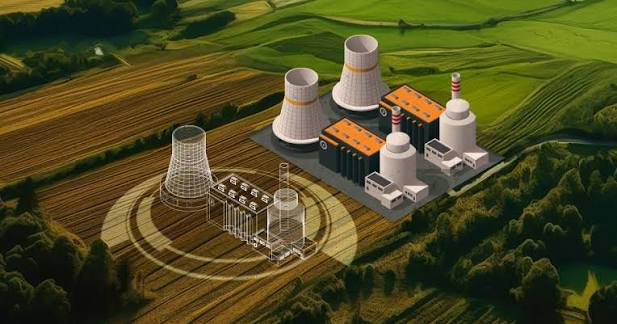
South Korea plans to invest up to $120 billion in an eight-reactor U.S. nuclear program that could add up to 10.2 GW of generating capacity, expanding construction opportunities across the American nuclear supply chain.
The nuclear program forms part of a broader South Korean investment package for U.S. infrastructure and energy projects. The eight reactors are expected to combine Westinghouse AP1000 technology with South Korea’s APR1400 design.
The planned investment would make nuclear power one of the largest components of Seoul’s U.S. investment commitments. The reactor program alone represents roughly 60% of the $200 billion strategic investment pool under discussion between the two countries.
Eight Reactors Planned Across Two Designs
The current framework calls for six AP1000 reactors developed by Westinghouse and two APR1400 reactors developed in South Korea.
The AP1000 is a Generation III+ pressurized-water reactor. It has already entered commercial operation in the United States through Vogtle Units 3 and 4 in Georgia.
The APR1400 is also a Generation III+ pressurized-water reactor. South Korea has deployed the design domestically and exported it to the United Arab Emirates.
The combination would give Korean companies a pathway to participate in U.S. nuclear construction while retaining a role for Westinghouse technology.
Recent Korean reporting indicates that the first phase could involve two AP1000 units, followed by two additional AP1000 units and two APR1400 units in later stages. The remaining project structure would depend on subsequent agreements.
Projects Still Need Sites and Contracts
The $120 billion framework does not mean eight reactor projects have already reached construction.
Individual plants still need project sites, licensing approvals, financing arrangements, detailed engineering and construction contracts. The timing of those contracts also remains unsettled.
Potential U.S. locations discussed in connection with the broader nuclear expansion include sites in Texas, South Carolina and Florida, along with other locations that could support new nuclear generation.
Those locations should be treated as potential sites rather than confirmed destinations for the eight-unit program until project-specific announcements are made.
The scale of the planned buildout would also require substantial expansion of nuclear manufacturing, engineering and construction capacity in the United States.
Westinghouse Role
Westinghouse is expected to play a central role because the proposed fleet includes six AP1000 reactors.
South Korea has also been discussing an equity investment in Westinghouse as part of the broader nuclear cooperation framework. Reports have placed the potential stake below the 15% level Seoul had previously sought, although the final size has not been settled.
The discussions follow earlier intellectual-property arrangements between Westinghouse and South Korean nuclear companies. Those arrangements have been an important factor in determining how Korean reactor technology could enter the U.S. market.
The proposed APR1400 units would represent a significant step because they would introduce South Korea’s reactor technology into the U.S. commercial nuclear market.
Construction Timeline
The program is expected to proceed in phases rather than through simultaneous construction of all eight reactors.
Earlier planning called for the first phase to begin with four reactors. The subsequent phase would add four more units, subject to project agreements and regulatory progress.
Long-lead nuclear equipment will be a major scheduling consideration. Reactor vessels, steam generators and reactor coolant equipment can require several years between ordering and delivery.
The program will also need to navigate U.S. nuclear licensing requirements before individual projects can enter full construction.
Investment Part of Broader U.S. Energy Buildout
The nuclear program is one component of a wider U.S. investment initiative involving South Korean capital.
The package also includes a planned Alaska LNG investment and a large Texas gas-fired power project. Reuters reported Sept. 30 that the broader package could involve about $200 billion in South Korean investment in U.S. projects.
South Korea’s investment framework stems from the broader U.S.-South Korea strategic investment arrangement negotiated alongside trade discussions.
For the nuclear sector, the proposed $120 billion commitment would create a pipeline of projects extending well beyond a single reactor site.
However, the construction program remains dependent on project-level agreements. Final sites, EPC contractors, financing structures, licensing schedules and construction dates will determine when the planned capacity can move from an investment framework into physical development.
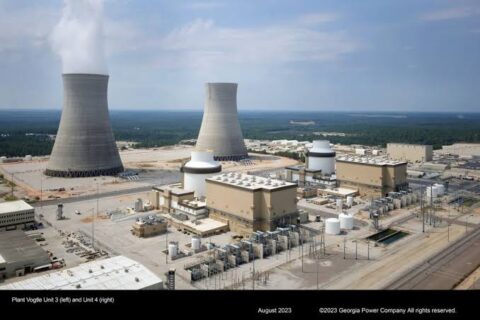
Project Factsheet
- Project: U.S. Eight-Reactor Nuclear Program
- Location: United States; individual sites not yet finalized
- Investment: Up to $120 billion
- Planned Reactors: 8
- Planned Capacity: Up to 10.2 GW
- Reactor Mix: 6 Westinghouse AP1000 units and 2 APR1400 units
- AP1000 Developer: Westinghouse
- APR1400 Developer: South Korean nuclear industry
- Program Structure: Phased development
- Potential Sites: Locations in Texas, South Carolina, Florida and other U.S. sites have been discussed
- Latest Milestone: South Korea and the U.S. are advancing the nuclear investment framework
- EPC Status: Project-level construction contracts not yet finalized
- Regulatory Status: Individual projects will require applicable U.S. nuclear approvals

Leave a Reply