When the Czech government selected Korea Hydro & Nuclear Power (KHNP) as the preferred bidder in July 2024 to build two new APR1000 reactors (Units 5 and 6) at the Dukovany Nuclear Power Plant, the decision marked the country’s largest-ever energy investment and a major breakthrough for South Korea’s nuclear export ambitions.
Two years later, the project continues to course through implementation despite legal and regulatory hurdles. Following the signing of the engineering, procurement and construction (EPC) contract in June 2025, the Czech Republic and South Korea have established a bilateral Dukovany Steering Committee to oversee delivery, licensing, localization and supply chain development.
In June 2026, both governments confirmed that the project remained on schedule. The European Commission also concluded its preliminary review under the EU Foreign Subsidies Regulation without opening an in-depth investigation into KHNP’s bid, effectively removing one of the last major regulatory uncertainties. This is as European countries continue to increase national investments in nuclear power, including Slovakia with the Mochovce Nuclear Power Plant which is expecting its final reactor commissioning this year after a 39-year construction period.
Site preparation and licensing work at Dukovany continue ahead of the planned start of construction in 2029. The first reactor is targeted for operation in 2036 while the second eyes 2038.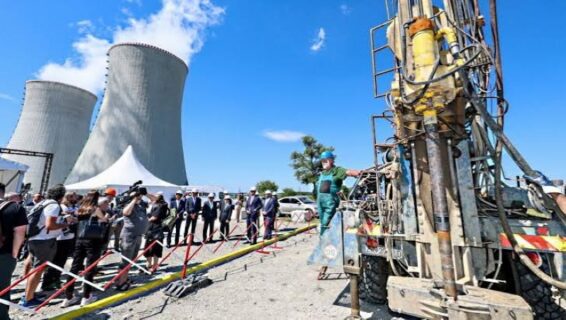
Dukovany New Nuclear Power Plant Project (Dukovany Units 5 and 6) Fact Sheet
Technology: APR1000 Pressurized Water Reactors (PWR)
Number of New Units: 2 (with options for up to two additional reactors at the Temelin Nuclear Power Station site)
Reactor Capacity: 1,055 MW per unit
Total New Capacity: 2.1 GW
Project Developer/Owner: Elektrarna Dukovany II (EDU II), a subsidiary of CEZ Group
Operator (upon completion): CEZ Group
EPC Contractor: Korea Hydro & Nuclear Power (KHNP)
Project Delivery Consortium: Led by KHNP with support from KEPCO, Doosan Enerbility, KEPCO Engineering and Construction, KEPCO Nuclear Fuel and other Korean suppliers
Project Cost: Approximately CZK 407 billion (US$18–19 billion)
Preferred Bidder Selected: July 2024
EPC Contract Signed: June 2025
Current Phase (2026): Licensing, engineering, localization, site investigations and early project implementation
Expected Construction Start: 2029
Target First Reactor Operation: 2036
Target Second Reactor Operation: 2038
Design Life: Approximately 60 years
Fuel Type: Low-enriched uranium
Primary Purpose: Replace aging generating capacity, strengthen national energy security and support decarbonization
Strategic Importance:
- Largest energy infrastructure investment in Czech history
- Largest overseas nuclear project ever awarded to South Korea
- Cornerstone of the Czech Republic’s long-term nuclear expansion strategy
- Expected to help increase nuclear power’s share of Czech electricity generation to around 50% by 2050
Major Regulatory Milestones:
- Czech government selected KHNP as preferred bidder in July 2024.
- EPC contract signed after court proceedings concluded in June 2025.
- In 2026, the European Commission concluded its preliminary review under the Foreign Subsidies Regulation without opening an in-depth investigation, allowing the project to continue as planned.
South Korea’s KHNP Beats France’s Energy Giant to Win a Multi-Billion-Dollar Czech Nuclear Tender
Reported July 20, 2024 – The Czech government has picked Korea Hydro & Nuclear Power (KHNP) as preferred bidder to for the Czech Nuclear Tender build two nuclear reactors at Dukovany Nuclear Power Plant. The award also marks South Korea’s first overseas order for a large-scale nuclear power project since 2009.
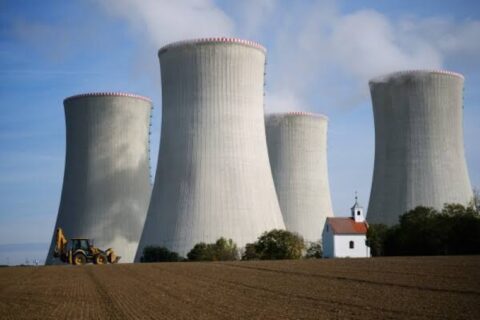
The final contract, including the value, remains to be negotiated, with completion of the deal targeted for March, South Korea’s industry ministry said. However, the Czech government estimated the cost of a new unit when building two at the same site at 200 billion crowns ($8.65 billion) at current prices.
KHNP, a subsidiary of Korean state utility KEPCO (015760.KS), opens new tab, beat a rival bid from France’s EDF as South Korea seeks to capitalise on a revival of interest globally in nuclear power, with countries seeking to enhance energy security and lower carbon emissions.
How Did South Korea Win the Czech Nuclear Tender?
During the bidding process, KHNP stressed its ability to meet project deadlines and keep costs within budget based on South Korea’s previous track record, including its 2009 order from the United Arab Emirates (UAE), South Korean officials said.
South Korea’s bid was considerably less costly than that put forward by two sources with knowledge of the matter told Reuters, declining to be identified as they are not authorised to speak to media.
Nuclear Power Track Record
In 2009, South Korea, spearheaded by KEPCO, signed an $18.6 billion deal with the UAE to build four nuclear reactors at the Barakah nuclear energy plant, totaling 5,600 megawatts in capacity.
Moreover, three reactors became operational in 2021, 2022 and 2023, respectively. The fourth is on track to start operations later this year, according to KEPCO.
KHNP, which participated in the Barakah project, oversees 26 nuclear reactors in South Korea including some that have operated for nearly 40 years, and is currently building two more, according to company data. The 26 reactors supply about a third of South Korea’s electricity, according to the World Nuclear Association.
In 2023, KHNP won an order to build a tritium removal facility for a reactor in Romania’s Cernavoda nuclear power plant, and began working on a feasibility study for new nuclear power facilities in the Netherlands, the company said.. French state power giant EDF lost a bid to build at least two new nuclear reactors in the Czech Republic on Wednesday, a major blow to Europe’s only nuclear power plant builder at a critical time for the company.
EDF to bid once more after Dukovany Nuclear Power Plant tender
The project, won instead by Korea’s KHNP, would have been the first contract for EDF since Hinkley Point in Great Britain in 2016, and a vote of confidence after being dogged by delays and soaring costs on projects at home and abroad.
But its recent track record and a gamble on new, untested technology has cost it a significant new project and likely others in the future too.
“We were counting on this project to give credibility to our offer on a European scale,” said a source at EDF, declining to be identified because of the sensitivity of the issue.
“But unfortunately the reality of the costs outweighed any political rhetoric, and the message sent to the rest of Europe was not the one we had hoped for.”
Also read: US-based Amazon Goes Nuclear as it Acquires $650M Atomic Data Centers from Cumulus Data