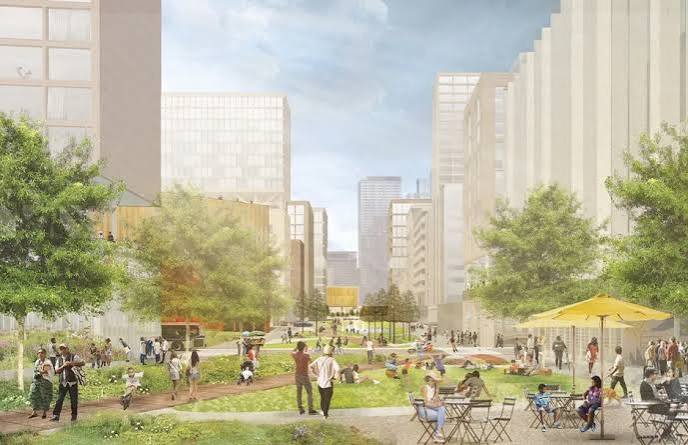
A proposal to transform Sunnyside Yard in Queens into a new neighborhood moved into a new phase this week as President Donald Trump and New York City Mayor Zohran Mamdani agreed to deepen federal and city discussions over a plan seeking more than $21 billion in federal grants.
The two leaders met at Gracie Mansion on September 21, with housing emerging as a central part of their discussions. After the meeting, Mamdani said City Hall and the White House would establish a more technical level of coordination between their housing and operations teams.
The discussions focus on a proposal that could place 12,000 new homes above the active rail yard, including 6,000 Mitchell-Lama-style affordable homes, alongside parks, schools, health care facilities and other community infrastructure. The broader concept could also support about 30,000 jobs.
The project remains far from construction, however. No federal funding commitment has been announced, and major engineering, regulatory and financing issues still need to be resolved.
A new neighborhood above an active rail yard
Sunnyside Yard is not an undeveloped parcel waiting for construction. It is an active rail complex in western Queens that supports Amtrak, MTA and NJ Transit operations.
The site covers roughly 180 acres and has long been identified as one of New York City’s major opportunities for large-scale development because of its location and limited availability of vacant land. A 2017 city feasibility study examined how a new neighborhood could be built over the rail infrastructure while allowing train operations to continue below.
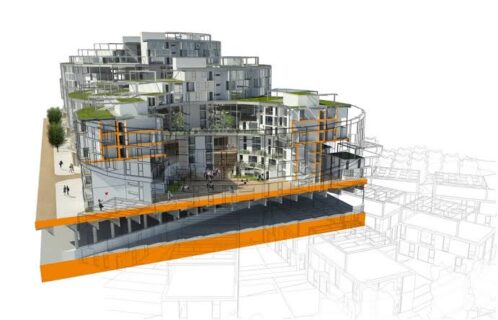
The basic engineering concept involves constructing a massive structural deck over portions of the rail yard. Buildings, streets, parks and community facilities could then be developed above the deck.
That approach would effectively create developable land without removing the rail infrastructure that already occupies the site.
The scale is significant. The current proposal calls for 12,000 homes, with half planned as affordable housing, including 6,000 Mitchell-Lama-style units. It also envisions parks, schools and health care facilities, as well as approximately 30,000 jobs.
NYCEDC’s earlier Sunnyside Yard master plan also identified affordable housing, public space, transportation, schools, jobs and community infrastructure as major components of a future neighborhood.
Why the proposal needs federal involvement
The biggest challenge is not simply constructing apartments. The project would require major infrastructure work over an operating rail facility, creating a complicated intersection between housing development, transportation infrastructure and federal regulation.
Mamdani first formally presented the federal funding proposal to Trump in February, seeking more than $21 billion in federal grants to build the deck and support the development. City Hall described the proposal as potentially the largest housing and infrastructure investment in New York City in more than 50 years if realized.
Trump acknowledged the federal role during Monday’s meeting.
“Sunnyside’s a big job,” Trump said, adding that the project would require significant federal approvals and “probably some federal money.”
But the meeting did not result in a commitment of federal dollars.
Instead, the immediate outcome was an agreement to move the discussions into more detailed technical work involving City Hall and White House teams. Those discussions are expected to address the approvals, financing structure and other requirements needed to determine whether the proposal can advance.
The engineering challenge behind the proposal
The central construction challenge is the platform itself.
Sunnyside Yard remains an active transportation facility, meaning a future development cannot simply cover the tracks and begin building. The deck would need to accommodate the existing rail infrastructure while creating a foundation capable of supporting a new urban neighborhood above it.
That makes the project fundamentally different from a conventional residential development.
The city’s earlier feasibility work examined the technical and financial implications of decking over the yard, including the need to maintain rail operations while construction takes place. The 2017 study identified Sunnyside Yard as a 180-acre site serving essential rail operations for Amtrak, the MTA and NJ Transit.
The timing is also significant because rail investment is already taking place at Sunnyside Yard.
Amtrak began major construction in August 2026 on a new maintenance facility at the yard, part of a more than $1 billion investment that includes a two-track maintenance and inspection facility, six service and cleaning tracks and other improvements. The work is scheduled to open in phases through 2030.
That ongoing rail modernization adds another layer of coordination to any future overbuild project.
From decades-old vision to renewed federal talks
The idea of developing above Sunnyside Yard is not new.
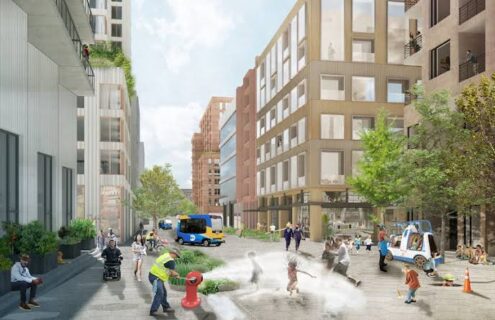
New York City has studied the concept for years, including a formal feasibility study released in 2017 and a broader master planning process that produced a Sunnyside Yard Master Plan in 2020.
The long-running proposal has repeatedly faced the same fundamental obstacles: the cost of building over active rail infrastructure, the complexity of coordinating multiple transportation agencies and the difficulty of assembling a financing structure large enough to support the infrastructure.
Mamdani revived the proposal as part of his push to expand affordable housing and secure federal support for major housing infrastructure.
In July, he described Sunnyside Yard as a long-term effort because of the scale of investment and commitment required, while saying the site could deliver more than 10,000 homes and more than 30,000 jobs.
The latest meeting with Trump therefore does not represent the beginning of the Sunnyside Yard concept. It represents another attempt to solve the financial and regulatory problems that have prevented the concept from reaching construction.
Additionally, the renewed push for Sunnyside Yard comes as another major Queens housing redevelopment moves from plans into a new neighborhood. At Willets Point, the first 880 affordable homes are now complete and residents have begun moving in, while construction continues on additional housing and other components of the 2,500-home development. The project also includes a public school, open space, a hotel and a new soccer stadium, offering a look at the scale of neighborhood transformation already underway elsewhere in Queens.
Trump and Mamdani find common ground
The political dimension has nevertheless given the project new attention.
Trump and Mamdani occupy very different positions in national politics, but the Sunnyside Yard proposal has become an area where their administrations can pursue a shared objective: expanding housing in New York City.
Trump has also maintained a personal connection to Queens and said he has watched efforts to develop Sunnyside Yard for decades.
At Gracie Mansion, he described the proposal as a “big job” and said the location had long been viewed as a strong development opportunity. Mamdani, meanwhile, has emphasized that he is prepared to work with the federal government to secure resources for New Yorkers.
Their latest meeting was the third in-person encounter between the two since Mamdani’s election. Despite their disagreements on other issues, housing has remained one of the areas where the two administrations have continued discussions.
That political relationship could matter because Sunnyside Yard requires something few conventional housing projects need: sustained cooperation between city and federal authorities over a project that could take years to design, finance and build.
What happens next
The immediate next step is technical coordination rather than construction.
City Hall and White House teams will need to determine what federal approvals are required, how the proposed deck could be financed and how the project could be delivered without disrupting the rail operations beneath it.
The financing question remains particularly important. The city has requested more than $21 billion in federal grants, but Trump has not committed that money. The eventual funding structure could also involve city resources, financing mechanisms and private-sector participation, although no final structure has been announced.
For now, Sunnyside Yard remains a proposal rather than an active housing construction project.
But the latest agreement has moved the long-discussed Queens development back into high-level federal and city negotiations.
If the financing, approvals and engineering challenges can eventually be resolved, the project could turn one of New York City’s busiest rail yards into the foundation for an entirely new neighborhood — adding thousands of homes without eliminating the transportation infrastructure already operating beneath the site.
Project factsheet: Sunnyside Yard housing project
- Location: Queens, New York City
- Site: Approximately 180-acre active rail yard
- Proposed housing: 12,000 homes
- Affordable housing: 12,000 proposed affordable homes under the current federal proposal, including 6,000 Mitchell-Lama-style units
- Jobs: About 30,000 proposed jobs
- Major infrastructure: Large structural deck over portions of the active rail yard
- Additional development: Parks, schools, health care facilities and other community amenities
- Federal funding request: More than $21 billion in federal grants
- Current status: Federal and city technical discussions; no federal funding commitment announced
- Background: NYC has studied development over Sunnyside Yard for more than a decade
- Rail operations: Amtrak, MTA and NJ Transit use the yard
- Related current work: Amtrak is constructing a major maintenance facility at Sunnyside Yard, with phased openings through 2030

Leave a Reply