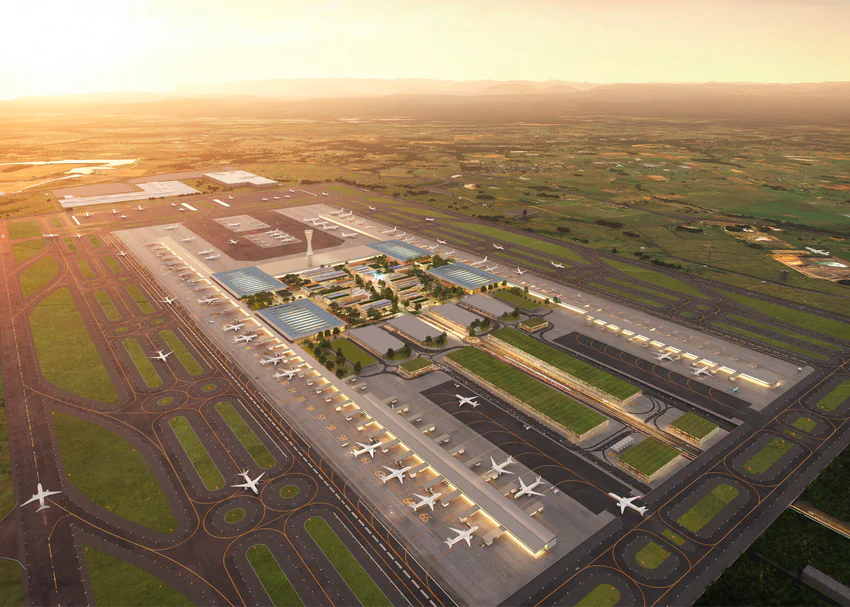
Sydney Airport has appointed Multiplex to provide construction planning and delivery expertise as it develops the Major Development Plan for its T2-T3 terminal project, the airport confirmed on August 20, 2026. The project will merge the T2 and T3 domestic terminals into a single precinct with up to 12 new international capable “swing gates,” forming the centerpiece of the airport’s A$6 billion five year capital works programme.
Filling Out a Design Team Already in Place
Multiplex’s appointment follows Sydney Airport’s earlier selection of Grimshaw as lead architect and Mott MacDonald as engineer for the T2-T3 project, bringing a construction delivery partner into a design process that was already underway. Sydney Airport Group’s executive for planning and delivery, Paul Willis, called it “a highly complex project in the heart of a live airport precinct,” and said early collaboration between the airport, its designers, and Multiplex would help test how the project can be staged and built safely without disrupting passengers, airlines, or day to day operations. Multiplex’s regional managing director, David Ghannoum, said the company was “pleased to contribute our expertise to a project that will support the future of Australia’s international gateway.”
Merging Two Terminals Into One Flexible Precinct
The project’s core move is structural: joining the T2 terminal, currently home to Virgin Australia, Jetstar and other regional carriers, with the T3 Qantas domestic terminal into a single U shaped precinct stretching from the rotunda at the end of T3 along a new western concourse to T2. Up to 12 of the new gates in that precinct will be “swing gates,” able to switch between domestic and international operations depending on demand, with two further international gates added separately at the T1 international terminal.
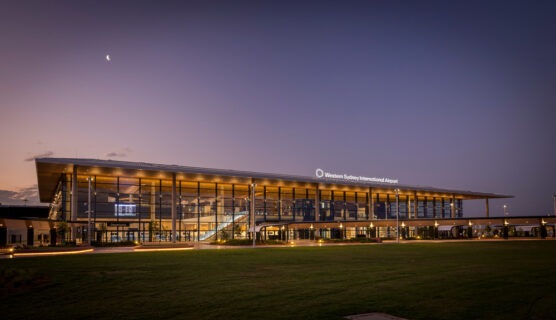
That flexible gate design deliberately mirrors the model just delivered at Western Sydney International, known as Nancy-Bird Walton Airport, where Multiplex also served as builder alongside design team Woods Bagot, Zaha Hadid Architects and COX Architecture. Construction there wrapped in late 2025 ahead of the airport’s planned opening in late 2026, giving Sydney’s aviation market its first working example of an integrated domestic and international terminal before Sydney Airport’s own swing gates are built.
A Longer Runway Than the Announcement Suggests
The T2-T3 project sits inside Sydney Airport’s Master Plan 2045, released as a draft in September 2025, which forecasts passenger volumes growing 75 percent to 72.6 million a year by 2045, up from 41.4 million in 2024, alongside airfreight volumes more than doubling to 1.4 million tonnes annually. Airport officials have said the wider plan could support more than 105,000 jobs and contribute roughly $70 billion a year to the economy through trade, freight and tourism.
Multiplex’s construction planning work begins well ahead of any groundbreaking. Industry reporting on the master plan has indicated staged construction is expected to begin from 2028, with the first combined domestic and international swing gates targeted for delivery in the early 2030s, meaning the current phase is about sequencing a build inside a fully operational airport rather than starting physical works.
How Sydney’s Bet Compares to Melbourne’s
Sydney is not the only major Australian gateway rebuilding its domestic-international split. Melbourne Airport has locked in Qantas backing for its own $4.5 billion terminal program, which includes an International Business Lounge built above Terminal 2 that Qantas expects to complete by 2029. Both projects are chasing the same underlying pressure, forecast passenger growth that existing single-mode terminals cannot absorb, but Sydney’s approach leans on merging and repurposing existing terminal buildings through swing gates, while Melbourne’s plan adds dedicated new premium space alongside its existing footprint.
Part of a Broader NSW Infrastructure Push
Sydney Airport’s terminal ambitions are unfolding alongside major transport investment elsewhere in New South Wales. ACCIONA’s $4.24 billion contract for stage two of the Western Harbour Tunnel, the roughly 8.5 kilometer road link connecting WestConnex at Rozelle with the Warringah Freeway, is being built in parallel with the airport’s own capital programme, underscoring how Sydney’s growth pressures are being addressed on the ground and in the air at the same time, even though the two projects have separate owners, financing structures and delivery teams.
What Happens Next
Sydney Airport has not yet said when the Major Development Plan for T2-T3 will be lodged with the Australian Government for approval, a step that typically precedes any construction contract award. Until that plan is submitted and approved, Multiplex’s current role remains advisory, helping shape how a 12 gate terminal merger can be sequenced inside one of Australia’s busiest live airport precincts.
Project Fact Sheet
- Project Name: Sydney Airport T2-T3 Terminal Redevelopment
- Location: Sydney Airport (SYD), Mascot, New South Wales, Australia
- Project Value: Part of Sydney Airport’s A$6 billion five year capital works programme
- Client/Owner: Sydney Airport
- Construction Delivery Partner: Multiplex
- Architect: Grimshaw
- Engineer: Mott MacDonald
- Key Components: Merger of T2 and T3 domestic terminals into a single precinct; up to 12 new domestic/international “swing gates”; two additional international gates at T1; improved inter-terminal connectivity
- Wider Context: Part of Sydney Airport’s draft Master Plan 2045, targeting capacity for 72.6 million passengers annually by 2045
- Construction Start: Staged construction expected from 2028, per industry reporting
- Expected Milestone: First combined domestic/international swing gates targeted for the early 2030s
Project Team
- Client/Owner: Sydney Airport
- Construction Planning and Delivery: Multiplex
- Architect: Grimshaw
- Engineer: Mott MacDonald


Leave a Reply