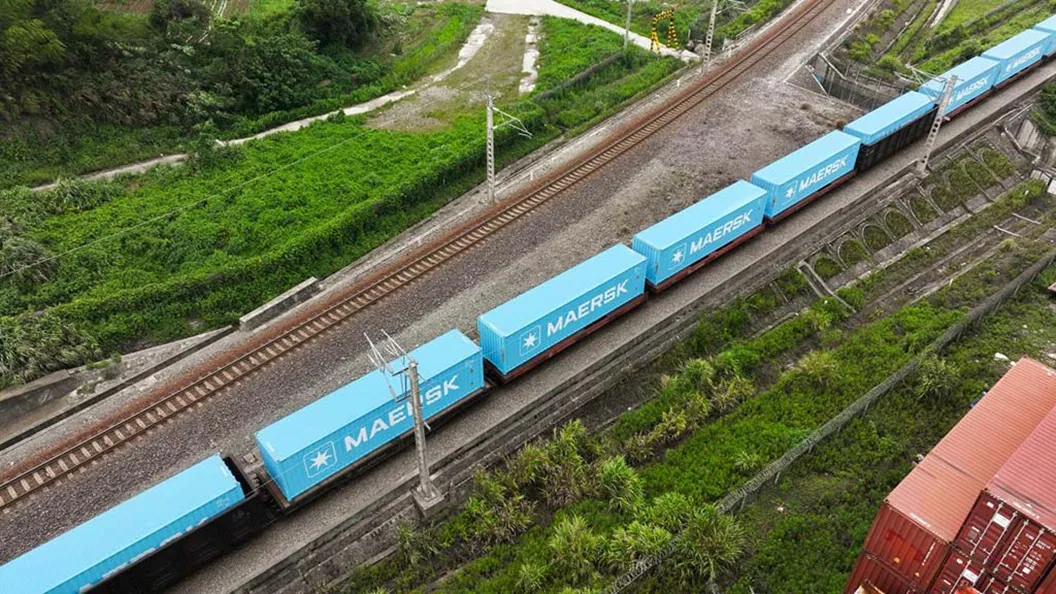
A.P. Moller-Maersk has made Tanger Med its primary Moroccan gateway, routing cargo bound for Casablanca onto a dedicated rail corridor rather than direct sea calls. The shift, fully operational since August 2026, responds to chronic congestion at Casablanca, which handled 17 million tons of cargo in the first half of the year. It also leans on rail capacity that Morocco’s national operator ONCF is expanding under a roughly $10 billion modernization program.
Casablanca’s Congestion Forces a Rethink
Casablanca handles about 35 percent of Morocco’s total port traffic, and that share is straining under rising volumes. The National Ports Agency recorded 3.53 million tons moving through the port in June alone, a 32 percent jump from the same month in 2025, with imports accounting for roughly three quarters of first half traffic. Maersk had already introduced a Congestion Fee Destination surcharge on Casablanca bound shipments earlier this year in response to the backlog.
Rather than simply pricing around the congestion, Maersk restructured its Moroccan routing. Containers now arrive by sea at Tanger Med, then travel approximately 500 kilometers by rail to Casablanca on a corridor operated by ONCF, according to reporting from 7News Morocco. The service bundles customs clearance, inland storage and last mile truck delivery into a single offering, and Maersk removed a 1,400 dirham peak season inland surcharge on the route on June 10. Ruben Moratinos, the company’s Head of Sales Maghreb, said the model addresses a recurring customer complaint about moving cargo into Morocco’s commercial center, though he did not specify cargo volumes expected to shift onto the corridor.
A Freight Corridor Riding on Passenger Rail Investment
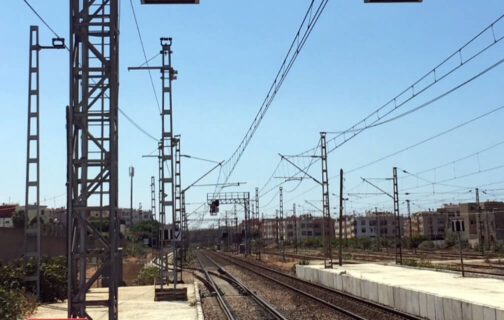
Maersk’s routing choice is only viable because of infrastructure Morocco was already building for other reasons. ONCF’s Rail 2040 plan, worth roughly 96 billion dirhams, or nearly $10 billion, includes dedicated freight tracks along the Atlantic corridor alongside its better known passenger investments. The centerpiece of that program, the $445 million contract awarded to French firm Colas for civil works and track systems on the Kenitra to Marrakech extension, was originally framed around passenger speed rather than freight capacity. The Kenitra-Marrakech project has since grown into a $10.3 billion undertaking that King Mohammed VI formally initialed earlier this year, extending Morocco’s existing Tangier to Kenitra high speed line another 430 kilometers south.
Freight is becoming an explicit part of that financing picture. The African Development Bank approved a €205 million loan on July 8, 2026 for a project known by its French acronym PADIF, targeting track components and switches along the Kenitra-Marrakech corridor and around the Casablanca rail hub specifically to accommodate growing freight traffic alongside passengers, according to the Bank’s Morocco country office. That loan sits on top of a €365 million European Investment Bank package signed in Rabat in late June, part of which funds ONCF rehabilitation work separate from the high speed build.
How the Corridor Compares to Morocco’s Other Bottleneck Fixes
Morocco is pursuing more than one route out of the Casablanca congestion problem. On the maritime side, the $2.1 billion Marsa Maroc port investment program approved in March 2026 funds upgrades directly at Casablanca and Jorf Lasfar alongside a new container terminal at Nador West Med, the roughly $5.6 billion transshipment port on the Mediterranean coast expected to begin operating in the fourth quarter of 2026 with initial capacity of up to 5 million TEU, rising toward 12 million. Where Nador West Med and the Marsa Maroc program add physical port capacity, Maersk’s rail corridor instead reroutes existing volume onto inland infrastructure that already had to be built for the high speed line, a cheaper and faster fix that does not require new berths or dredging.
The tradeoff is capacity ownership. Nador West Med and the Casablanca upgrades expand Morocco’s own port infrastructure regardless of which carrier uses it, while the Tanger Med to Casablanca rail service is currently a Maersk specific commercial arrangement running on ONCF track. Other ocean carriers facing the same Casablanca delays have not yet announced equivalent rail based routing, though the underlying freight capacity ONCF is building is not exclusive to any single shipping line.
What to Watch as the Corridor Matures
The African Development Bank’s own framing of the freight investment suggests the metric that will determine whether this shift proves durable: not journey times between Tangier and Marrakech, but the number of freight paths the corridor can sustain once passenger high speed services ramp up on the same tracks. ONCF has not published a freight capacity figure for the Tanger Med to Casablanca segment specifically, and neither ONCF nor Maersk has disclosed how much of Casablanca’s import volume the rail corridor is expected to absorb.
Nador West Med’s fourth quarter opening will offer a natural test of whether Morocco’s ports themselves, rather than rail workarounds, become the primary release valve for Casablanca’s congestion. Until then, the rail corridor gives Maersk a way to keep cargo moving without waiting on port capacity that will not exist for several more months.
Corridor at a Glance
- Service Name: Tanger Med to Casablanca rail corridor (Maersk)
- Location: Tanger Med port to Casablanca, Morocco, approximately 500 kilometers by rail
- Operator: A.P. Moller-Maersk, in partnership with ONCF
- Key Components: Ocean leg into Tanger Med; dedicated high frequency rail connection to Casablanca; customs clearance; inland storage; last mile truck delivery
- Rail Infrastructure Owner: Office National des Chemins de Fer (ONCF)
- Related Investment Program: ONCF’s approximately $10 billion (96 billion dirham) Rail 2040 plan, including dedicated freight tracks along the Atlantic corridor
- Related Financing: African Development Bank €205 million PADIF loan, approved July 8, 2026, for the Kenitra-Marrakech corridor and Casablanca rail hub
- Launch: Fully operational August 2026; inland peak season surcharge removed June 10, 2026
- Casablanca Port Traffic: 17 million tons handled in the first half of 2026, up 7 percent year on year, per Morocco’s National Ports Agency (ANP)
Key Players
- Ocean and Logistics Operator: A.P. Moller-Maersk
- Rail Operator: Office National des Chemins de Fer (ONCF)
- Regional Sales Lead: Ruben Moratinos, Head of Sales Maghreb, Maersk




Leave a Reply