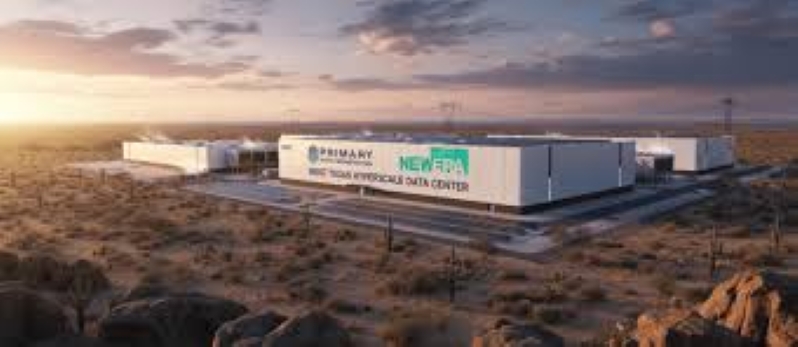
Texas Critical Data Centers (TCDC): Project Fact Sheet
LocationEctor County, Texas, USA
Site size438 acres; additional 54-acre expansion in consideration
Total capacityMore than 1 GW
Phase 1200 MW
Phase 2450 MW
Primary useAI & high-performance computing data center campus
Power strategyHybrid grid and behind-the-meter generation
Delivery timelineInitial construction expected from 2026
Development structureJoint venture between New Era, Stream, and an unnamed institutional investor
Who is Behind the Development of TCDC Campus?
Developers
- New Era Energy & Digital
- Stream Data Centers
Advisors
- OG Advisory Group
Outlook on New Era Energy and Stream Data Centers’ Development in West Texas
TCDC is emerging as a example of how data center development is evolving in the AI era toward energy-integrated, hyperscale-ready campuses capable of delivering gigawatt-scale capacity. Its location in the Permian Basin also offers a unique competitive advantage. This is in the sense that, TCDC campus is close to abundant West Texas energy resources combined with favorable permitting conditions and land availability.
As hyperscalers race to deploy AI infrastructure globally, projects like TCDC could become templates for future developments, particularly in energy-rich regions where speed-to-power is critical. When construction is complete, the campus could anchor West Texas as a major U.S. data center hub, complementing established markets such as Northern Virginia and Dallas.
What to Look Out for Ahead of Construction Start this Year
Despite its strong positioning, the project still faces several key risks. First, the non-binding nature of the current agreement means execution depends on reaching definitive agreements and securing full financing. Second, large-scale data center developments are highly sensitive to power infrastructure timelines, supply chain constraints, and construction costs. These have substantial ability to affect TCDC campus’ development timeline.
Additionally, while the behind-the-meter power strategy offers resilience, it also introduces regulatory and environmental considerations, particularly around gas-fired generation. Finally, market competition remains intense, with multiple developers racing to deliver AI-ready capacity across the U.S.




Leave a Reply