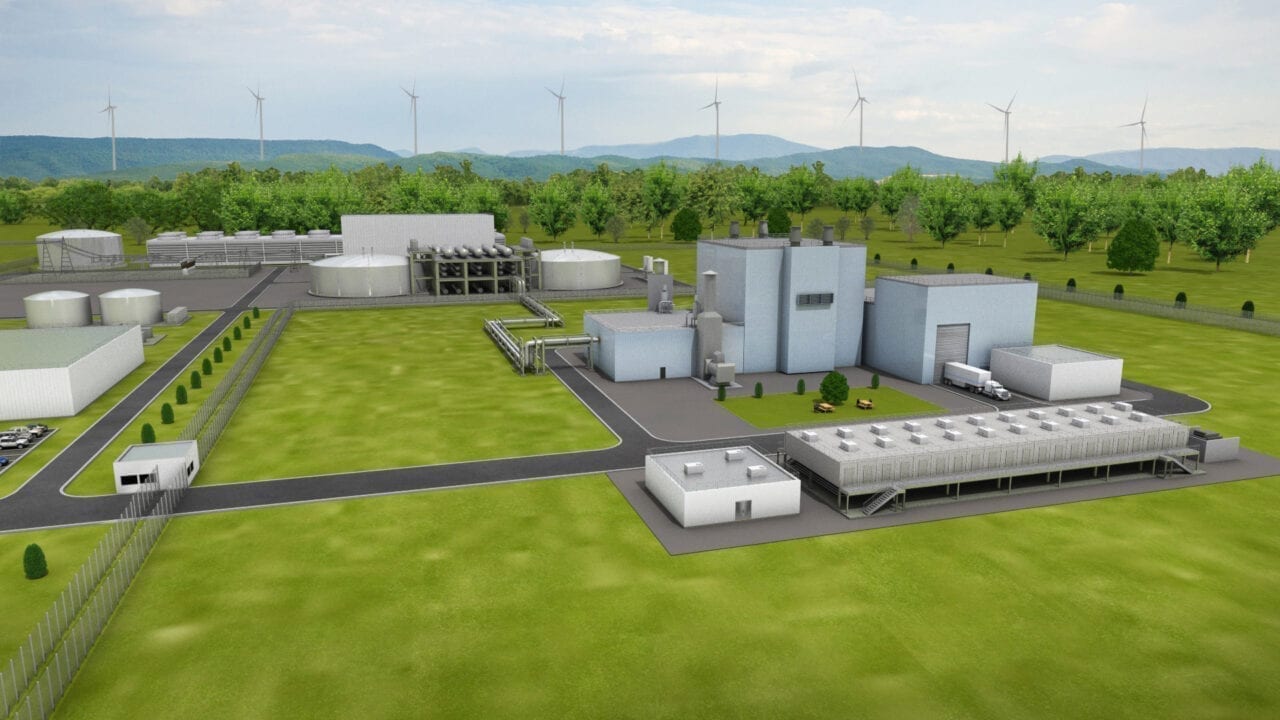
TerraPower’s unveiling of its first dedicated data center nuclear reactor deal, setting up a groundbreaking for its second Natrium facility in 2027, serves as a pivotal catalyst for the broader nuclear power renaissance in the United States. By pairing a 345-megawatt sodium-cooled fast reactor with an integrated molten-salt energy storage system, TerraPower delivers a technological solution tailored to artificial intelligence and hyperscale computing. Unlike traditional nuclear plants that operate at a rigid, continuous output, the Natrium design uses its thermal storage “battery” to boost electrical generation up to 500 megawatts during peak compute surges without altering the core nuclear reaction. This inherent flexibility directly resolves the operational challenge of matching firm, zero-carbon baseload power with the volatile, high-density energy demands of modern AI data center workloads.
Beyond technological innovation, TerraPower’s move marks a critical transition for American nuclear power from custom, one-off utility mega-projects to commercialized, repeatable Small Modular Reactor (SMR) deployments. Backed by private tech capital and strategic construction partnerships with firms like Hyundai Engineering & Construction, TerraPower aims to turn its Natrium architecture into a standardized fleet, accelerating regulatory approval pathways and driving down capital expenditures through mass production. By demonstrating that advanced nuclear reactors can bypass transmission bottlenecks and provide scalable, on-site energy directly to hyperscale tech operators, TerraPower establishes a viable economic model that is attracting billions in private investment, positioning advanced atomic energy as the foundational backbone of America’s next-generation digital and energy infrastructure.
August 22, 2026
TerraPower’s early purpose was to serve utilities. However, currently data centers offer a new avenue for growth. The emergence of power-hungry AI applications, as well as industrial facilities such as semiconductor plants that are now exploring on-site generation, creates a new market for developers of small reactors. During an interview that was held on Tuesday, TerraPower’s CEO Chris Levesque stated that TerraPower will unveil its next project that is designed for a data center before the end of the year. However, he did not mention the customer. This timeline would put the company on track to start construction on its second unit in 2027.
TerraPower is building the only utility-scale nuclear power plant.
Capacity of TerraPower’s Natrium Reactor
Additionally, the Natrium reactor, designed by TerraPower, delivers 345 megawatts. This is far less than the typical 1-gigawatt output of conventional nuclear reactors.
In the previous week, TerraPower and several South Korean partners signed agreements backing the technology’s rollout, including Hyundai Engineering and Construction, which agreed to construct up to eight units. These contracts cover up to eight Natrium reactors.
Moreover, the small modular reactors are designed to generate electricity on a smaller scale than traditional nuclear plants. This feature allows them to be established closer to customers and developed in phases. The Natrium design’s 345-megawatt output is well suited to a single large data center or an industrial campus. As for the Hyundai agreement, it is meant to help turn that design into a repeatable construction process.
TerraPower’s collaboration with Hyundai Engineering and Construction is intended to standardize the building process. This will potentially allow multiple units to be erected in sequence. Furthermore, this approach could help address the growing electricity demand from data centers without the need for extensive new transmission infrastructure.
The 2027 target for the second unit suggests the company is confident in its supply chain. Also, it shows the company’s confidence in its ability to repeat the construction process quickly.
Advantages of Small Modular Reactors (SMRs)
Small modular reactors are being built as a faster, more flexible option to traditional nuclear plants. Their smaller size means they can be constructed closer to demand and financed in smaller steps. Also, their small size means they can be paired with renewable energy or placed near industrial sites.
TerraPower’s decision to target data centers shows how reactor developers are responding to a market where large technology companies are in need of reliable, carbon-free power without waiting for new transmission lines.
Growth of AI Infrastructure Accelerates the Need for Reliable Power and How SMRs Offer Best Solution
As power-hungry AI applications continue to grow, the demand for reliable, carbon-free baseload power intensifies on the other hand. Data center operators, such as Amazon face long connection queues and are increasingly seeking on-site generation to guarantee uptime. Small modular reactors like the Natrium design offer a scalable solution that can be paired with renewable sources or deployed near industrial clusters. TerraPower’s pivot to data centers reflects this broader market shift. Also, its partnership with Hyundai Engineering and Construction signals an ambition to construct multiple units in rapid succession, leveraging existing construction expertise to bring the technology to scale.
Terrapower Data Center Nuclear Reactors Deal: Factsheet
Developer / Designer: TerraPower (founded by Bill Gates) in partnership with GE Hitachi Nuclear Energy
Primary EPC Partner: Hyundai Engineering & Construction (construction agreement for up to 8 units)
Flagship Demonstration Site: Kemmerer, Wyoming (Kemmerer Unit 1)
Target Markets: Utility grids, hyperscale AI data centers, and heavy industrial/semiconductor campuses
Operational Lifespan: Up to 80 years
Technical and Performance Specifications
- Reactor Type: Sodium-Cooled Fast Reactor (SFR)
- Baseload Capacity: 345 MWe continuous electrical output (840 MWt thermal output)
- Peak Power Capacity: Up to 500 MWe (via integrated molten salt storage)
- Energy Storage Capacity: Integrated molten salt system delivering 500 MWe for 5.5+ hours
- Ramp Rate: 10% capacity change per minute
- Primary Coolant: Liquid Sodium (operates at low/atmospheric pressure)
- Fuel Source: HALEU (High-Assay Low-Enriched Uranium)
- Operating Temperature: 500°C (enables direct industrial steam/heat generation)
Key Design and Economic Advantages
- Built-In Gigawatt-Scale Storage: Unlike conventional light water reactors, the Natrium plant runs at 100% constant reactor output, routing excess heat to molten salt tanks to ramp electricity up or down as demand/renewables dictate.
- Simplified Safety and Lower Footprint: Uses passive safety mechanisms (gravity-driven control rods and natural air convection cooling). Eliminates high-pressure pumps and heavy containment structures, using 50% less nuclear-grade concrete and steel than legacy reactors.
- Separated Architecture: The facility decouples the “Nuclear Island” from the “Energy Island,” reducing the proportion of the plant subject to strict nuclear-grade construction controls.
- Rapid Deployment Timeline: Standardized modular design targets a 36-month construction duration from nuclear concrete pour to fuel loading.
Project Team
Core Developer and Engineering/Construction (EPC)
- TerraPower: Core technology developer and project owner (founded by Bill Gates).
- GE Hitachi Nuclear Energy: Primary co-developer of the Natrium reactor design.
- Hyundai Engineering & Construction (HDEC): International construction partner for standardized, repeatable global building rollouts (including target data center units).
- Bechtel: Primary Engineering, Procurement, and Construction (EPC) partner leading site preparation and building execution for the flagship plant in Kemmerer, Wyoming.
- KBR: Professional services and engineering partner supporting long-term commercialization and deployment.
Utility and Off-Take Partners
- PacifiCorp (Rocky Mountain Power): Utility partner hosting the flagship demonstration unit on a retiring coal site in Wyoming.
- Energy Northwest & Duke Energy: Industry consortium partners supporting technology development and future potential deployments.
Key Equipment Manufacturers & Technical Suppliers
- Doosan Enerbility (South Korea): Manufacturing partner for major reactor internal components, including the reactor core barrel and guard vessel.
- HD Hyundai (South Korea): Manufacturing partner contracted for the reactor vessel.
- Equipos Nucleares S.A. (ENSA, Spain): Specialized nuclear components supplier manufacturing the reactor head.
- BWXT Canada, Ltd.: Designer and fabricator of the Intermediate Heat Exchanger (IHX) system.
- Curtiss-Wright (Nuclear Division): Lead developer of the digital Reactor Protection System (RPS).
- Western Service Corporation (WSC): Developer of the high-fidelity Natrium engineering simulator.
- James Fisher Technologies: Provider of the injection casting furnace system used in fuel testing laboratories.
Fuel Supply Chain
- Centrus Energy: Primary fuel processing partner working to establish domestic U.S. supply of High-Assay Low-Enriched Uranium (HALEU).


Leave a Reply