Tesla, Inc. has filed an application with Lamar Consolidated Independent School District (Lamar CISD) requesting a decade-long property tax limitation for a proposed $10.1 billion solar cell manufacturing facility in Fort Bend County, Texas. The filing, submitted July 22, 2026, under the state’s Jobs, Energy, Technology & Innovation Act (JETI), does not commit Tesla to building the plant — the company says it is still weighing the Texas site against a competing location in another state and that the Fort Bend site is not economically competitive without incentive support.
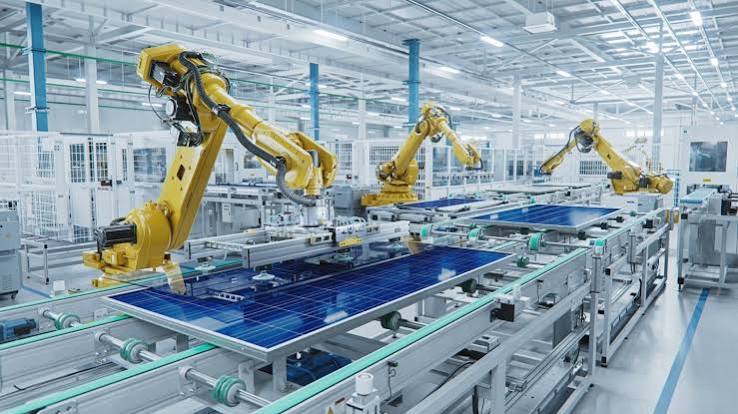
If approved and built, the proposed facility, identified as “Project Crystal Sun” in supporting documents, would manufacture photovoltaic solar cells and/or assembled solar modules for utility-scale, commercial, and distributed solar installations.
Project Details and Location
The proposed site is within Lamar CISD’s jurisdiction along FM 762 and FM 1994 near Richmond, Texas. Tesla’s application identifies portions of five parcels covering roughly 3,000 acres in total, although the project would not necessarily occupy every acre of those parcels. The property is identified for manufacturing activity under NAICS code 334413.
- Applicant: Tesla, Inc.; company address listed as 1 Tesla Rd., Austin, Texas
- Affiliated district: Lamar Consolidated ISD, Fort Bend County
- Proposed investment: ~$10.1 billion total, including approximately $1.5 billion in real property and $8.6 billion in personal property
- Permanent jobs projected: 9,712 at full operations
- Peak construction jobs: ~1,147
- Construction window: 2026–2028
- Targeted commercial operation: First quarter of 2029
- Incentive requested: 10-year limitation on the taxable value of new eligible property under Texas’ Jobs, Energy, Technology & Innovation Act (JETI)
- Application prepared by: Kroll Tax Services on behalf of Tesla
The application contemplates production equipment and supporting infrastructure associated with solar manufacturing, including wafer and ingot manufacturing equipment, coating and metallization lines, cell testing and quality-control systems, cleanroom infrastructure, chemical storage, and utility and safety systems. The proposed facility would include industrial buildings, production lines, supporting utilities, warehousing for raw materials and finished products, and related site improvements.
Tesla’s application estimates that the project would require approximately $10.1 billion in capital investment, with about $1.5 billion directed toward real property and $8.6 billion toward personal property. The investment is projected to occur primarily during 2026–2028, with no additional capital investment currently projected during the incentive or post-incentive periods.
Existing property within the proposed project area is not necessarily part of Tesla’s investment. The application identifies existing land and improvements separately from the new eligible property that would be subject to the requested JETI limitation.
Why Tesla Is Requesting the Incentive
Tesla’s application frames the JETI limitation as a “compelling factor” in an ongoing, multi-state site-selection process. The company says it is evaluating the Fort Bend County site against another potential location outside Texas and that, without incentive support, the Texas site’s economics would not be competitive with the alternative.
Tesla is seeking a 10-year limitation on the taxable value of new eligible property, rather than a $10.1 billion tax exemption. The requested limitation would apply during the incentive period, which the application identifies as 2029 through 2038.
The application also identifies additional local and state actions associated with the proposed project. Tesla’s JETI filing seeks coordination and support involving the Texas Comptroller of Public Accounts and the Office of the Governor, while the Fort Bend County site would be accommodated by a proposed reinvestment zone to be established by the Fort Bend County Commissioners Court if the project moves forward.
Tesla’s application does not commit the company to building the facility in Fort Bend County. The company says the site remains under consideration and that the requested incentive would help make the Texas location economically competitive in the ongoing site-selection process.
Projected Economic Impact
Kroll’s economic benefit statement estimates the project’s fiscal and economic effects over a 38-year period, covering the construction period, the 10-year incentive term, and 25 years following the end of the incentive period.
- Permanent jobs: 9,712 at full operations
- Peak construction jobs: ~1,147
- Estimated annual payroll: ~$1.3 billion at full operations
- Total capital investment: ~$10.1 billion
- Average estimated valuation of new property: ~$1.8 billion over the 38-year analysis
- Estimated ad valorem property taxes without incentives: ~$1.1 billion across all taxing jurisdictions
- Estimated direct state tax revenue: ~$2.2 billion
- Estimated total direct state and local tax revenue: ~$4.0 billion
- Estimated total direct and indirect state and local tax impact: ~$6.4 billion
- Estimated statewide GDP increase: ~$107 billion
- Estimated statewide earnings increase: ~$68 billion
- Average permanent jobs supported by local businesses: ~13,028
- Estimated local business expenditures: ~$1.1 billion
Kroll’s analysis treats these figures as estimates based on economic modeling, regional conditions, wages, spending patterns, and tax assumptions. The analysis also estimates that the project would generate approximately $2.3 billion in state and local taxes through indirect economic activity.
Kroll notes that the analysis does not include speculative revenue sources such as tourism and hotel-stay taxes where sufficiently reliable metrics were not available.
What Happens Next
Tesla’s application has been submitted to Lamar CISD as part of the JETI process, but approval is not guaranteed and the application does not constitute a final commitment to construct the facility.
If the project advances, the proposed Fort Bend County site would be accommodated by a reinvestment zone to be established by the Fort Bend County Commissioners Court under Texas Tax Code Section 312.201. The application also calls for coordination with the Texas Comptroller and the Office of the Governor as Tesla pursues the requested JETI taxable-value limitation.
Tesla’s proposed investment and employment figures substantially exceed the statutory JETI thresholds cited in the application. The project would involve approximately $10.1 billion in capital investment and 9,712 permanent jobs, compared with the minimum qualifying thresholds of $200 million in investment and 75 new jobs.
However, Tesla has not finalized the Fort Bend County site. The company says it continues to evaluate an alternative location in another state and that incentive support is an important factor in determining whether the Texas site remains economically competitive.
Tesla’s filing adds to a broader wave of new U.S. solar cell manufacturing capacity coming online. Suniva is separately developing a 4.5-GW solar cell facility in South Carolina. Targeting completion by the second quarter of 2027 — a smaller but faster-moving project that, alongside Tesla’s proposed Fort Bend County plant, points to renewed domestic investment in solar cell production as manufacturers look to reduce reliance on imported components.
Additionally, Tesla’s Fort Bend County project forms part of the company’s broader expansion of advanced manufacturing in Texas. Alongside SpaceX, Tesla is also pursuing Terafab, a planned 100-million-square-foot semiconductor manufacturing campus in Grimes County. On August 6, 2026, the companies confirmed an initial investment of more than $16.8 billion, while the broader multi-phase project could ultimately require up to $119 billion in investment.
Fast Facts: Tesla’s Fort Bend County JETI Application — Project Crystal Sun
- Company: Tesla, Inc.
- Company address listed in application: 1 Tesla Rd., Austin, TX
- Project name: “Project Crystal Sun”
- Proposed facility: Photovoltaic solar-cell and/or assembled solar-module manufacturing facility
- Location: Fort Bend County, Texas, within Lamar CISD, along FM 762 and FM 1994 near Richmond
- Site: Portions of five parcels totaling roughly 3,000 acres
- Total proposed investment: $10.1 billion
- Real property investment: $1.5 billion
- Personal property investment: $8.6 billion
- Application filed: July 22, 2026
- Application prepared by: Kroll Tax Services on behalf of Tesla
- Incentive requested: 10-year limitation on the taxable value of new eligible property under JETI
- Incentive period: 2029–2038
- Permanent jobs projected: 9,712
- Peak construction jobs: 1,147
- Estimated annual payroll at full operations: ~$1.3 billion
- Construction period: 2026–2028
- Targeted commercial operations: Q1 2029
- JETI minimum thresholds: $200 million investment / 75 new jobs
- Estimated ad valorem property taxes without incentives: $1.1 billion over the 38-year analysis
- Estimated direct state tax revenue: $2.2 billion
- Estimated total direct state and local tax revenue: $4.0 billion
- Estimated direct and indirect state and local tax impact: $6.4 billion
- Estimated statewide GDP increase: $107 billion
- Estimated statewide earnings increase: $68 billion
- Estimated jobs supported by local businesses: 13,028 on average
- Estimated local business expenditures: $1.1 billion
- Status: JETI application filed; Fort Bend County site selection remains under consideration

Leave a Reply