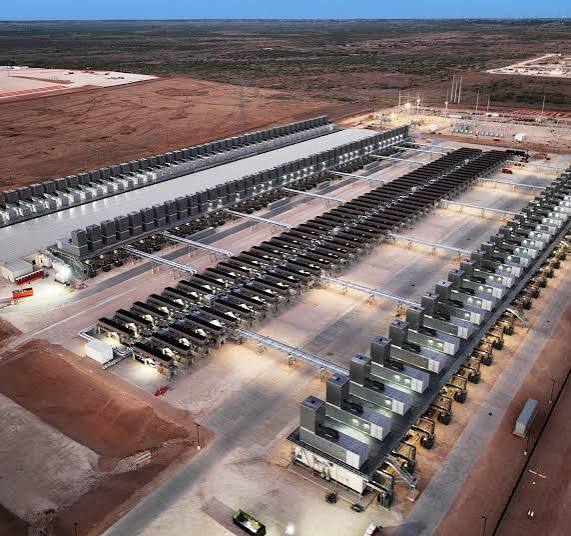
In Santa Teresa, New Mexico, one elected official has helped stall one of the largest computing projects ever proposed in the United States.
Stephanie Garcia Richard, the state land commissioner, twice refused to allow a natural-gas pipeline to cross state trust land, citing concerns over water use and emissions. The pipeline intended to supply Oracle’s Project Jupiter subsequently slipped from August to February.
In September, Oracle sent its financing partner a force majeure notice, a contractual step that could protect the company if the project fails to come online as planned in 2028.
The project is enormous: up to $165 billion in industrial revenue bonds, a 2.5-gigawatt campus, a fuel-cell microgrid and a promise of 7,000 construction jobs.
Yet the development has been held up by something far smaller than its headline numbers: a pipeline crossing and a state land decision. How is Project Jupiter Doing Still On Track or Derailed?
That is the scale of the problem the data center industry is now confronting.
At least $260 billion in data-center investment has been canceled this year after sustained local opposition, according to industry estimates. Roughly half of that amount was canceled in the three months ending September 30. More than 100 moratoriums are being considered across the country.
Public opinion is moving in the same direction. A Quinnipiac poll found that 71% of Americans would oppose a data center in their community, up from 65% in March. Goldman Sachs predicts that only 50% to 60% of planned data-center capacity will come online as expected over the next two years.
The precise figures may vary depending on how researchers define a canceled, delayed or speculative project. But the broader trend is difficult to ignore: the data-center boom is running into resistance from the communities and infrastructure systems it needs to expand.
The backlash is changing the politics
The opposition is also scrambling old political lines.
In Texas, Gov. Greg Abbott has paused new grid connections and ordered audits of data-center projects, while the state attorney general has opened an investigation into water use.
Texas Republicans, once among the industry’s most reliable allies, are now facing anger from rural voters concerned about noise, water consumption and electricity costs associated with large server campuses.
The opposition is no longer coming only from environmental groups or traditionally liberal communities. It is also emerging from conservative voters and officials questioning who should pay for the infrastructure required by some of the world’s largest technology companies.
The old description — NIMBYs versus technology — no longer captures the conflict.
The more accurate description may be technology versus technology, and technology versus itself.
The companies building the data centers are now spending heavily to defend them because local opposition has become a genuine business risk. Delays can threaten construction schedules, power contracts, financing arrangements and expected returns.
The industry’s response has therefore developed on three fronts: policy, lobbying and money.
The policy campaign
The first front is policy.
In March, Amazon, Google, Meta, Microsoft, OpenAI, Oracle and xAI gathered at the White House and signed the Ratepayer Protection Pledge.
The companies committed to building, bringing or buying the power their data centers need and paying for associated grid upgrades rather than passing those costs to households.
In July, the pledge expanded to more than 200 utilities, cooperatives and data-center firms covering roughly 80% of U.S. power delivery.
The pledge addresses one of the public’s most powerful concerns: that families and small businesses could end up paying for generation and transmission infrastructure built primarily to serve technology companies.
But a pledge is not automatically a law, tariff or enforceable regulatory order.
The critical questions are what happens when a project is delayed, sold, downsized or canceled, and how regulators determine which infrastructure costs the company should bear and which should remain with the public.
A company may pay for a substation built specifically for its facility while still benefiting from broader transmission upgrades that utility rates recover. Regulators will ultimately have to draw the line between private responsibility and public cost.
The lobbying campaign
The second front is lobbying.
On September 28, the American Infrastructure Alliance launched a partnership between labor and business focused on data centers.
OpenAI, Blackstone, QTS and SoftBank joined five building-trades unions, including electrical workers and plumbers, to develop state-level standards and guardrails ahead of the 2027 legislative sessions.
The alliance is targeting Texas, Georgia, Ohio, Iowa, Pennsylvania, Indiana and South Carolina.
The union component is deliberate. It allows the industry to present data centers not only as technology projects, but as major construction and infrastructure investments capable of creating skilled jobs.
The coalition’s argument is that states should establish standards rather than impose broad moratoriums. That position is likely to appeal to lawmakers who want investment and employment but are increasingly uneasy about unregulated growth.
It also raises a difficult question: if companies and their partners help shape the standards governing their expansion, who independently determines whether those standards adequately protect the public?
Industry participation can improve policymaking because companies understand the technical requirements of data centers. But the resulting standards must remain transparent, enforceable and open to independent review.
Otherwise, “guardrails” risk becoming less about protecting communities and more about making projects easier to approve.
The strategy is particularly significant in states such as Ohio, where coalition polling reportedly found that 67% of residents viewed data centers unfavorably. Opposition can soften when developers offer jobs, tax revenue and assurances about electricity costs.
The industry has understood that it must sell more than computing.
It must sell a local economic future.
The money campaign
The third front is money.
Amazon announced its Built Together program on October 2, promising more than $1 billion over five years for communities hosting its data centers.
The program includes community-college opportunities, job training, energy-efficiency improvements and other local investments. Amazon also promised to stop using nondisclosure agreements with local governments in its data-center dealings.
That change matters because secrecy has helped fuel distrust. Residents can become aware of data-center proposals only after developers and officials have already discussed land, electricity, tax incentives and infrastructure.
Meta has announced comparable community and workforce commitments, while Microsoft has moved away from using NDAs with local governments.
The AI Infrastructure Coalition, backed by Google, Meta and Microsoft, has also announced five community principles covering full energy costs, support for schools and hospitals, reduced water use and local hiring.
These are significant changes in tone.
But they do not settle the underlying disputes.
A community fund cannot answer whether electricity rates will rise. Job training does not establish how many permanent jobs a facility will create. Ending an NDA improves transparency, but transparency alone does not give residents the power to alter a project’s design.
The real test is whether these promises become obligations that can be measured and enforced over the life of a project.
Texas builds its own defense
In Texas, the response has taken a separate form.
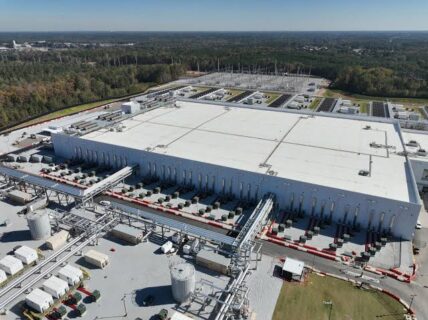
The Lone Star Infrastructure Coalition launched on October 1. Blackstone’s QTS, NextEra Energy, Siemens Energy, Quanta Services and the Nuclear Energy Institute are running an education campaign aimed at residents, mayors and county officials.
The coalition is making the case that data centers and related energy projects will bring jobs, investment and economic growth.
The distinction between the two alliances matters.
The American Infrastructure Alliance is a multistate policy and labor coalition seeking to influence state standards before the 2027 legislative sessions. The Lone Star Infrastructure Coalition is a Texas-focused public campaign seeking to influence local opinion during a period of growing political scrutiny.
Together, they show how the industry is responding at multiple levels: through national pledges, state lobbying, local outreach and direct community investment.

The accountability test
The irony is difficult to miss.
The same companies building the data centers are now spending heavily to defend them. The same unions that have traditionally challenged corporate power are now partnering with technology companies, private-equity firms and infrastructure developers. And the same rural voters who helped drive America’s recent political realignment are increasingly being asked to host the power plants, pipelines and server campuses behind the AI economy.
The industry has money, political access, technical expertise and organized labor on its side.
The opposition has numbers, local authority and a growing list of stalled or canceled projects to point to.
Whether the counteroffensive works is the open question.
But its success will depend on more than announcements.
Companies will have to disclose their energy and water requirements, pay their full infrastructure costs, accept independent oversight and provide enforceable guarantees when projects fail to materialize.
States should not reject every data center. Neither should they treat every announced investment as an inevitable economic benefit.
Project Jupiter offers a warning. A development can be worth tens or even hundreds of billions of dollars on paper and still depend on a pipeline, a permit, a utility connection and the decision of a public official whose responsibility is to protect public resources.
That is the central tension facing the next phase of America’s data-center boom.
The industry can build faster, raise more capital and promise more jobs. But none of that eliminates the physical constraints of electricity, water, land and local infrastructure — or the authority of communities and governments over how those resources are used.
The next phase will therefore be decided not only by computing demand or investment capital, but by whether the industry can prove that the AI economy will not privatize the benefits while shifting its infrastructure risks onto communities and electricity customers.
The data-center fight is no longer simply about whether America should build.
It is about who pays, who decides and who remains responsible when the promised future meets the physical limits of the present.

Leave a Reply