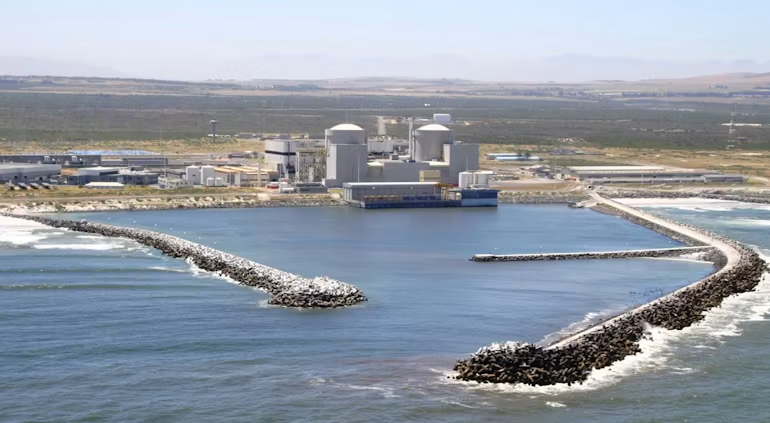
The Thyspunt nuclear plant could add 5,200MW of electricity generation capacity to South Africa’s national grid as Eskom advances plans for a new nuclear power station along the Eastern Cape coastline. The proposed facility would be developed near St Francis Bay, a coastal town popularly known as “Little Venice,” as the country pursues additional nuclear generation under its long-term energy strategy.
The project has entered a detailed environmental assessment phase following preliminary public consultations and the submission of the Final Scoping Report to the Department of Forestry, Fisheries and the Environment (DFFE) on July 6, 2026. Construction Review previously covered Eskom’s nuclear ambitions at Thyspunt in South Africa’s proposed 5.2GW nuclear reactor development, which outlined the site’s earlier development plans.
Thyspunt nuclear plant targets 5,200MW capacity
Eskom plans to develop a nuclear power station with up to 5,200MW of generating capacity, making it significantly larger than the existing Koeberg nuclear power station near Cape Town. Koeberg operates two reactors with a combined nameplate capacity of 1,940MW.
The new facility forms part of South Africa’s Integrated Resource Plan 2025, which targets an additional 5,200MW of nuclear generation capacity by 2039. The government views nuclear power as a source of dependable electricity that could strengthen energy security, support industrial growth and complement renewable energy generation.
However, Eskom has not selected a reactor supplier or finalized the technology for the proposed plant. The environmental application uses a technology-neutral Plant Parameter Envelope, allowing the assessment to consider different reactor designs within defined environmental parameters before the utility makes its final technology choice.
Eskom advances environmental assessment at coastal site
The proposed development lies at Thyspunt, between Oyster Bay and Cape St Francis, near St Francis Bay in the Eastern Cape’s Kouga Local Municipality. Eskom selected Thyspunt as its preferred site following preliminary technical and environmental investigations that also considered Bantamsklip in the Western Cape.
Existing electrical infrastructure, proximity to wind farms and Eskom’s ownership of the land helped strengthen Thyspunt’s position. Nevertheless, the utility must complete detailed investigations into biodiversity, marine ecology, freshwater supply, transport, heritage, tourism, health, noise and socio-economic impacts before authorities can make an environmental decision.
Eskom appointed WSP Group Africa to manage the environmental assessment and public participation process. Local residents, environmental organizations, traditional leaders and other stakeholders have raised concerns about the coastline’s ecological sensitivity, cultural significance and tourism economy.
The South African Heritage Resources Agency has also raised heritage considerations, while the project’s location has intensified debate over the potential effects on nearby communities and coastal resources.
Nuclear project still requires regulatory approvals
Eskom must complete the environmental impact assessment and obtain the required environmental authorization before construction can proceed. The National Nuclear Regulator will also oversee the separate nuclear licensing process, which addresses site safety and nuclear risks.
The project has not yet secured a confirmed construction budget, financing structure, reactor supplier or construction start date. Eskom will determine these details as the development progresses through environmental assessment, nuclear regulation, procurement and planning.
South Africa’s 2039 nuclear capacity target provides a national planning milestone, but it does not establish a commissioning date for Thyspunt.
Thyspunt development could create construction opportunities
If Eskom advances the project to construction, the development could generate opportunities across civil engineering, heavy construction, electrical infrastructure, specialist equipment, logistics and nuclear supply chains.
The project could also support technical skills development and create economic activity in the Eastern Cape. However, Eskom has not published confirmed employment figures, contractor appointments or procurement packages for the proposed plant.
The scale of the development will also require careful planning around local water supply, transport, municipal services, emergency preparedness, environmental protection and long-term nuclear waste management.
For now, Eskom continues to advance the proposed Thyspunt nuclear power station through environmental and regulatory processes. The outcome of these assessments, together with future financing and technology decisions, will determine whether South Africa moves the 5,200MW coastal project into construction.

Leave a Reply