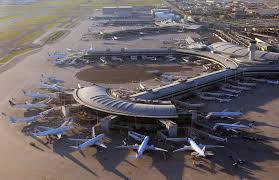
Toronto Pearson International Airport has officially launched major initial phases of its decade-long Pearson LIFT (Long-term Investment in Facilities and Terminals) transformation, a multi-billion-dollar infrastructure effort designed to modernize Canada’s busiest travel hub. In July 2026, the Greater Toronto Airports Authority (GTAA) announced a $1.5 billion revitalization project for Terminals 1 and 3, awarding the design contract to joint venture NORR-DIALOG and the construction management role to PCL Construction. This phase focuses on upgrading public terminal interiors and passenger-processing facilities, featuring expanded check-in areas, modernized security screening, refreshed lounges, improved customs and immigration spaces, updated baggage handling, and enhanced digital wayfinding. To limit travel friction, construction will be executed in managed, phased stages so operations can run continuously without closing major sections.
This terminal announcement follows the groundbreaking of Pearson LIFT’s initial $3 billion phase in May 2026, which targeted airfield technology, run-side efficiency, and heavy airside infrastructure. The overall LIFT program addresses aging facilities and equips the airport to handle up to 65 million annual passengers by the early 2030s. Beyond immediate passenger comfort, the ongoing mega-project is projected to generate significant economic benefits, creating an estimated 16,000 airport jobs and expanding Pearson’s annual economic contribution to $30 billion.
May 8, 2024
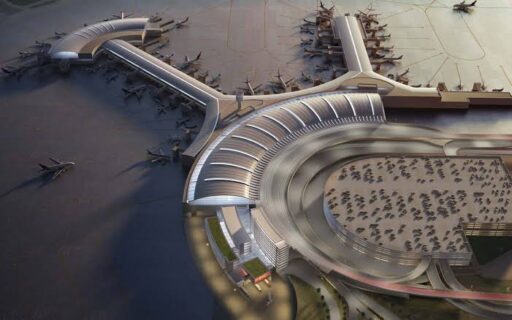
Canada’s largest airport-which is Toronto Pearson International Airport (YYZ)- will receive a facelift, and its transformation will be done through the implementation of its Pearson LIFT Initiative (Long-term Investment in Facilities and Terminals). This project will be erected over a decade, under a decision facilitated through billions of dollars. It will take off, literally, right away as developers are currently engaging in a tendering process with designers, builders, and technology specialists.
Project Scope
The fundamental intention of the plan is to develop Toronto Pearson into a gateway to sustainable growth that will be necessary to handle the projected number of passengers which should hit 65 million by 2030. Indicators of transformation that the airport will implement include modernizing assets as well as developing high-speed taxi lanes for facilitating faster aircraft movements, upgrading the airport lighting and temporary terminal improvements, and installing renewable technologies so that the airport could meet its net-zero emissions targets.
Location
Toronto Pearson International Airport, which is 14 miles (22.5 km) away from the heart of Toronto, accommodates two major airlines in Canada, i.e., Air Canada which is a flag carrier as well as the hub for Westjet Airline, and Air Transat, the country’s other prominent carriers. It came into existence on August 29th, 1938, a little more than 85 years ago.

The relatively newly appointed Chairperson of the Greater Toronto Airport Authority Board of Directors, Doug Allingham, has indicated the long-term investment into Pearson will bring more than just economy benefits for the region; instead, this will create “billions of dollars” of economic benefits for the area. Moreover, CAG stated that it could create thousands of jobs ranging from construction workers, truck drivers, catering staff, security guards, and administrators among others. The GTAA’s President and Chief Executive, Deborah Flint, emphasized the vision with this statement:The GTAA’s President and Chief Executive, Deborah Flint, emphasized the vision with this statement:
‘
“LIFT program will be delivered to implement world class passenger experience, smart light structure application and digital including in air transport as well as encouraging going green by shooting for a net zero future. The objectives are all under the umbrella of our target to open a new airport for increasing international competitiveness, applying innovation, and going green which finally leads to economic returns in Canada.”
Scope
From here, there are direct flights between Toronto Pearson and cities that belong to any provinces across Canada, while there are many other international flights to other cities all over the world. Also from May, the airport will be serving all countries, namely all six continents. Sydney, Australia is the destination, Air Canada’s relaunching of the service to this city is effective from 1.5.
Toronto has five 200-ft wide runways, three of them (the two broad-running east-west ones and the narrower north-south running one) are twice as wide as regular runways. The longest runway situated at is 05/23 (11,120 ft or 3,390 meters long). The airport provides the landing location for the Emirates A380 multiple times a week. Two gates also are big enough to handle the superjumbo.
It adds to Canada’s personalized system of interconnecting that supports flights to the Southern States of the US, the Caribbean, the Central and Latin America regions, which are mostly serviced by the Air Canada, Air Canada Rouge, Air Transat, Sunwing, and West jet. The airport operating some of the major budget airlines in the market, including Flair, Sunwing, and Canada Jetlines.
Toronto Pearson LIFT Initiative: Project Factsheet
Project Name: Pearson LIFT (Long-term Investment in Facilities and Terminals)
Owner and Operator: Greater Toronto Airports Authority (GTAA)
Location: Toronto Pearson International Airport (YYZ), Mississauga / Toronto, Ontario, Canada
Program Horizon: Multi-billion-dollar decade-long strategic plan
Current Passenger Capacity Goal: Expand throughput from 47M passengers to 65M passengers/year by the early 2030s
Delivery Model: Phased, staged construction to ensure 24/7 continuous, uninterrupted operations
Program Framework (Three Core Pillars)
1. Accelerator Program
- Focus: Airside modernization, airfield technology, taxiway infrastructure, and critical baggage systems.
- Investment: $3.0 Billion CAD (Groundbroken May 2026).
- Delivery Model: Progressive Design-Build.
2. Terminal 1 & 3 Revitalization Program
- Focus: Modernization of passenger processing spaces, gates, security checkpoints, customs, lounges, and digital wayfinding.
- Investment: $1.5 Billion CAD (Phase announced July 2026).
- Delivery Model: Design-Build & Construction Manager at Risk.
3. Gateway Program
- Focus: Net-new terminal space expansion adding capacity for an additional 15 million passengers per year.
- Status: Future phase / Long-term horizon.
Major Technical & Functional Upgrades
- Airfield Footprint: Renewal and expansion of 2.2 million m² of airfield space
- Taxiways and Light Infrastructure: Installation of new high-speed taxiways and replacement of 20,000+ airfield lights with smart, automated lighting systems.
- Baggage Systems: Overhaul of 30 km of baggage infrastructure, featuring automated camera sensors, early jam detection, and new carousels in Terminal 1.
Terminal 1 & Terminal 3 Revitalization ($1.5B Phase)
- Passenger Processing: Integration of advanced CT security screening to accelerate throughput and modern self-service check-in kiosks.
- Customs and Border Control: Expanded and reconfigured Canada Border Services Agency (CBSA) facilities.
- Terminal Experience: Refreshed airline lounges, expanded floorplans to reduce bottlenecks, enhanced digital/static wayfinding, and an increased density of in-terminal charging stations.
Key Project Partners
- Owner / Lead Authority: Greater Toronto Airports Authority (GTAA)
- Design and Architecture (T1/T3 Revitalization): NORR-DIALOG (Joint venture between NORR and DIALOG)
- Construction Management (T1/T3 Revitalization): PCL Construction
Projected Economic and Operational Impact
- Direct Employment: Projected creation of 16,000 airport jobs.
- National Job Support: Supports over 160,000 jobs nationwide.
- Economic Output: Expected to expand Pearson’s economic contribution to $30 billion annually.
- Local Business Investment: Generates over $10 billion annually in spending with Canadian suppliers.
Project Team
Greater Toronto Airports Authority (GTAA): Serves as the owner, operator, and overall project manager directing the Pearson LIFT program.
NORR-DIALOG (Joint Venture): Awarded the planning, architecture, engineering, and integrated design contract for the $1.5 Billion Terminal 1 & Terminal 3 Revitalization Program.
PCL Construction: Serves as the Construction Manager at Risk (CMAR) for the terminal revitalization phases, managing site execution, logistics, and staged delivery to maintain uninterrupted 24/7 airport operations.
Read also Top 10 Largest Airports in North America by Land Area
Read also Top ten construction companies in Canada, North America