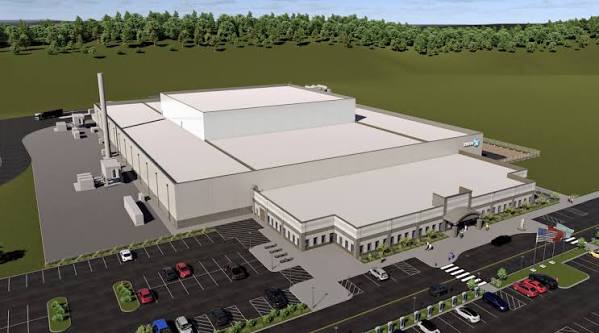
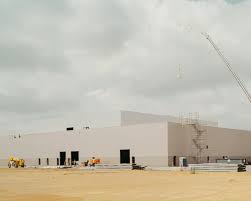
TRISO-X, LLC has completed vertical construction on TX‑1, the first commercial-scale advanced nuclear fuel fabrication facility to be built in the United States in more than 50 years, marking a key step toward domestic production of fuel for next-generation small modular reactors.
The milestone, announced Thursday, closes out the core-and-shell phase of the 214,812-square-foot plant at the TRISO-X Campus in Oak Ridge’s Horizon Center and clears the way for interior fit-out, installation of fuel-making equipment, and construction of adjacent support buildings.
“Completing vertical construction is a major milestone for TX‑1 and another tangible demonstration of the progress our team is making in Oak Ridge,” said Joel Duling, president of TRISO-X, a wholly owned subsidiary of X‑Energy Inc. “We are moving from constructing the core and shell of the facility to building out the interior utilities, installing manufacturing equipment, and constructing key support capabilities.”
What happens next
With the building envelope complete, work now shifts to systems and infrastructure needed to prepare TX‑1 for commercial operations. Clark Construction Group remains the general contractor, leading interior buildout of the process equipment and administration building, installation of fuel fabrication equipment, and construction of an adjacent graphite matrix powder building.
TRISO-X began vertical construction in November 2025 and had targeted mid‑2026 for completion of the core-and-shell phase. The company recently secured U.S. Department of Energy approval to spend an additional $30 million to lock in long-lead equipment and keep the schedule on track.
Fuel fabrication at TX‑1 is expected to begin in early 2028, after equipment installation, testing, and a final U.S. Nuclear Regulatory Commission operational readiness review that must be completed before uranium can be introduced to the facility.
First-of-its-kind license, first new fuel plant in decades
Earlier this year, the NRC granted TRISO-X a 40-year Special Nuclear Material License for the facility—the first-ever NRC Category II fuel fabrication license issued for processing high-assay, low-enriched uranium (HALEU).
The license, which expires in 2066, authorizes TRISO-X to receive, possess, and transfer special nuclear material enriched to less than 20% uranium-235 for TRISO fuel fabrication. It is the first new fuel fabrication license issued in the U.S. in roughly five decades.
Before operations begin, the NRC must complete a final inspection to verify that safety systems, procedures, and personnel training meet regulatory requirements. Additional permits still required include Tennessee air-quality operating permits, U.S. Department of Transportation hazardous-materials registration, and state radioactive-material licenses.
How much fuel, and what it looks like
Once operational, TX‑1 is expected to produce approximately 700,000 TRISO-X fuel pebbles annually, equivalent to 5 metric tons of uranium, with capacity to provide fuel for up to 11 Xe‑100 reactors.
Each billiard-ball-sized pebble contains more than 18,000 TRISO particles—poppy-seed-sized kernels of uranium, carbon, and oxygen encased in multiple layers of carbon and silicon carbide ceramic. The coatings are designed to retain fission products even at very high temperatures, a key safety feature for advanced reactors.
The plant will not enrich uranium. Instead, it will convert feedstock—such as LEU U3O8 from Urenco USA in Eunice, New Mexico; HALEU U3O8 from the American Centrifuge Plant in Piketon, Ohio; and dilute uranyl nitrate from the Department of Energy’s Savannah River Site in South Carolina—into gel spheres, kernels, coatings, and finished fuel, with quality control, R&D, uranium recovery, and waste handling on site.
A second unit, TX‑2, currently in design, would add two production lines for a combined 20 MTU/year, bringing total site capacity to 25 MTU/year if both units operate around the clock.
Jobs and local footprint
The TX‑1 project is estimated at $768 million over five years of construction, peaking at about 332 workers on site. Once operational, the facility is expected to employ roughly 500 full-time staff.
The completion of vertical construction builds on a period of sustained progress across TRISO-X’s Oak Ridge operations. In recent months, the company expanded its nuclear fuel campus by approximately 70 acres—bringing the total to about 180 acres—extended its cooperative research and development relationship with Oak Ridge National Laboratory, initiated construction of TX‑L, a dedicated R&D facility, and received economic development support from the State of Tennessee for continued expansion of its advanced nuclear fuel campus.
Why Oak Ridge, and why now
TRISO-X has operated a pilot fuel fabrication facility at ORNL since 2016 and has used the partnership to develop and test its TRISO fuel, including irradiation testing at Idaho National Laboratory. The existing nuclear ecosystem, state support, and available land made Oak Ridge a natural fit for the first commercial-scale TRISO fuel plant in North America.
TX‑1 will initially supply fuel for X‑Energy’s proposed Xe‑100 advanced small modular reactor at Dow Inc.’s UCC Seadrift Operations manufacturing site in Texas. The project qualifies for up to 50% cost share through the DOE’s Advanced Reactor Demonstration Program.
The NRC accepted Dow’s construction permit application in May 2025 and is reviewing it on an approximately 18-month track, with potential issuance later this year. Beyond Dow, X‑Energy is advancing additional Xe‑100 projects in partnership with Energy Northwest and Amazon in Washington, and has a joint development agreement with Centrica for up to 6 GW in the UK, with Hartlepool identified as a first target in the mid‑2030s.
Bigger picture: U.S. fuel supply and competition
TX‑1 sits at the center of a broader push to rebuild domestic advanced nuclear fuel capacity. The DOE’s Fuel Line Pilot Program, launched in 2025, has conditionally selected Oklo, Terrestrial Energy, TRISO-X, Valar Atomics, and Standard Nuclear to accelerate domestic advanced fuel capacity.
Competitors are moving as well. BWX Technologies delivered the first TRISO fuel for the Pentagon’s Project Pele microreactor in December 2025 and is producing TRISO compacts for Antares Nuclear, while Standard Nuclear emerged in 2025 with venture backing and plans to scale capacity to more than 2 MTU/year by mid‑2026 across Oak Ridge and Idaho Falls.
X‑Energy cites an 11‑GW commercial pipeline—roughly 144 Xe‑100 reactors—and has a 16‑unit component reservation with Doosan Enerbility, which is building an SMR component factory in South Korea sized for about 20 Xe‑100 reactors per year at full production.
What could still slow things down
Even with the building complete, key steps remain before fuel rolls off the line. The NRC must complete its final operational readiness review before the company can introduce uranium. The company also depends on HALEU supply from the American Centrifuge Plant in Ohio, which has faced its own scaling challenges, and must secure final state air permits and transport approvals for radioactive materials.
During operations, the facility will handle about 36 truck deliveries of uranium feed per year, roughly 196 shipments of fabricated fuel, and around 60 truck shipments of solid radioactive waste, primarily to EnergySolutions’ Clive, Utah disposal site
For Oak Ridge, long known as the home of the Manhattan Project’s uranium enrichment work, TX‑1 represents a return to fuel-cycle leadership—this time for advanced reactors that promise higher temperatures, passive safety features, and modular construction.
“Every milestone brings us closer to establishing a new domestic source of advanced nuclear fuel and supporting the deployment of the next generation of American nuclear reactors,” Duling said.
The TRISO-X project is advancing alongside other U.S. energy manufacturing developments, including NeoVolta’s Pendergrass battery facility in Georgia, which has completed construction and entered commissioning ahead of its planned production ramp.
Factsheet: TX‑1 TRISO Fuel Fabrication Facility
Location: TRISO-X Campus, Horizon Center, Oak Ridge, Tennessee
Facility size: 214,812 square feet (≈214,000 sq ft)
Campus size: ~180 acres (after recent 70-acre expansion)
Owner: TRISO-X, LLC (wholly owned subsidiary of X‑Energy Inc., Nasdaq: XE)
General contractor: Clark Construction Group
Key dates:
- Vertical construction start: November 17, 2025
- Vertical construction completion: September 24, 2026
- Expected fuel fabrication start: Early 2028
- NRC license expiry: February 13, 2066
Licensing:
- First-ever NRC Category II fuel fabrication license
- First new U.S. commercial fuel fabrication license in ~50 years
- 40-year Special Nuclear Material License (SNM‑7007)
Production capacity:
- TX‑1 (one line): 5 metric tons of uranium (MTU)/year ≈ 700,000 TRISO pebbles annually
- TX‑2 (in design, two lines): 20 MTU/year
- Combined potential: 25 MTU/year (24/7 operations)
- Fuel sufficiency: Up to 11 Xe‑100 reactors (TX‑1 alone)
Feedstock sources:
- LEU U3O8: Urenco USA, Eunice, New Mexico
- HALEU U3O8: American Centrifuge Plant, Piketon, Ohio
- Dilute uranyl nitrate: DOE Savannah River Site, Aiken, South Carolina
Jobs and investment:
- Construction cost: $768 million over 5 years
- Peak construction workforce: ~332 workers
- Permanent operations jobs: ~500 full-time staff
Logistics (annual, once operational):
- Uranium feed deliveries: ~36 truck shipments
- Fabricated fuel shipments: ~196 truck shipments
- Solid radioactive waste: ~60 truck shipments (mainly to Clive, Utah)
Commercial pipeline:
- Initial customer: Dow UCC Seadrift, Texas (DOE ARDP demonstration)
- Other projects: Energy Northwest/Amazon (Washington); Centrica JDA (up to 6 GW, UK)
- Total pipeline: ~11 GW (≈144 Xe‑100 reactors)
- Component supply: 16-unit reservation with Doosan Enerbility (South Korea)



Leave a Reply