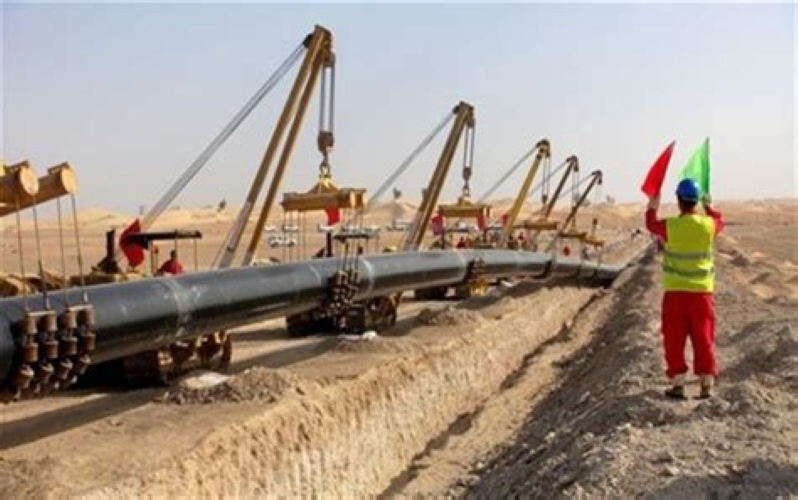
The United Arab Emirates (UAE) is considering developing a third crude oil export pipeline connecting its western coast to the eastern port of Fujairah, in a move that could further reduce the country’s dependence on the Strait of Hormuz for energy exports. The proposed infrastructure would also expand the UAE’s ability to transport crude oil to international markets without requiring tankers to navigate the strategically important waterway.
The Abu Dhabi National Oil Company (ADNOC) is weighing the construction of the additional pipeline, which could connect oil-producing areas in western UAE to Fujairah on the Gulf of Oman. The proposed line could also be made available to third-party oil producers. This will potentially provide additional export infrastructure for other companies operating in the region.
However, the proposal remains at an early development stage. ADNOC has so far discussed the possibility with some Asian customers, although the route and other project details had not been finalized.
Additionally, ADNOC disputed the report, describing it as inaccurate and purely speculative. Consequently, there is currently no confirmed construction schedule, investment value, pipeline capacity or final route for the proposed third line.
UAE seeks to expand crude oil export capacity outside Hormuz
The third pipeline proposal also comes as the UAE accelerates efforts to establish alternative export corridors capable of maintaining crude oil deliveries during disruptions to shipping through the Strait of Hormuz.
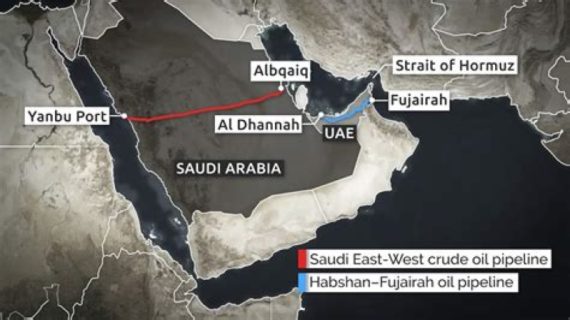
The country already operates the approximately 400-kilometre Abu Dhabi Crude Oil Pipeline (ADCOP), also known as the Habshan-Fujairah pipeline. The system transports crude from onshore production facilities at Habshan in Abu Dhabi to Fujairah. At Fujairah, tankers can load cargoes directly onto the Gulf of Oman without passing through the Strait of Hormuz.
The existing pipeline has an estimated transportation capacity of approximately 1.8 million barrels per day, according to the International Energy Agency (IEA). It has also become an important component of the UAE’s energy export infrastructure, providing an alternative route to international markets when maritime traffic through the strait is disrupted.
In addition, ADNOC is advancing a second West-East Pipeline project intended to double the country’s crude transportation capacity through Fujairah. The project is already under construction, with the UAE targeting commissioning in 2027.
In May 2026, ADNOC CEO Sultan Ahmed Al Jaber disclosed that construction of the second pipeline was approximately 50% complete. The UAE has also since indicated that some Asian refiners could begin receiving crude delivered through the new infrastructure at Fujairah in early 2027.
If the new third pipeline project eventually progresses, it would represent a further expansion of this emerging export corridor. It could also provide additional transportation flexibility as the UAE seeks to accommodate growing crude production. This is while maintaining reliable deliveries to overseas customers. Other countries including Russia and the Democratic Republic of Congo (DRC) are also advancing their own set of regional fuel pipeline in a bid to secure petroleum distribution.
Strait of Hormuz remains a vulnerability for Gulf energy exports
The UAE’s pipeline expansion ambitions also reflect the strategic importance of securing alternative routes around the Strait of Hormuz. The Strait of Hormuz connects the Persian Gulf with the Gulf of Oman and the Arabian Sea.
The narrow maritime passage is one of the world’s most important energy transportation chokepoints. It handles approximately 20 million barrels of oil per day under normal conditions, equivalent to around one-fifth of global petroleum consumption.
Disruptions associated with the 2026 conflict involving Iran have exposed the vulnerability of Gulf energy exporters that depend heavily on the waterway. The UAE and Saudi Arabia are among the few regional producers with operational crude oil pipeline infrastructure capable of bypassing the strait.
Beyond oil pipelines, the UAE has also outlined wider plans to strengthen its eastern-coast logistics infrastructure. These include expanding at least three ports and investing in supporting road, rail and pipeline connections to improve the movement of goods and energy commodities outside the Strait of Hormuz.
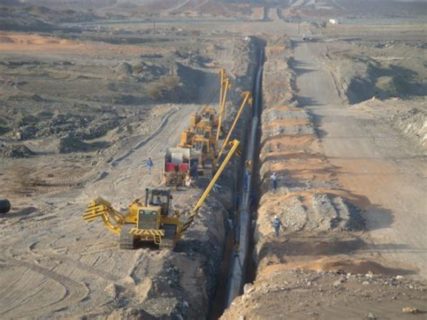
The proposed third crude oil pipeline, if confirmed and developed, could therefore form part of a broader strategy to improve the resilience of the UAE’s export infrastructure. Nevertheless, the reported project remains speculative, with ADNOC’s denial making its actuality a hazy reality.
UAE Third Crude Oil Export Pipeline Project: Key Facts
Proposed route: Western UAE to Fujairah, on the Gulf of Oman
Project purpose: Transport crude oil to export terminals bypassing the Strait of Hormuz
Proposed developer: Abu Dhabi National Oil Company (ADNOC)
Potential users: ADNOC and third-party oil producers
Destination: Fujairah export facilities
Existing infrastructure: Habshan-Fujairah (ADCOP) pipeline
Existing pipeline capacity: 1.8 million barrels per day
Second pipeline: West-East Pipeline, under construction
Second pipeline commissioning target: 2027
Current status: ADNOC describes the third UAE oil pipeline project as speculative
Who is involved in the proposed third UAE oil pipeline to bypass the Strait of Hormuz
Abu Dhabi National Oil Company (ADNOC)
Government of Abu Dhabi



Leave a Reply