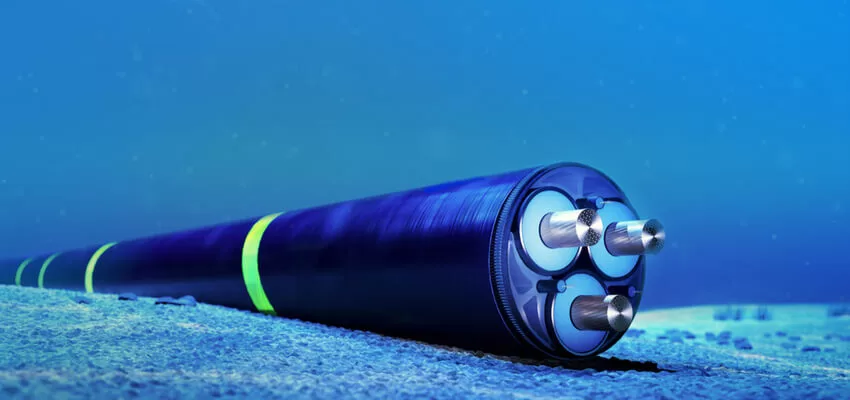
The Eastern Green Link 2 subsea interconnector has become a cornerstone case study for expanding the UK’s electricity transmission capacity, strengthening high‑voltage links between Scotland and England. This project illustrates how long‑distance subsea HVDC systems integrate renewable generation into national grids.
Similar projects such as Eastern Green Link 4 subsea interconnection between Scotland and England have advanced with contracts being awarded thus boosting UK grid capacity.
Eastern Green Link 2 (EGL2) is the first of 26 projects to complete the fast-track process to secure funding through Ofgem’s new Accelerated Strategic Transmission Investment (ASTI) framework whichaccelerates the funding process by up to two years.
This decision is the key final approval in the regulatory process and allows construction to get underway later this year, with the connection due to be operational in 2029, when it will be able to power up to 2 million homes.
Capacity of the UK’s Longest-ever Subsea Connection
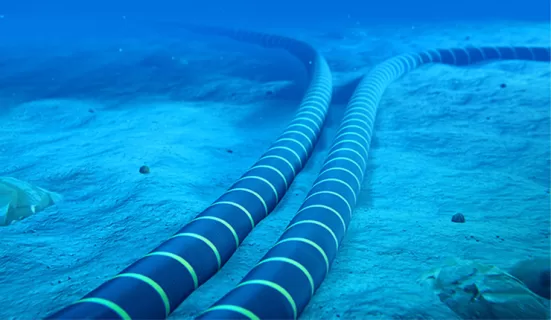
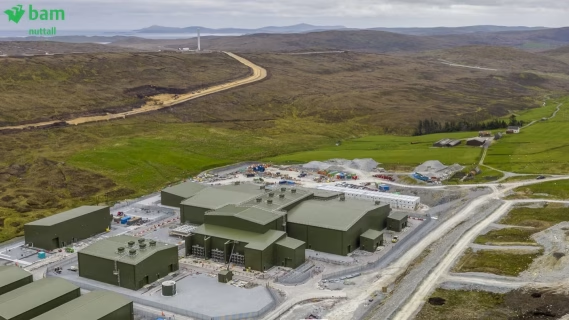
The 2 GW high-voltage electricity “superhighway” cable link will connect Peterhead in Aberdeenshire and Drax in North Yorkshire, comprising 436 kilometers of subsea cable and 70 kilometers of onshore cable, as well as two converter stations at each end.
Jointly developed by Scottish and Southern Electricity Networks Transmission (SSENT)and National Grid Electricity Transmission (NGET), the project is seen as the longest high-voltage cable in the UK and largest ever investment in transmission infrastructure.
“Ofgem is fully committed to supporting the government to meet its aims of getting clean power by 2030.
Today’s announcement is a further step in putting the regulatory systems and processes in place to speed up network regulation to achieve its aim,” said Jonathan Brearley, Ofgem CEO.
“Accelerated Strategic Transmission Investment (ASTI) accelerates approval times for projects such as Eastern Green Link 2 (EGL2) by up to two years.
However, streamlining the process does not mean blank cheques for developers as we are able to step in and make financial adjustments to maximize efficiency and consumer benefit.”
Ofgem will publish a statutory consultation on the proposed modifications to the transmission operator (TO) license conditions that will formalize the decision in the coming weeks.
Ofgem also fast-tracked the 2 GW Eastern Green Link 1 (EGL1) earlier this year, revealing a provisional £2 billion funding package.
Other ASTI projects
Ofgem has announced a proposed funding allowance of £294.8 million for another project in its ASTI cohort, the Yorkshire Green Energy Enablement (GREEN)project which involves a proposed upgrade to the local electricity network to help transport energy generated by Scottish and North Sea wind farms to consumers.
Plans include building new substations, underground cables, overhead lines and cable sealing end compounds.
The proposed funding allowance is subject to consultation with the project currently slated to be operational by 2027.
Furthermore, Ofgem approved two Early Construction Funding (ECF) requests which allow project developers to apply for up to 20% of total forecast project costs to fund early construction activities including land purchases, early procurement purchases and preparatory works, such as ground preparation.
The ECF requests were approved for the North London Reinforcement Project which involves replacing existing 275 kV overhead lines with higher voltage 400 kV overhead lines, as well as Scottish Hydro Electricity Transmission (SHET)bulk submission for six onshore and two offshore projects to boost electricity transmission capacity to enable more clean energy to be transported to where it is needed.
SHET’s bundle includes the Spittal to Peterhead 2 GW HVDC subsea link and Arnish to Beauly (Western Isles) HVDC link.
Also read: UK to build one of the world’s largest LDES and the country’s first commercial-scale LAES plant
Project Fact Sheet
Project Name: Eastern Green Link 2 (EGL2) subsea interconnector
Location: Peterhead, Aberdeenshire, Scotland to Drax, North Yorkshire, England
Type: High Voltage Direct Current (HVDC) subsea and onshore transmission link
Voltage: 525 kV
Capacity: 2 GW (2,000 MW)
Route Length: ~436 – 505 km (subsea + underground)
Estimated Investment: ~£4.3 billion
Construction Start: 2024 (main works)
Expected Operational Date: 2029
Purpose:
- Strengthen transmission capacity between Scotland and England
- Support renewable energy integration and grid flexibility
- Enable low‑carbon electricity flow to demand centers
Connection Points:
- Northern converter station near Peterhead, Scotland
- Southern converter station near Drax, Yorkshire
Project Team
Owners / Sponsors / Developers:
- SSEN Transmission (Developer; majority owned by SSE plc with strategic investment)
- National Grid Electricity Transmission (NGET) (Joint Developer & transmission network partner)
- Ofgem (Regulator providing approvals and oversight)
Contractors & Major Delivery Partners
- Hitachi Energy – Preferred technology provider supplying two HVDC converter stations. These stations convert AC to DC and vice versa, enabling efficient long‑distance transmission.
- BAM (Royal BAM Group) – Lead contractor for engineering works and converter station construction at both ends of the transmission link.
- Prysmian Group – Preferred bidder for the HVDC subsea and underground cable system; responsible for cable manufacturing and supply.
- David Smith Contractors – Local UK firm handling civil engineering and related enabling works at converter station sites.
Support, Consultancy & Technical Partners
- Gardiner & Theobald (G&T) – Project management, cost consultancy, and integrated reporting support.
- Community Liaison Teams – Local engagement and liaison managers supporting construction and stakeholder communication.
Stakeholders & Beneficiaries
- UK Government Department for Energy Security and Net Zero – Policy and planning stakeholder.
- Local planning authorities (Aberdeenshire, North Yorkshire, East Riding councils) – Provided planning consents and permits.
- Scotland and England electricity consumers and generators – Indirect stakeholders benefiting from grid capacity expansion.




Leave a Reply