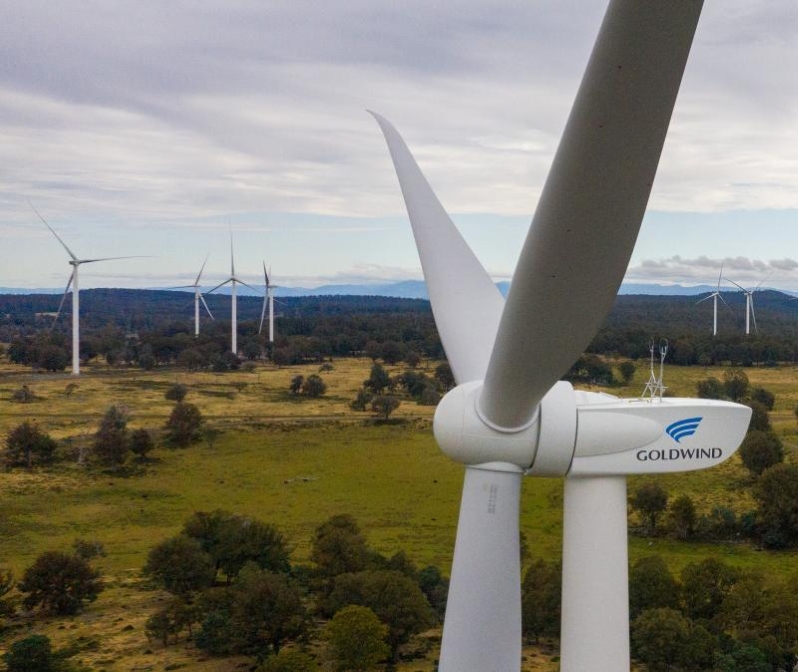
1.4GW Baldon Wind Farm has secured planning approval in New South Wales, Australia paving the way for a major renewable energy project featuring 175 turbines reaching up to 300 meters in height. However, access to the region’s dedicated transmission infrastructure remains a key challenge for the project.
What is the Baldon Wind Farm Project in Australia?
The Baldon Wind Farm is a proposed 1,400MW onshore wind energy development by Goldwind Capital in the South West Renewable Energy Zone (SW REZ) of New South Wales, Australia.
Located approximately 64 kilometers south-west of Hay, in the Riverina region, the project is expected to become one of the largest wind farms in New South Wales once fully developed.
On November 10, 2026, the NSW Independent Planning Commission (IPC) granted development approval for the project. This has cleared a major regulatory hurdle following considerable opposition during the public consultation process.
The approved development comprises up to 175 wind turbines, each reaching a maximum tip height of 300 meters. This would make them more than 100 meters taller than turbines currently operating in New South Wales.
The project’s approval is also particularly significant for the state’s renewable energy ambitions. This is as the South West REZ intends to accommodate large-scale renewable generation and associated transmission infrastructure as Australia transitions away from conventional coal-fired electricity generation.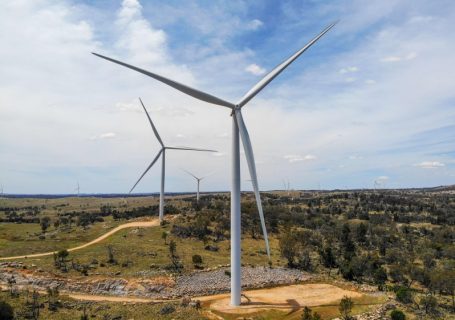
Goldwind Capital Secures Approval Despite Community Opposition
The Baldon Wind Farm project in Australia was referred to the NSW Independent Planning Commission because of substantial community opposition.
During the original public consultation process, the project received 80 submissions, of which 72 opposed the proposed development. Concerns raised during the assessment included increased traffic, potential contamination and cumulative impacts from renewable energy developments. The opposition for the wind farm was also centered on the eventual decommissioning and rehabilitation of the site.
Hay Shire Council, however, supported the development.
Following its assessment, the three-member IPC panel approved the project subject to conditions intended to address the concerns raised by stakeholders.
Among the requirements imposed on Goldwind Capital are the preparation of a traffic management plan, and upgrades and maintenance of affected local roads. Goldwind is also expected to repair any road damage attributable to construction activities.
The developer must also prepare and implement a decommissioning and rehabilitation plan. This will provide a framework for restoring the site when the wind farm eventually reaches the end of its operational life.
Baldon Wind Farm’s 300-Meter Turbines Specifications and 1.4GW Generation Capacity
One of the most distinctive aspects of the Baldon Wind Farm project is its proposed turbine dimensions.
The approved development allows for up to 175 turbines with maximum tip heights of 300 meters. This is approximately 30 meters shorter than the Eiffel Tower and would establish a new height benchmark for operating wind turbines in New South Wales.
At full development, the facility is expected to have an installed generation capacity of 1,400MW (1.4GW).
Its scale places it among the largest proposed wind energy developments in NSW, second only to the 1,460MW Yanco Delta Wind Farm in terms of the capacity figures reported for major projects in the region.
Project Design, Battery Storage and Grid Connection
According to the IPC’s decision documents, the development will be delivered in two stages to accommodate the available grid connection infrastructure.
- Stage One: 46 wind turbines with a combined generation capacity of 368MW, connecting to the existing 220kV transmission line.
- Stage Two: The remaining 129 turbines, adding approximately 1,032MW of generation capacity.
The approved Baldon Wind Farm project also includes provisions for a battery energy storage system (BESS) of up to 200MW/400MWh. This could be delivered as a centralized battery facility or through distributed battery storage units connected to individual wind turbines.
The project will also include two central switching stations, two primary substations, seven collector substations and 33 kilometers of overhead transmission lines. It will also have underground electrical cabling, internal access roads and operations and maintenance facilities.
Additionally, the project is expected to require 42 months of construction if both stages are delivered consecutively. Each stage would take approximately 24 months if constructed separately. Its anticipated operational life is approximately 30 years.
Grid Connection Remains a Major Challenge for the Baldon Wind Farm Project
Despite receiving planning approval, the Baldon Wind Farm project faces an important hurdle concerning access to transmission infrastructure.
In December 2025, EnergyCo awarded access rights to transmission infrastructure within the South West Renewable Energy Zone to four developments:
- Origin Energy’s 1,460MW Yanco Delta Wind Farm.
- Spark Renewables’ 1,007MW Dinawan Energy Hub.
- BayWa’s 262.3MW Bullawah Wind Farm.
- Someva/AGL Energy’s 831.2MW Pottinger Wind Farm.
Baldon was not among the projects awarded access rights.
Consequently, the Baldon Wind Farm project development will initially rely on the existing 220kV X5 Balranald-to-Darlington Point transmission line to export electricity from its first stage.
The developer has also identified the possibility of securing access to the South West REZ transmission infrastructure for its larger second stage.
This distinction is important because obtaining approval to construct the 1.4GW wind farm does not automatically guarantee that the entire generation capacity can be connected to the electricity grid. The grid connection issue has persisted as a great impediment to renewable energy projects being developed in Australia. Projects including the 700MW Euston Wind Farm have remain stuck in the environmental assessment phase for close to half a decade due to this issue.
The availability of suitable transmission capacity and the necessary connection agreements will therefore influence how quickly the Baldon Wind Farm project can progress towards its full generation potential.
Baldon Wind Farm Project: Construction Jobs and Economic Benefits
The Baldon Wind Farm project is expected to generate significant economic opportunities for communities in the Riverina region.
According to the Independent Planning Commission, the development could create up to 400 jobs during construction. It will also create approximately 35 ongoing positions during its operational phase.
The developer has also committed to a community benefit-sharing arrangement involving Murray River Council and Hay Shire Council.
Under the proposed arrangement, community benefit contributions are calculated at $1,100 per megawatt generated. Approximately 85% of the contributions will be allocated to the two host councils, while the remaining 15% of annual contributions will support a Community Benefit Fund covering local community and First Nations initiatives.
The project will also require an Industry and Aboriginal Participation Plan. This will help create opportunities for local and First Nations employment and procurement.
These commitments are intended to ensure that the economic benefits of the development extend beyond electricity generation.
Environmental Considerations and Baldon Project Conditions
The project’s approval also comes with several environmental and social obligations.
The IPC considered potential impacts on biodiversity, including threatened species such as the Plains-wanderer, Southern Bell Frog, Little Eagle and Mossgiel Daisy.
The development is also expected to disturb approximately 795 hectares, including vegetation clearing. This is as biodiversity offsets and additional management requirements are imposed as conditions of consent.
The developer must also participate in a regional Plains-wanderer working group. Goldwind is also expected to contribute a management strategy addressing the cumulative impacts of renewable energy developments in the South West REZ.
Transport infrastructure is another important consideration. Oversized turbine components will be transported from Port Adelaide through South Australia and into New South Wales. This is before proceeding along the Sturt Highway towards the project site.
The approval therefore requires road upgrades, traffic management measures, road condition surveys and repairs where necessary.
These requirements will be particularly important given the scale of the proposed turbines and the associated transportation requirements.
What Next for the Baldon Wind Farm Project in NSW, Australia?
With development approval secured on November 10, 2026, Goldwind Capital can advance the project towards its next development milestones.
However, the approval does not mean construction will begin immediately. The developer must address the necessary grid connection agreements and satisfy development consent conditions. Goldwind will also need to finalize engineering and procurement arrangements, and secure the required financing for implementation.
Baldon Wind Farm project’s two-stage development strategy also makes transmission access particularly important. While the first stage has an identified connection route through the existing 220kV network, the second stage will require additional grid capacity to accommodate the remaining generation.
The inclusion Baldon Wind Farm project in the Australian government’s Capacity Investment Scheme process provides an additional financing pathway. Baldon was invited to enter into a Capacity Investment Scheme agreement under Tender Round Seven in May 2026.
Ultimately, the Baldon Wind Farm project represents a major addition to Australia’s renewable energy development pipeline. Its progress will depend not only on the successful delivery of its turbines and associated infrastructure but also on securing the transmission capacity needed to bring its planned 1.4GW generation potential to the electricity market.
Baldon Wind Farm Project Fact Sheet
Type: Onshore wind project
Location: South West Renewable Energy Zone, New South Wales
Nearest towns: Moulamein, Balranald and Hay
Developer: Goldwind Capital Australia Pty Ltd
Project company: Baldon Wind Farm Pty Ltd
Installed capacity: 1,400MW (1.4GW)
Number of turbines: Up to 175
Maximum turbine tip height: 300 meters
Stage One: 46 turbines, 368MW
Stage Two: 129 turbines, 1,032MW
Battery storage: Up to 200MW/400MWh
Grid connection: Existing 220kV X5 Balranald-to-Darlington Point line and potential South West REZ transmission connection.
Construction period: 42 months (if delivered consecutively)
Construction employment: Up to 400 jobs
Permanent operational employment: 35 jobs
Operational lifespan: 30 years
Planning approval: November 10, 2026
Approving authority: NSW Independent Planning Commission
Current status: Development approved. Pre-construction and grid connection arrangements are important next steps.
Project Team and Key Stakeholders
Goldwind Capital Australia – Project developer
Baldon Wind Farm Pty Ltd – Project applicant and project company
Goldwind Australia – Renewable energy developer and project sponsor
Murray River Council – Host local government authority
Hay Shire Council – Host local government authority
Independent Planning Commission NSW – Planning approval authority
EnergyCo NSW – South West Renewable Energy Zone infrastructure
Transgrid – Electricity transmission network and grid connection partner
Australian Energy Market Operator (AEMO) – Grid connection and electricity system partner
Transport for NSW – Road transport and infrastructure stakeholder


Leave a Reply