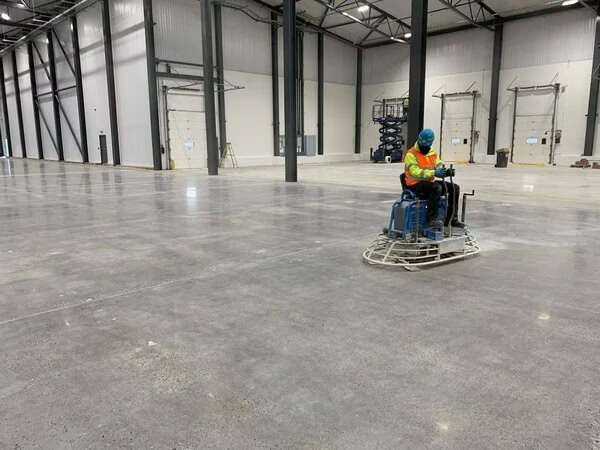
Washing a concrete floor is only half the job. Once dirt has been loosened, the contaminated water needs collecting before it dries and leaves residue behind.
For polished workplace floors, start by removing loose grit, then wash with a compatible cleaner and suitable equipment. Plan the work around pedestrian routes, deliveries and drying, so each section can be cleaned and reopened while keeping other routes available.
Check the finish before choosing cleaning products
Find the floor’s maintenance instructions and identify any protective treatment. Two similarly glossy surfaces can have different care requirements.
The cleaning routine for commercial polished concrete should follow the installed system’s guidance, including its recommendations for cleaning products and pads. A compatible pH-neutral cleaner is a common choice for routine care.
Select a product for the finish, rather than relying on the broad label “concrete cleaner” or a degreasing recipe intended for untreated garage slabs.
Check the product instructions for dilution, application requirements and protective equipment. Never mix cleaning chemicals. Before using a new, compatible product across the floor, test it in an inconspicuous area and inspect the result after it has dried.
Remove loose grit and control access
Use a clean microfibre dust mop or a vacuum suitable for the surface and debris. Pay particular attention to entrances, corners and the edges of traffic lanes. Loose grit caught beneath a mop or cleaning pad can be dragged across the finish.
Before applying water, separate the working area from pedestrian traffic. Use barriers where needed, provide an alternative route and keep exits clear. Warning signs alert people to wet floors; barriers help prevent them from walking through.
Choose sections that can be cleaned, dried and reopened in sequence, with a usable route around the next wet area.
Clean manageable sections and collect dirty water
Measure the cleaner accurately and follow its instructions for contact time and rinsing. Work in areas small enough to finish before the solution dries on the floor.
With a mop, use a damp microfibre head rather than flooding the surface. Replace or rinse dirty heads regularly, change contaminated water and use clean heads to pick up soiled solution. Repeated passes with a dirty mop simply carry contamination into the next section.
Where the product requires rinsing, make a separate pass with clean water and remove the remaining liquid. Include edges and corners in the process, particularly where the main mop or machine pass leaves them untouched.
For a scrubber-dryer, fit a pad or brush matched to the floor and machine, choosing by specification rather than colour alone.
The machine applies solution, agitates the surface and collects dirty liquid. Check the floor behind it as you work. If it leaves wet trails, stop and check the recovery tank and squeegee condition against the operating instructions before continuing. Adding detergent will not fix poor liquid pickup.
Handle spills and investigate persistent marks
Respond promptly to spills and control access while they are removed. Follow the site’s procedure for the substance involved, escalating an unknown chemical spill rather than treating it as routine mopping.
For an established mark, identify the likely contamination before selecting a treatment. Review the first cleaning attempt before reaching for a stronger chemical or harsher pad.
Streaks after drying can indicate residue or incomplete dirty-water recovery. Check dilution, mop cleanliness and liquid collection before changing products. A persistent dull patch or mark may need assessment to distinguish embedded dirt from surface damage. Record its location and the methods already tried to guide that assessment.
Inspect before reopening and record the routine
Check the cleaned section for moisture, residue and loose debris. Look beside shelving and at turns where liquid may collect, as well as across the main walking route. Keep access controls in place until the area is dry and ready for normal use.
Record the approved cleaner, dilution, pad or mop type, and any required rinsing. Include who should assess unresolved marks so the next shift can follow up without repeating unsuccessful treatments.
Base cleaning frequency on actual use. An entrance collecting grit throughout the day needs different attention from a quiet storage corner. Check conditions between cleans and adjust the schedule if grit or dirt builds up before the next visit.