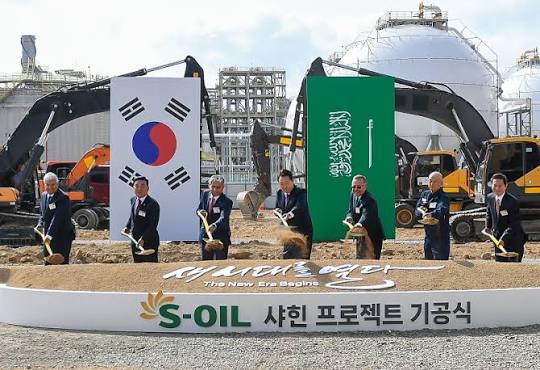
The S-Oil Shaheen Project is a US$6.9 billion investment making it the largest petrochemical project in South Korea’s history. It represents a major step in S-Oil’s strategy to diversify its business and increase the value obtained from crude oil. Similarly, the US$1.7 billion Yongin power plant investment highlights the country’s growing need for reliable energy to support major industrial developments
Shaheen Complex Features Large-Scale Steam Cracker and TC2C Technology
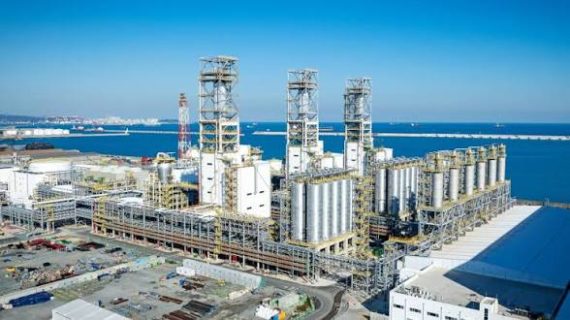
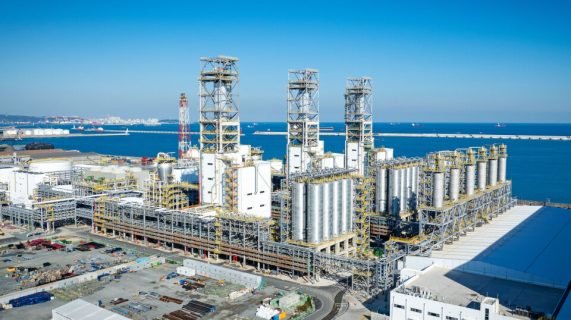
The S-Oil Shaheen Project covers approximately 880,000 square metres at the Onsan National Industrial Complex. Its main facilities include a thermal crude-to-chemicals (TC2C) unit, a large-scale steam cracker and polymer production plants.
The steam cracker has a single-unit ethylene production capacity of 1.8 million tonnes annually. It is regarded as the world’s largest single-train steam cracker by production capacity. The facility will also produce other basic petrochemical feedstocks, including propylene and butadiene.
The polymer production units will convert part of the ethylene output into polyethylene products for domestic and international markets. S-Oil has entered an export marketing agreement with Saudi Basic Industries Corporation (SABIC), which will use its global distribution network to market the project’s polyethylene output.
Once all facilities reach commercial operation, the complex is expected to add approximately 3.2 million tonnes of annual petrochemical production capacity. This will increase petrochemicals’ share of S-Oil’s overall production from approximately 12% to 25%.
Thermal Crude-to-Chemicals Technology Marks Project Milestone
A central feature of the Shaheen development is the commercial application of Thermal Crude-to-Chemicals technology. Developed jointly by Saudi Aramco and Lummus Technology, the process is designed to convert crude oil and refinery residues directly into petrochemical feedstocks.
The technology aims to increase the proportion of higher-value chemical products obtained from each barrel of crude oil. It also supports closer integration between refining and petrochemical operations.
The S-Oil Shaheen Project represents the world’s first commercial-scale deployment of the TC2C technology. Its performance will therefore be significant beyond South Korea, as the technology could influence future investments in integrated refining and petrochemical facilities.
The development builds on the strategic relationship between S-Oil and Saudi Aramco, which began with Aramco’s equity investment in S-Oil in 1991. The two companies expanded their cooperation through earlier refining upgrades and petrochemical developments before reaching the final investment decision for Shaheen in November 2022.
Construction and Project Delivery of S-Oil Shaheen Project
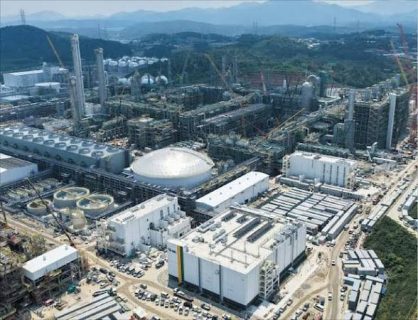
Construction began in March 2023 following the project’s groundbreaking ceremony. Four major South Korean construction companies participated in the development: Hyundai Engineering & Construction, Hyundai Engineering, Lotte Engineering & Construction and DL E&C.
Hyundai Engineering & Construction led the main construction consortium. Hyundai Engineering, Lotte E&C and DL E&C participated in construction packages covering the petrochemical processing units and connections to existing refinery infrastructure.
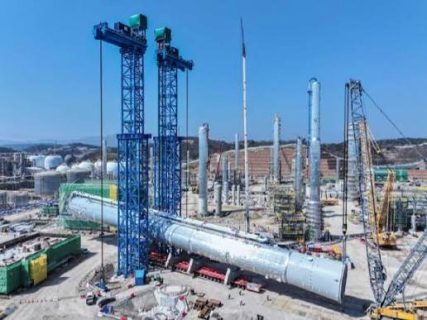
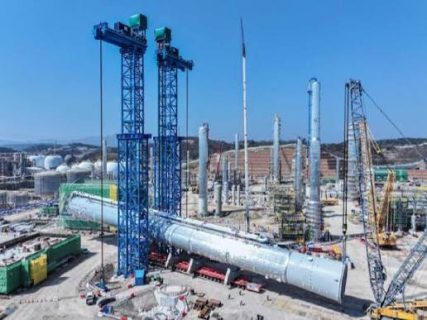
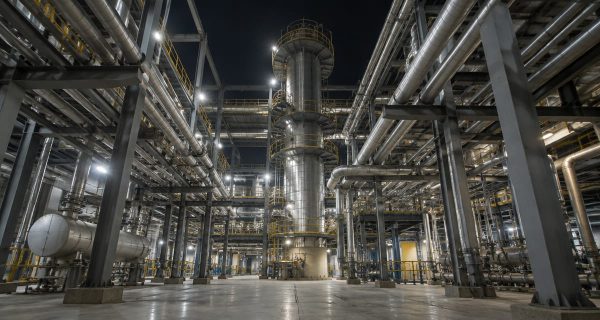
The project involved large-scale process equipment, storage facilities, utility systems, pipelines and supporting infrastructure. One of its prominent structures is a 118-metre-high steam cracker component, which has become a notable feature of the Ulsan industrial site.
S-Oil has completed construction and is progressing through commissioning and start-up preparations. The company expects commercial operations to begin in 2027 after the necessary testing and trial runs.
S-Oil Shaheen Project to Strengthen South Korea’s Petrochemical Supply
The project is expected to support South Korea’s domestic petrochemical industry by increasing the availability of basic chemical feedstocks. S-Oil plans to supply olefin products through an integrated pipeline network connecting the complex with downstream manufacturers in the Ulsan industrial region.
These supplies could reduce the need for some downstream companies to import petrochemical raw materials. The company also estimates that the development could replace approximately US$770 million in annual imports.
The project is expected to generate additional economic activity in Ulsan, including an estimated US$87 million in annual economic benefits. Its products will serve industries that use petrochemical materials in manufacturing, packaging, automotive components, electronics and other industrial applications.
However, the investment enters a competitive global petrochemical market. Producers in Asia continue to face pressure from capacity expansion, fluctuating feedstock prices and uneven demand. S-Oil will therefore need to maintain competitive production costs and secure reliable markets for its increased output.
For S-Oil, the completion of Shaheen marks a major transition from a predominantly refining-focused business towards an integrated refining and petrochemical operation. The next milestone will be the successful start-up of the facilities and their ability to deliver the planned production capacity.

Leave a Reply