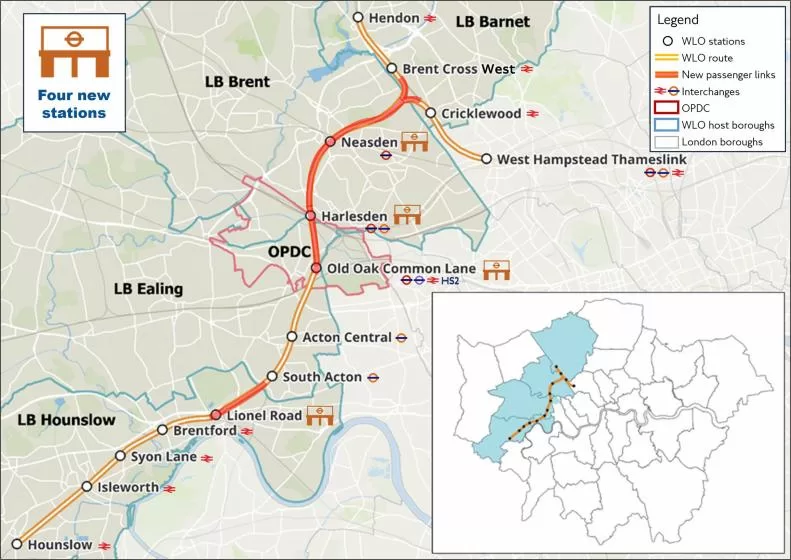
The West London Orbital Project continues advancing across northwest and west London following new development funding commitments announced in 2026. The proposed London Overground expansion aims to transform underused freight corridors into a new orbital passenger railway connecting key growth zones between Hounslow and Hendon. Transport for London (TfL), four London boroughs and the Old Oak and Park Royal Development Corporation (OPDC) recently committed up to £6.65 million ($8.4 million) to support the next project development phase.
The railway proposal would create a new passenger transport corridor using existing freight infrastructure, including the Dudding Hill Line. Project planners expect the route to improve connections between major employment centers, regeneration districts and national rail interchanges across west London. The scheme also supports broader transport integration around the future Old Oak Common HS2 and Elizabeth Line interchange hub.
West London Orbital Project enters next planning phase
The newly approved funding package will finance detailed design work, operational modelling, engineering assessments and public consultation activities through 2028. TfL confirmed that the next development phase will help determine whether the project proceeds toward statutory approvals and eventual construction.
Current plans propose up to six trains per hour operating between Hounslow and Hendon. Additionally, the route would create new interchange opportunities with the London Underground, National Rail, the Elizabeth Line, Thameslink and HS2 services. The railway would also introduce four new stations at Neasden, Harlesden, Old Oak Common Lane and Lionel Road.
Project stakeholders estimate the railway could support approximately 25,000 new homes and more than 11,500 jobs across west London. Furthermore, planners expect the route to remove around 650,000 car journeys annually, helping reduce congestion and transport emissions across the capital.
The project currently remains in the proposal and business-case stage. However, several local authorities and transport agencies continue supporting the scheme because it largely uses existing rail corridors rather than requiring extensive tunneling works. Some reports indicate construction could begin from 2027 if statutory approvals and additional funding arrangements move forward successfully.
West London Orbital Project complements wider European rail investment plans
The West London Orbital Project also aligns with wider European investment in rail infrastructure modernization and sustainable urban mobility. The proposed line would strengthen orbital connectivity across London while improving access to strategic regeneration districts including Brent Cross, Old Oak Common and the Great West Road corridor.
The scheme additionally complements larger European rail infrastructure initiatives, including the $490 billion Starline Metro Project which targets to connect 22 European countries by 2040 upon its completion.
Although full project financing still requires further approvals, the latest funding commitments mark a major step toward advancing one of London’s largest proposed orbital rail schemes in recent years.
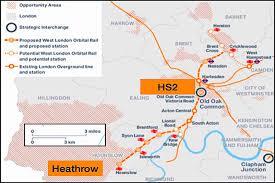
Feasibility Phase of the West London Orbital
The study completed by Transport for London in conjunction with Mott MacDonald and West London Alliance checked for an array of aspects. These included the feasibility design options and transport modelling cost estimates. Alongside this was the economic assessment and the technical work. Network Rail assessed the impacts the project will have on surrounding infrastructure.
Design Phase
The design stage of the West London Orbital is expected to start in the spring of 2025 through to 2026. This next phase will only be feasible if the TfL and other involved local authorities will have come up with a funding scheme by then.
The (feasibility) design stage is almost complete. This features the completion of the engineering, timetable, and traction power studies. Alongside this was the assessment on each of the boroughs, with each presenting a strong strategic case for the project. This will then call for the shortlisting of options for the elements of the project. All this points to the fact that the West London Orbital project is deliverable.
2025 will see TfL and Network Rail review the designs developed in the (feasibility) design stage. They will then identify a preferred option for each location, and then engage in public participation and consultation.
Construction Phase of the WLO
The construction phase of the WLO is expected to start in late 2020s. This has been put into realistic projection by TfL Major Projects and Urban Design Manager Matthew Rheinberg. He stated that if all goes as planned, construction is expected to start around 2030, with services starting three years later. For the construction phase to go through, the WLO project will have to get approval after a Transport & Works Act Order application.
Challenges to the (prospective) construction phase have also been identified. There has been mention of “existing housing, industrial buildings and road bridges” challenges. These have however been termed as “less constrains”. Mott MacDonald Associate Structural Engineer Chris Williams – the Project and Design Manager on the feasibility stage of WLO, mentioned the stated.
Funding for the project
According to the Mayor of London in mid-October, there are currently no funding allocated to the project. Only estimates suffice; ranging from £300m to £900m.
Close to end of November, official statement had it that the WLO needs £300m raised for the project. The government, local sources, and the TfL/GLA are the prospective sources for the project’s funding. The “nature” of the top priority project for London will however feature very little of private investment. The Mayor mentioned of “limited opportunities” for the private sector.
Official comments from the Mayor of London on the progress of talks with investors have not yet been made.
According to the mayor, all elements of the WLO are more than on-track, confirming that all that was planned was achieved. And all that is in line, will be achieved. The phases in line as confirmed, are the design and funding for the project.
The private sector and local funding sources
A Public-Private Partnership (PPP) for the scheme will not likely be the case as the infrastructure is wholly under the Network Rail. Another simple reason to this is that the West London Orbital project is not a new rail project but an upgrade to an existing rail network. The project’s funding could entirely be from the public sector. Funding from the private sector will contribute, “very little in the grand scheme of things”.
There is however some good news to the private sector. Recent official developments have it that despite the project having “limited opportunities” for the private sector, their contributions will not be intentionally left out as the TfL considers such as “reasonable and equitable”.
Also made official were the local sources for funding. These include the Community Infrastructure Levy and funds from housing and other developments.
Forecast benefits of the West London Orbital
Once completed the West London Orbital is expected to cut down transit time between key developing areas like the Brent Cross, Old Oak Common, and the Great West Corridor.
The West London Orbital is also expected to bring about an estimate 15,800 new homes across the route. Around 11,500 additional jobs will also be created across London. The economic boost from the WLO scheme in the four boroughs it will serve, will amount to around 12% of job growth forecast by the Greater London Authority. The forecast indicates years between 2031 and 2041.
Travel via the radial corridors via central London will also be less crowded as per prospective estimates.
As part of WLO’s scheme, a new platform and four other TfL stations will also be established. These new stations will serve as a link to the other aforementioned rail lines. The WLO will also lie close to Brentford FC Stadium. A link with the High Speed 2 (HS2) that is under construction will also be formed.
The new platform will be established in the Brent Cross West station. This strategic location in the Midland Main Line will allow for interchange services with the Network Rail’s network.
Also read about the Liverpool Street Station new plan proposal after the £15b by Sellar was ditched
The economy, environment, and social mobility aspects
The economic, environmental, and social mobility impacts of the WLO to the West London region will now cease to be hearsay. This comes after the Office of the Mayor made clear that the network rail project will not only bring in more labor pool to West London, but also improve the access to employment opportunities.
With the milestones achieved in the feasibility design stage and other completed stages, the reduction of carbon emissions catered for by the project cannot go unmentioned – this also means improved air quality in the areas served by the rail network. In-depth analysis of this will feature in the most recent stage of the project as the “business case” for the scheme.
£36M in funds, and the Old Oak and Park Royal
This investment from DESNZ is geared towards the broader West London’s energy infrastructure. It will principally focus on a heat network, one integrated into the Local Area Energy Plan (LAEP). The LAEP is developed by the OPDC for West London. The grant money will serve two purposes, £1m for businesses and the remaining £35m for construction. A partner to actuate the plans has not yet been named, but once done, estimates have it that the low-carbon heating project will be completed by 2027.
The HS2 is taking staggering shape in the UK. Alongside this is the Old Oak station and Park Royal. In the core of this development is the need for low-carbon solutions, an integral goal in the global chase for Net Zero.
The LAEP aims for this by the year 2050, and this investment is out to support the environmental bid. This will be made possible through the introduction of a heat network zone, rooftop PVs, grid decarbonization and the use of electric vehicles.
The heat network will harvest waste energy from data centers and channel it to new businesses and households, offering them low-carbon heating. The GLA, a prospective investor in the West London Orbital project, will fund the LAEP’s future work. This, in all sense, will also include the implementation.
Also read about the Old Oak Common station and 2 other sites to start main prep work
Concerns surrounding recent govt announcements
There has also been talk that the prioritization of the extension of the High Speed2 (HS2) to Euston. It has been speculated that this might have timeline effects on the delivery of the West London Orbital. No official comments have been made about this yet.
Project Fact Sheet
Project Name: West London Orbital (WLO) Project
Location: West and Northwest London, United Kingdom
Project Type: London Overground rail expansion project
Estimated Project Cost: £430 million–£610 million (US$545 million–US$775 million)
Current Development Funding: £6.65 million (US$8.4 million)
Project Status: Proposal and development stage
Planned Route: Hounslow to Hendon
Rail Infrastructure: Existing freight corridors including the Dudding Hill Line
Planned Rail Service: Up to six trains per hour
Planned Stations: Neasden, Harlesden, Old Oak Common Lane and Lionel Road
Key Interchanges: HS2, Elizabeth Line, London Underground, Thameslink and National Rail
Expected Benefits: Reduced congestion, improved connectivity and regeneration support
Projected Economic Impact: Approximately £300 million economic contribution during the first 10 years of operation
Housing Support: Around 25,000 homes
Employment Support: More than 11,500 jobs
Project Team
Project Owner: Transport for London (TfL)
Sponsors: Greater London Authority (GLA), West London Alliance and participating London borough councils
Lead Development Partners: London Boroughs of Barnet, Brent, Ealing and Hounslow alongside OPDC
Project Developer: Transport for London (TfL)
Infrastructure Partner: Network Rail
Funding Partners: TfL, OPDC and participating west London borough authorities
Potential Financiers: Greater London Authority, UK Government transport infrastructure programs and regional transport investment funds
Rail Systems Scope: Passenger rail upgrades, signaling modernization, station construction and interchange integration
Potential Contractors: Rail infrastructure engineering contractors, signaling specialists and station development firms
Urban Regeneration Stakeholders: Old Oak and Park Royal Development Corporation (OPDC) and local borough regeneration agencies
Transport Integration Partners: London Underground, Elizabeth Line, HS2 Ltd and National Rail operators



Leave a Reply