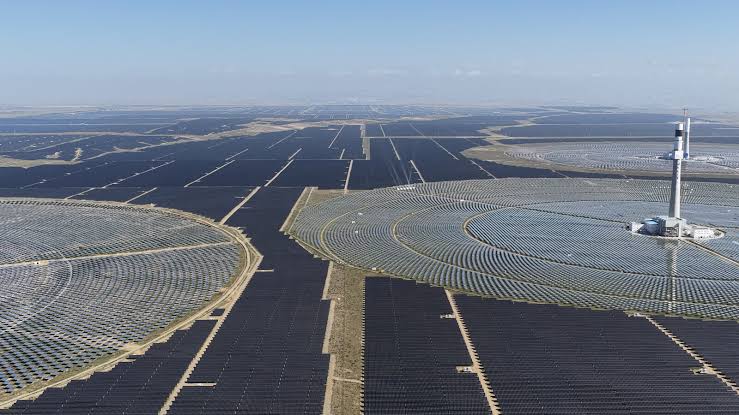
The world’s highest solar thermal plant being built in Xianzing, China is progressing nicely, with many key pieces of equipment now fully installed. The 100MW renewable energy project is now in the final stages of construction. Engineers and construction teams are also working together to implement the next steps towards grid integration. The recent milestone was a chance to secure the wide-spanning solar field operations of the facility.
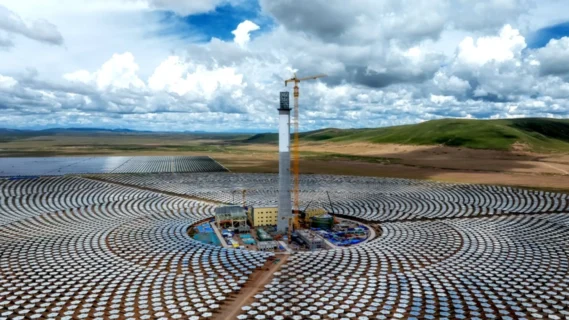
The proposed project site is approximately 8.6 million square feet distributed in Amdo County in Nagqu region. Furthermore, it is envisaged as a purpose-built site for sun-tracking heliostats which will contain 15,927 heliostats and a 210 m tower.
The plans for the ambitious molten-salt tower project to utilize the region’s 2,800 hours of sunshine per year were first announced by the developers. Earlier this year, teams also completed the enormous array of mirrors on the challenging plateau terrain. The massive build also is designed to ensure a reliable renewable energy source in challenging cold temperatures and poor grid conditions. Currently, China leads the world in renewable energy with the amount of wind and solar power capacity under construction in China has more than doubled the amount under construction in the rest of the world
Outlook on the World’s Highest Solar Thermal Plant in China
The world’s highest solar thermal plant in China has been labeled a technological marvel which is capable of providing continuous power generation with advanced thermal storage. This is based on the insights gained from the project engineers controlling the flights at the highest altitudes. After the installation of the heliostats, the team intends to start with the grid connection process by October 2026. Once the facility is in service an intelligent control system will also be installed to ensure stable performance.
It has a molten salt to capture and store the concentrated heat from the sun, generating electricity long when the sun has set. Despite the development being pushed forward, local training activities actively support farmers and herders to earn an estimated $17.47 million.
The project documentation stated that the plant’s design is supposed to provide “reliability” because the technology of the solar collectors. Moreover, the thermal storage system is concentrated, and the control system is automated. The massive construction project overcame the harsh winter weather and strong winds in the region. Currently, it is officially in place for the plateau to produce 255 million kilowatt-hours of clean energy each year.
Project Overview
- Project Value: Undisclosed
- Location: Amdo County, Nagqu, Xizang Autonomous Region, China
- Developer: Regional Energy Engineers and Authorities
- Status: Heliostat installation complete; targeting October 2026 grid connection
Scope
- 100-megawatt (MW) tower-type solar thermal power plant
- 15,927 sun-tracking mirror heliostats
- 8.6 million square-foot solar energy field
- Also 210-meter central receiver tower utilizing molten salt
Project Highlights
- First facility of its kind built at an ultra-high altitude
- Generates 255 million kilowatt-hours of electricity annually
- Saves approximately 60,000 tonnes of standard coal per year
- Also reduces annual carbon dioxide emissions by 165,000 tonnes
Key Developments
- Major milestone achieved with the installation of nearly 16,000 heliostats
- Custom construction methods developed for the plateau environment
- Grid connection also officially targeted for October 2026
Key Challenges
- Navigating severe cold and also powerful winds during construction
- Managing complex equipment operations at ultra-high elevations
- Also integrating massive power loads into challenging weak-grid conditions
Outlook
- Project awaits its final October 2026 grid integration
- Local economic development and also specialized workforce training likely to continue
- Furthermore, high-altitude renewable energy initiatives remain highly active



Leave a Reply