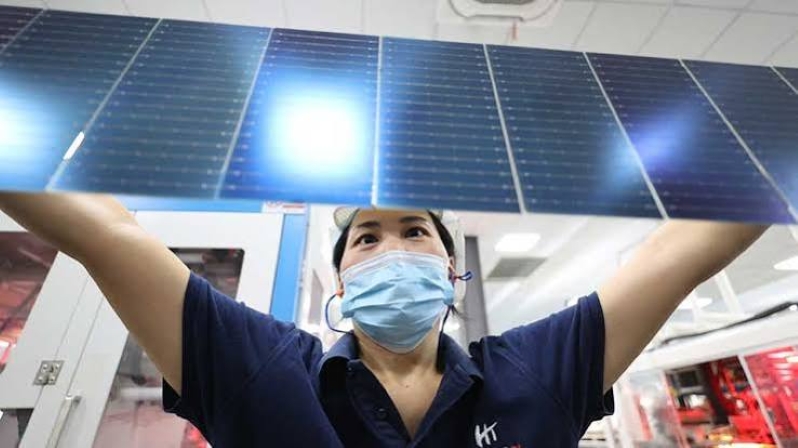
China’s proposal for export controls on key solar manufacturing technologies could complicate efforts by other countries to develop domestic photovoltaic industries. This raises questions about energy security, technological independence and the future of global clean-energy supply chains.
The proposal, announced in October 2026, targets 12 technologies used in solar manufacturing. It also includes processes for producing silicon wafers, advanced solar cells and polysilicon. While some technologies would be prohibited from export, others would be subject to restrictions and additional approval requirements.
The solar industry has benefited from years of falling equipment costs and expanding international trade. The recent proposal by China to control export of solar manufacturing technologies highlights an increasingly important question. Can countries achieve energy independence when the technologies required to manufacture renewable energy equipment remain concentrated in the hands of a few global players?
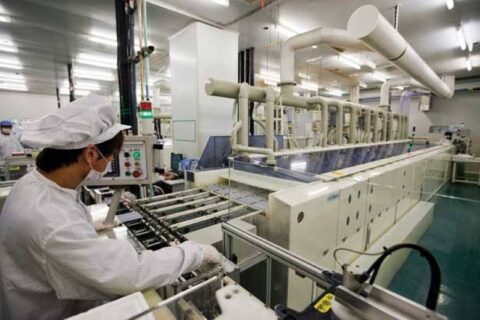
China’s solar dominance extends beyond finished panels
China is dominating the global solar photovoltaic supply chain. This is supported by extensive manufacturing capacity, investment in research and development, and the development of meshwork industrial networks.
The influence of the second largest economy in the world by GDP also extends beyond the finished solar modules installed on rooftops and utility-scale solar farms. It also features upstream materials, silicon wafers, solar cells and the manufacturing expertise needed to produce these components at scale.
The distinction is important because purchasing solar panels and developing the capacity to manufacture them are two different industrial challenges.
A country can rapidly expand its renewable energy capacity by importing finished modules. Establishing a competitive domestic manufacturing industry, however, requires much more. This will span access to production equipment, specialized engineering knowledge, intellectual property, skilled workers and reliable supply chains.
China’s proposed controls therefore raise concerns that countries seeking to reduce their dependence on imported solar equipment could encounter additional barriers when attempting to acquire the technology needed to manufacture their own products.
According to Reuters’ report on the proposed controls, the measures form part of a broader review of export restrictions. It also covers advanced technologies, including artificial intelligence (AI) and biotechnology.
Beijing has also cited national security concerns. It argues that closer oversight is necessary as photovoltaic (PV) technologies find applications in sensitive sectors, including aerospace and defense.
Importantly, the proposal does not amount to a blanket ban on solar technology exports. Instead, it seeks to spell out technologies that would be prohibited from export and those that could be transferred overseas subject to restrictions.
The industrial implications could extend far beyond China
One of the most significant potential consequences is the effect on countries investing in domestic solar manufacturing.
The United States, India and European economies are set to face major blows. China’s export controls on solar manufacturing technologies has the potential to affect the economies’ plans to expand domestic clean-energy manufacturing. These challenges are also particularly relevant to Africa, where countries are expanding solar deployment while exploring opportunities to develop domestic manufacturing capabilities. China’s proposed controls could also affect Africa’s solar manufacturing ambitions.
This is so because, building factories is only part of the equation. Manufacturers must also obtain the technology and expertise required to operate production lines efficiently. They also need to remain competitive as solar technology evolves.
Restrictions on advanced manufacturing know-how could complicate those efforts. Particularly, where companies depend on Chinese processes, equipment or technical assistance.
The proposed measures could also affect the international expansion strategies of manufacturers seeking to establish production facilities outside China. Technology transfers, licensing agreements and the installation or commissioning of manufacturing lines could become more complicated where controlled technologies are involved.
This could increase compliance costs, delay projects or encourage manufacturers to seek alternative suppliers and develop their own processes.
The proposal also highlights the vulnerability of countries attempting to develop manufacturing capacity in emerging technologies. Advanced processes such as perovskite-silicon tandem cells offer the potential for improved solar conversion efficiency. Access to such processes is becoming increasingly important as the solar manufacturing industry moves beyond conventional production methods.
If access to some of these technologies becomes more restricted, competing manufacturers could find it harder to close the technological gap.
Could China’s solar export controls move accelerate the search for alternatives?
China’s proposed restrictions could also create additional incentives for countries to invest in domestic research and development. The export controls could also catalyze the establishment of alternative technology partnerships and the diversification of sources of manufacturing equipment.
India, for example, has been seeking to reduce its reliance on Chinese solar technology. Restrictions affecting technology transfers could make that objective more difficult in the short term, but they could also strengthen the case for investing in independent manufacturing capabilities.
Other countries could pursue similar strategies. Also noteworthy is that developing competitive production processes requires considerable capital, technical expertise and time.
There is also a risk that increasingly fragmented technology markets could undermine some of the efficiencies that have helped drive down solar costs. If manufacturers must develop parallel production systems or source technologies from a narrower range of suppliers, the industry could face higher costs and slower deployment of advanced manufacturing methods.
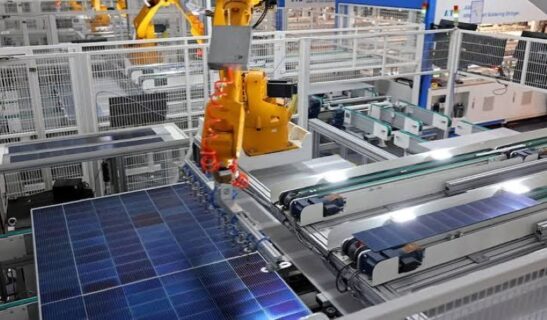
Conversely, stronger investment in alternative technologies could eventually produce a more diversified global supply chain.
Whether that outcome materializes will depend on the willingness of governments and private investors to support manufacturing beyond the initial construction of factories.
Energy security now includes control over manufacturing technology
The proposed export controls on solar manufacturing technologies by China also illustrates how energy security is evolving.
Historically, many governments focused on securing fuel supplies, electricity generation capacity and access to critical raw materials. As renewable energy becomes increasingly important, the ability to manufacture the equipment that generates and distributes electricity is also becoming a political and strategic concern.
Solar power reduces exposure to imported fossil fuels. Dependence can also shift elsewhere in the supply chain if countries rely heavily on foreign suppliers for panels, components and manufacturing technology.
This does not mean that every country needs to manufacture its own solar equipment. International trade and specialized production remain important sources of affordability and efficiency.
However, governments must weigh the benefits of inexpensive imports against the risks of concentrated supply chains. This is importantly particular to where access to advanced technology could become subject to geopolitical tensions.
China’s proposed solar technology export controls: What happens next?
China’s proposal for solar manufacturing technology export controls is open for public consultation until November 15, 2026.
Until then, it would be premature to conclude overseas solar manufacturing projects will face disruption or that the price of finished solar panels will necessarily rise. Nevertheless, the proposal by China to control export on solar manufacturing technologies is significant.
The global energy transition has largely been driven by the pursuit of cheaper, cleaner electricity. Its next phase could increasingly be shaped by a different contest. Who controls the technologies needed to manufacture the equipment on which that transition depends?



Leave a Reply