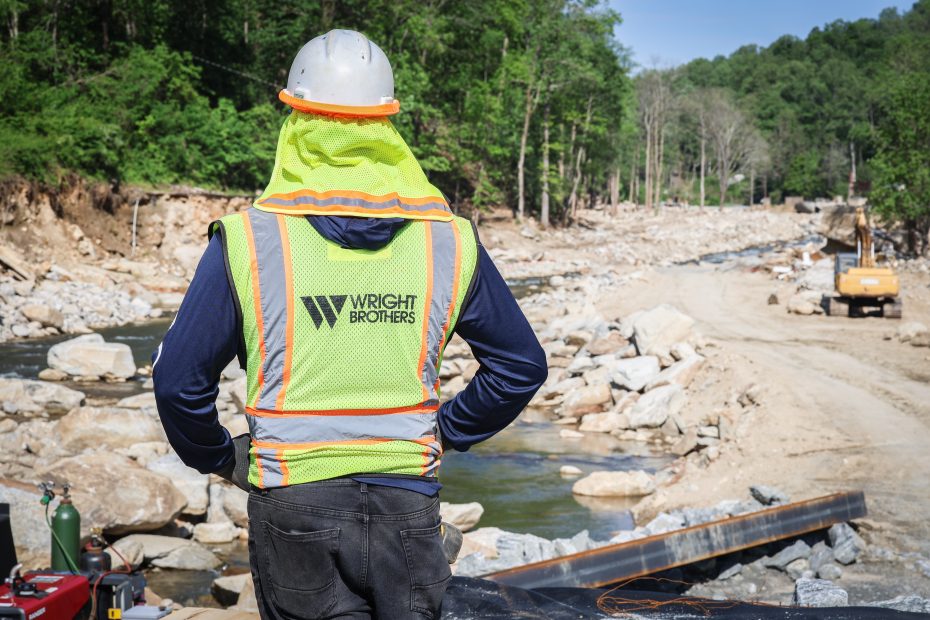
The Wright family, founders and owners of Wright Brothers Construction, has unveiled plans for Project River, a $11.3 billion industrial campus on 850 acres in Bradley County, Tennessee.
The proposed development would combine a large data center with an on-site power complex designed to generate most of the campus’s electricity. If fully built, the project could become the largest economic development investment in Tennessee history.
The proposal calls for a multi-use industrial campus with up to 1,500 megawatts of on-site generation, significant forestry operations and infrastructure designed to support a major power-intensive industrial user.
The Wright family is pursuing the project through Wright Industrial Group, led by President Lukas Salyer.
Project River would generate its own power
The centerpiece of Project River is a proposed 1,500-megawatt behind-the-meter power complex.
The system would consist of:
- A 500-megawatt biomass power plant fueled by Southern pine
- Two natural gas plants with a combined capacity of 1,000 megawatts
- A proposed 360-megawatt TVA connection to provide backup and meet peak demand
The natural gas facilities would receive fuel through the Enbridge East Tennessee Natural Gas pipeline.
Under the proposed operating model, the campus would use the electricity generated on site rather than sell power back to the grid.
Developers say the approach would allow Project River to meet its substantial electricity requirements while limiting the project’s reliance on broader grid infrastructure. The strategy also comes as utilities across the country face rapidly rising electricity demand from data centers and advanced manufacturing.
Biomass plant would connect the project to Tennessee’s timber industry
The proposed biomass facility would also make forestry a major part of Project River.
At full scale, developers estimate the plant could process approximately 5 million tons of timber each year. That would create additional demand for Southern pine while supporting logging, transportation and other forestry-related businesses across the region.
The project also proposes using moisture extracted from the timber as part of its water strategy.
Southern pine can contain roughly 40% moisture when it arrives at the facility. Project developers say the drying process could recover approximately 200 gallons of water per minute.
That recovered water would then support a closed-loop cooling system for the data center after the system’s initial fill.
The developers say the campus would not rely on municipal water for its routine operations and would not require water intake or discharge pipes connected to the Hiwassee River.
Data center could anchor the campus
A large data center currently represents the most likely major tenant for Project River, although the project does not yet have a confirmed operator or data center customer.
Developers have also identified other potential advanced industrial uses, including manufacturing, robotics and semiconductor-related operations.
The proposed investment would include approximately:
- $7.3 billion for data center buildings
- $1.5 billion for the natural gas power plant
- $1.25 billion for the biomass power plant
- $750 million for transmission technology
- $500 million for site work and other buildings
The estimated $11.3 billion investment excludes IT hardware, including servers, processors and networking equipment. A hyperscale data center operator could therefore bring additional billions of dollars in investment if the campus ultimately secures a major tenant.
Project could create thousands of jobs
At full build-out, Project River is expected to create approximately 2,600 direct and indirect jobs.
About 900 permanent positions would be located on the campus, including approximately:
- 525 data center operations jobs
- 250 power generation jobs
- 125 biomass handling and processing jobs
Developers estimate a median salary of approximately $84,600 for the permanent workforce.
The project could also support approximately 1,700 indirect jobs, particularly across forestry, trucking and other regional supply chains.
Construction would create another major employment surge. Project River could require as many as 3,500 construction workers at peak, with construction expected to span approximately five years.
$11.3 billion project would rise along the Hiwassee River
The proposed campus would occupy approximately 850 acres west of Interstate 75 and north of Old Lower River Road NW, along the Hiwassee River.
The property sits across Interstate 75 from the Wacker polysilicon plant.
Although the land remains privately owned by the Wright family, the development would proceed through Wright Industrial Group.
The developers have submitted plans seeking to rezone and annex the property into the City of Cleveland. The site is approximately seven miles north of Cleveland’s current northern edge.
As part of the proposed expansion, the Wright family has said it would donate land for a fire station and police station to serve the northern portion of the county.
The rezoning and annexation requests will require consideration by the Cleveland Municipal Planning Commission and Cleveland City Council. The project would also be structured as a planned unit development, providing additional oversight of the proposed campus.
The effort comes after Bradley County adopted zoning restrictions earlier in 2026 that significantly limit where data centers can be developed in unincorporated areas of the county.
Developers seek to address water and noise concerns
Project River’s design attempts to address several concerns that have emerged around large data centers, particularly electricity consumption, water use and noise.
The proposed campus would sit behind natural 80- to 100-foot ridges, with preliminary plans placing the main building pad below the ridge crest.
Developers say the surrounding terrain and existing trees could help reduce sound reaching nearby areas.
The proposal also calls for the campus to avoid the large diesel backup generator systems commonly associated with some data centers. Instead, the project’s on-site power system would provide its primary electricity supply, while the proposed TVA connection would support backup and peak requirements.
The closed-loop cooling system would further reduce the project’s dependence on municipal water.
Developers estimate that Project River could generate tens of millions of dollars in annual local tax revenue for Cleveland and Bradley County.
That revenue could support schools, roads, libraries, debt service and other capital projects without requiring local tax increases, according to the project team.
Major project details remain unresolved
Despite the scale of the announcement, Project River remains in the proposal and approval stage.
One of the biggest outstanding questions is who will ultimately operate the power facilities and who will occupy the industrial campus.
The project does not yet have a confirmed data center operator or power offtaker.
While developers describe a data center as highly likely, the final tenant has not been secured. The eventual operator would also influence several elements of the final design, including cooling systems, power redundancy, security requirements and traffic infrastructure.
The project must also move through the local rezoning and annexation process before construction can begin.
Construction could begin in 2027 or 2028
The project team is targeting late 2027 or early 2028 for the start of construction.
If that schedule holds, the full campus could take approximately five years to build, putting initial full-scale operations several years after groundbreaking.
The timeline remains dependent on approvals, project financing, power arrangements and the selection of a major industrial or data center tenant.
Public meetings planned for September
Project River’s development team plans to hold two public meetings in Cleveland to present the proposal and answer questions from residents.
The meetings are scheduled for:
- Tuesday, September 1, from 6 to 8 p.m.
- Saturday, September 12, from 10 a.m. to noon
Both meetings will take place at the PIE Center, 2337 Parker St. NW, Cleveland, Tennessee.
The project team is expected to discuss the proposed power system, water strategy, noise mitigation, employment, tax revenue and the project’s potential impact on the surrounding community.
For now, Project River remains a proposal, with rezoning, annexation and other approvals still ahead. Its path will be worth watching as communities across the country weigh the economic benefits of major data center developments against concerns over power, water, noise and land use. In Virginia, for example, the Fredericksburg City Council recently voted 7-0 to reject a special use permit and zoning map amendment for the controversial 1500 Gateway data center proposal. Whether Project River encounters a similar level of local opposition—or moves forward as planned—will become clearer as the approval process unfolds.

Project River at a glance
- Project Name: Project River
- Developer: Wright Industrial Group
- Owners: Wright family, founders and owners of Wright Brothers Construction
- Location: Approximately 850 acres in Bradley County, Tennessee
- Site: West of I-75, north of Old Lower River Road NW, along the Hiwassee River
- Proposed investment: Up to $11.3 billion, excluding IT hardware
- Potential anchor: Large data center
- On-site power: 1,500 MW
- Biomass generation: 500 MW
- Natural gas generation: 1,000 MW
- Proposed TVA backup/peak capacity: 360 MW
- Permanent on-site jobs: Approximately 900
- Indirect jobs: Approximately 1,700
- Peak construction jobs: Up to 3,500
- Construction timeline: Approximately five years
- Target groundbreaking: Late 2027 or early 2028
- Approvals: Rezoning, annexation and other required project approvals
- Public meetings: September 1 and September 12 at the PIE Center in Cleveland





Leave a Reply