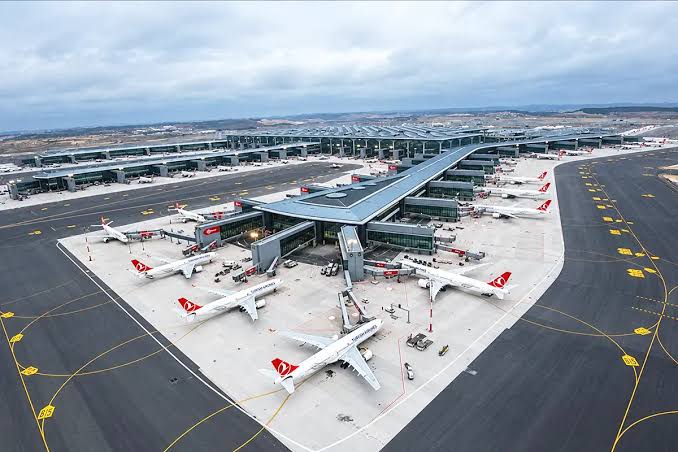
Istanbul Airport fourth runway will enter service on September 18, expanding the airport’s construction footprint and operational flexibility. The 2,820-metre concrete runway will become the airport’s first east-west oriented main runway. It will complement three existing main runways and two backup runways.
The new infrastructure comes as Istanbul Airport continues challenging London Heathrow for Europe’s leading passenger hub position. ACI EUROPE ranked Heathrow first in 2025 with 84.48 million passengers. Istanbul followed closely with 84.44 million passengers.
Istanbul Airport fourth runway expands operational capacity
Türkiye’s Transport and Infrastructure Minister Abdulkadir Uraloğlu confirmed the September 18 opening date. President Recep Tayyip Erdoğan is expected to attend the inauguration ceremony.
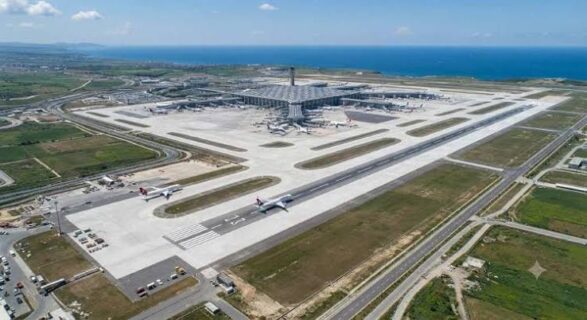
The fourth runway measures 2,820 meters long and 45 meters wide. Its east-west orientation differs from the airport’s three existing main north-south runways.
Therefore, the new infrastructure will provide controllers with another runway option during changing wind conditions. It should also shorten aircraft taxiing distances on selected routes.
The runway will particularly support domestic services and flights operating toward eastern destinations. Consequently, some aircraft can reach departure points more efficiently.
Once operational, Istanbul Airport will have six runways across its current configuration. Authorities also aim to achieve four-independent-runway operations at the airport.
Istanbul Airport fourth runway strengthens Europe hub competition
The runway project arrives amid strong passenger growth at Istanbul Airport. ACI EUROPE reported 5.5% annual passenger growth at Istanbul during 2025.
By comparison, Heathrow recorded only 0.7% growth during the same period. Istanbul therefore came within 40,000 passengers of Europe’s busiest airport.
The Turkish airport has also expanded its connectivity across international markets. Its strategic location supports connections between Europe, Asia, Africa and the Middle East.
Meanwhile, Istanbul Airport has already demonstrated its ability to operate three runways independently. İGA has previously stated that the airport’s original infrastructure supports future four-runway operations.
That capability formed part of the airport’s original construction planning. İGA began extensive planning, design and safety studies for independent runway operations in 2015.
The wider Istanbul Airport development represents an approximately $12 billion infrastructure investment. The airport opened in 2018 after replacing Istanbul Atatürk Airport as the city’s principal international hub.
Construction began in 2014 near the Black Sea. The development transformed a large site into a major aviation and transportation complex.
The airport’s long-term expansion strategy includes further terminal and airside infrastructure. İGA now plans to increase annual terminal capacity to 120 million passengers.
Construction program positions Istanbul for further growth
The fourth runway therefore represents more than an additional strip of pavement. It strengthens the airport’s wider airside infrastructure and future operating model.
Furthermore, the east-west alignment provides greater flexibility than the existing north-south runway configuration. This design can help airport authorities manage aircraft movements under different operating conditions.
The project also supports Istanbul’s growing role as an international transfer hub. Continued passenger growth will require additional runway, terminal, taxiway and apron capacity.
Istanbul’s performance against Heathrow demonstrates the scale of that challenge. The airport needs additional infrastructure to accommodate rising demand while maintaining efficient aircraft movements.
The September opening consequently marks another milestone in Istanbul Airport’s long-term construction program. It also brings the airport closer to its planned four-runway independent operating capability.
The contrasting expansion strategies also highlight different challenges facing Europe’s major airports. While Istanbul Airport adds runway capacity, the £49 billion Heathrow third runway project faces a severe construction skills shortage that could threaten delivery. The Heathrow program could require about 108,000 workers, making workforce development a critical part of its construction strategy.
Project Fact Sheet
Project: Istanbul Airport Fourth Runway
Location: Istanbul, Türkiye
Wider development value: Approximately $12 billion
Runway length: 2,820 meters
Runway width: 45 meters
Existing main runways: Three
Existing backup runways: Two
Total runways after opening: Six
Primary construction benefit: Increased airside operational flexibility
Operational advantage: Potentially shorter taxiing on selected routes
Target operations: Four independent runways
Airport opening: 2018
Construction commencement: 2014
2025 passenger traffic: 84.44 million
Planned terminal capacity: 120 million passengers annually
Strategic role: International transfer hub linking Europe, Asia and Africa
Project Team
Airport operator: İGA Istanbul Airport
Government ministry: Türkiye Ministry of Transport and Infrastructure
Aviation authority: General Directorate of State Airports Authority
Original development consortium: Cengiz, Mapa, Limak, Kolin and Kalyon
Development model: Build-operate-transfer concession
Master planning: İGA Istanbul Airport
Runway planning: Integrated into the airport’s original master plan
Independent runway planning: İGA began studies in 2015
Construction program: Phased airport development and airside expansion
Current expansion objective: Four-independent-runway operations
Passenger infrastructure strategy: Progressive expansion toward 120 million annual passengers

Leave a Reply