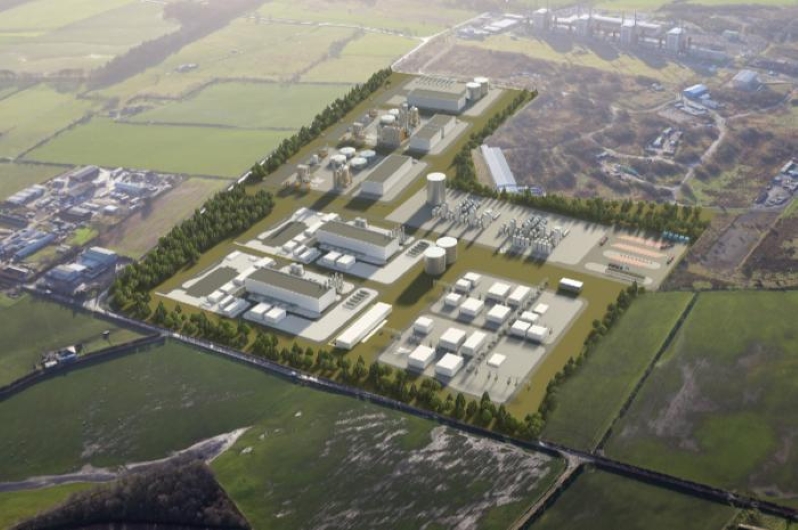
Plans have been submitted for a £16.5 billion data center project and technology campus at the former Chapelcross nuclear power station near Annan in Dumfries and Galloway, Scotland. Developer CX Tech Ltd is proposing an eight-building development with approximately 1GW of potential data center capacity, positioning the project among the largest digital infrastructure developments proposed globally.
Known as the CX Technology Campus, the development will occupy approximately 55 hectares of land north of the former nuclear power station. It will include up to 162,000 square meters of data center floorspace, supporting energy infrastructure, industrial buildings and a dedicated training center.
The project is expected to be delivered over approximately eight years, with construction potentially beginning in 2027. This, however, remains subject to planning approval and the completion of subsequent development and investment arrangements.
CX Tech also estimates that the development could attract approximately £16.5 billion in private investment. The Chapelcross data center project is also expected to generate around 750 construction jobs, alongside 450 permanent direct positions once operational.
Eight data center buildings planned for Chapelcross project
The proposed CX Technology Campus will comprise eight hyperscale data center buildings designed to support artificial intelligence (AI), cloud computing and other high-performance computing workloads.
The development will provide up to 162,000 square meters of data center floorspace, with approximately 1GW capacity across the completed campus.
The wider development will also include a dedicated training center, industrial buildings, electrical infrastructure, an on-site substation, access roads, landscaping and other supporting facilities.
The buildings will also be constructed in phases. This approach will allow the developer to align construction and infrastructure delivery with the requirements of future data center operators.
According to the planning proposals, the campus will feature energy-efficient building designs and infrastructure. This is intended to support large-scale computing operations while reducing its environmental footprint.
The Chapelcross data center project will also include closed-loop, non-evaporative air cooling systems. These are intended to avoid the continuous evaporative water demand associated with some conventional large-scale data center cooling technologies.
CX Tech also estimates that operational water consumption across the eight facilities could be equivalent to approximately 32 households.
Renewable energy supply and power infrastructure
Electricity availability is one of the main considerations behind the selection of Chapelcross for the proposed data center campus.
The location benefits from existing energy infrastructure associated with the former nuclear power station, including an adjacent 132kV grid supply point. It is also situated within a region with substantial existing and planned renewable electricity generation.
CX Tech also intends to develop dedicated connections to locally and regionally generated renewable energy. This will integrate the Chapelcross data center campus with wind, solar and other renewable energy sources.
The wider Chapelcross development program previously identified approximately 3GW of renewable energy resources within 50 miles of the site. This also includes additional planned and consented wind and solar developments.
The developer also says the campus will use a private-grid approach to secure renewable electricity supplies The technology campus will not rely on unrestricted withdrawals from the public electricity network.
The planning application is being assessed against important considerations. These include grid capacity, energy availability, greenhouse gas emissions and the potential effects on surrounding communities.
Chapelcross data center project planning application submitted as scrutiny intensifies
CX Tech submitted its application for Planning Permission in Principle to Dumfries and Galloway Council under reference 26/1649/PIP.
The application covers the proposed data center buildings, training center, industrial facilities, substation and associated infrastructure.
An Environmental Impact Assessment accompanies the planning submission. It examines issues including energy use, air quality, noise, traffic, water, biodiversity, landscape impacts, ground conditions and greenhouse gas emissions.
Planning Permission in Principle would also establish whether the development is acceptable in principle. Detailed matters such as building layouts, architecture, landscaping and other technical requirements would still need to be addressed through subsequent approvals.
The proposal has also attracted scrutiny from environmental campaigners and local representatives. They have argued against its potential electricity requirements, effects on rural landscapes and the use of agricultural land.
The Scottish Greens have also questioned whether a development of this scale could place additional pressure on the electricity network and undermine wider environmental objectives.
CX Tech maintains that the project has been designed around renewable energy supplies, low-water cooling systems and fossil-free backup generation. The developer also argues that the development would provide significant economic and employment benefits to the region.
As of November 2026, the planning application remains under assessment, with no final planning decision confirmed. A pre-determination hearing is also required because the proposal is classified as a national development.
The Scottish Government has also indicated that new guidance for data center developments is expected in December 2026. This adds another important consideration to the project’s planning timetable.
Chapelcross redevelopment builds on former nuclear site’s energy legacy
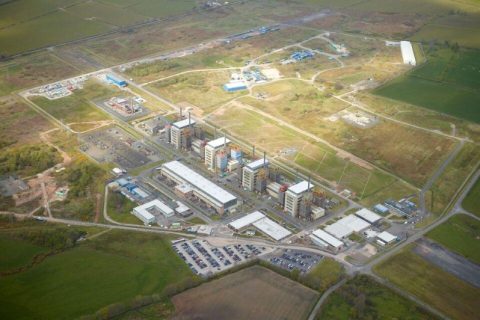
The proposed data center is part of a much wider effort to repurpose Chapelcross following the closure of its nuclear power station.
Chapelcross began generating electricity in 1959 and operated until 2004. The facility’s four Magnox reactors were subsequently de-fueled. The decommissioning program then continued under Nuclear Restoration Services, a subsidiary of the Nuclear Decommissioning Authority.
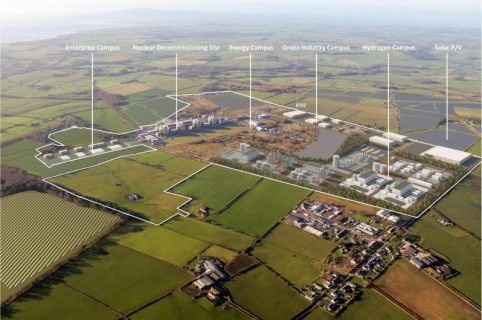
In August 2024, the Nuclear Decommissioning Authority and its partners published a masterplan for transforming the wider Chapelcross site into a green energy hub.
The wider redevelopment of Chapelcross is also attracting investment in renewable hydrogen infrastructure. Green Cat Hydrogen’s Creca Hydrogen Facility, located near the former nuclear power station, has secured planning approval for a proposed 50MW electrolyzer. It will be capable of producing more than 4,000 tons of green hydrogen annually.
In November 2025, the NDA announced that it had entered Heads of Terms with CX Power as the strategic developer for the wider redevelopment program. CX Power is associated with GA Consultants and Global Mutual Properties.
The wider masterplan also identified the potential for a 1GW data center campus alongside hydrogen and advanced manufacturing developments.
The subsequent CX Technology Campus proposal represents a major digital infrastructure component of that wider redevelopment ambition.
Importantly, the data center project is being developed on land north of the former Chapelcross nuclear station. It will not be a redevelopment of the former reactor buildings themselves. The distinction is significant because decommissioning and site clearance at the former nuclear facility will continue over an extended period.
Chapelcross data center project could reshape Dumfries and Galloway’s industrial economy
Beyond its digital infrastructure capacity, the CX Technology Campus is being positioned as a major economic development opportunity for southern Scotland.
CX Tech estimates that construction could support approximately 750 jobs over the eight-year delivery program. This is with around 450 permanent direct positions once the campus becomes operational.
The developer also proposes a dedicated training center and approximately 320 local apprenticeship opportunities. These are intended to develop skills in digital infrastructure, engineering, energy and construction.
The project could also generate further opportunities for regional contractors and suppliers involved in civil engineering, electrical infrastructure, mechanical installation, building services, security and facilities management.
The developer has also identified an indicative annual rateble value of approximately £15 million, potentially generating significant business-rate revenue for the local economy.
However, these economic benefits remain dependent on the development securing planning approval, attracting data center operators and progressing through its subsequent investment and construction phases.
If delivered, the data center project would give Chapelcross a new industrial purpose. It will also connect the area’s energy heritage with the growing demand for artificial intelligence (AI) and cloud computing infrastructure.
The development’s eventual success will surely depend on securing reliable renewable electricity supplies and addressing the environmental and community concerns associated with a project of this scale.
Europe’s changing energy infrastructure requirements are also driving investment in conventional nuclear supply chains. In France, EDF subsidiary Framatome is planning a major forge investment at Le Creusot to expand manufacturing capacity for nuclear reactor components as the country prepares its EPR2 program.


Leave a Reply