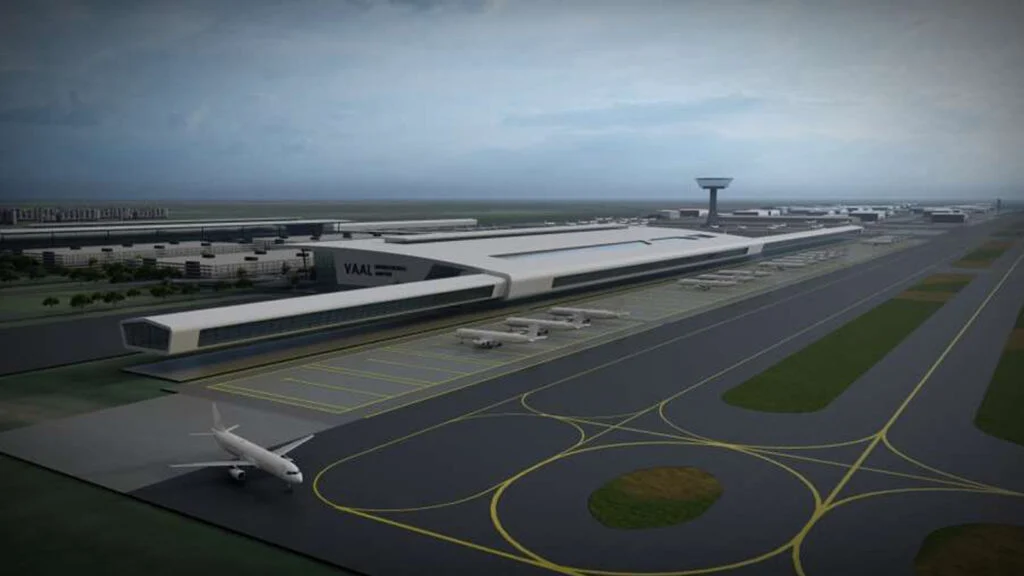
The Vaal Aerotropolis International Airport project in South Africa is advancing as a central pillar of a broader smart city and industrial strategy. Moreover, the proposed Greenfield airport will form the backbone of a new aerotropolis along the Vaal River in Gauteng. Therefore, planners aim to unlock regional economic growth while strengthening South Africa’s logistics and aviation capacity. In addition, the project integrates infrastructure, industry, and sustainability within a single development framework.
Vaal Aerotropolis International Airport project in South Africa drives SEZ development
The Vaal Aerotropolis International Airport project forms part of the planned Vaal Special Economic Zone. Consequently, authorities are conducting public consultations to guide the designation process and gather community input. Furthermore, the initiative is being led by the Department of Trade, Industry and Competition in collaboration with the Gauteng Growth and Development Agency. As a result, the project seeks to attract both domestic and foreign direct investment into Gauteng’s southern corridor.
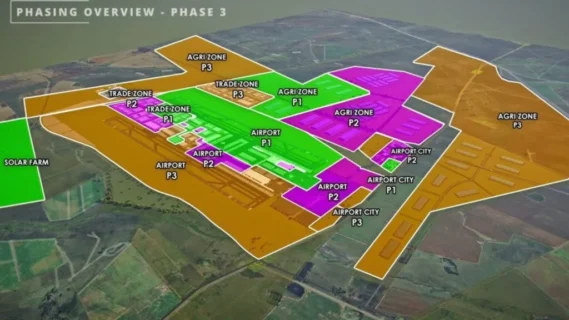
Meanwhile, the SEZ will include five land parcels located in Heidelberg, Kookfontein, Langlaagte, Rietspruit, and Zwartkopjies. In addition, planners intend to integrate industrial, commercial, and residential zones within the development. Therefore, the airport will act as a catalyst for a fully integrated urban and economic hub. Similarly, the smart city concept will prioritize job creation and long-term regional development.
Aerotropolis vision strengthens Vaal Aerotropolis International Airport project
Importantly, the Vaal Aerotropolis International Airport project anchors the broader Vaal Aerotropolis. As such, the aerotropolis model positions the airport at the center of economic activity and logistics networks. Moreover, developers emphasize integrated air cargo services as a core feature of the project. Consequently, the airport is expected to handle an initial capacity of 7.2 million passengers and 150,000 tons of freight annually.
In addition, the development will include four major economic zones designed to support aviation-linked industries. Therefore, the project aims to become a key gateway for global trade within a 50-minute radius of Johannesburg. Similarly, a new road network will connect the airport directly to the N1 highway, improving accessibility. Furthermore, the terminal design will focus on international operations with state-of-the-art facilities.
Notably, Citibank pledged R1.4 billion toward the first phase of the airport and aerotropolis development. However, additional investment will be required to fully realize the project. Nevertheless, strong institutional backing continues to position the project as a viable long-term investment opportunity.
Smart city and green hydrogen strategy shape construction scope
The project extends beyond aviation into a comprehensive smart city development aligned with sustainability goals. Consequently, planners are incorporating renewable energy solutions, including a large solar photovoltaic farm. In addition, designated agricultural zones will support agro-processing industries within the region. Therefore, the development integrates food production, energy, and logistics into a unified ecosystem.
Moreover, the project emphasizes “green industrialization,” with a focus on hydrogen production. As such, South Africa’s green hydrogen strategy underpins the long-term vision for the SEZ. In October 2023, the government approved a national framework to position the country as a global exporter of green hydrogen. Therefore, the Vaal region could emerge as a key hub for low-carbon manufacturing and renewable energy production.
However, environmental challenges remain a critical consideration. The Vaal River has experienced significant pollution from industrial activity and wastewater discharge. Consequently, the project includes a “blue economy” component aimed at improving environmental management. In the same way, developers aim to balance industrial growth with ecological sustainability.
The Vaal Aerotropolis International Airport project represents a transformative infrastructure initiative. Ultimately, it combines aviation, industry, and sustainability to reshape Gauteng’s southern corridor into a globally competitive economic hub.
Similarly, another major aviation development is progressing in the Western Cape, where the Cape Winelands Airport is moving closer to construction. The R7–R8 billion project near Durbanville is undergoing upgrades to accommodate wide-body aircraft and is expected to open around 2027–2028, reinforcing South Africa’s broader push to expand aviation capacity and regional connectivity.
Project Fact Sheet
Project Name: Vaal Aerotropolis International Airport
Location: Vaal region, Gauteng, South Africa
Estimated Cost: $1 billion (initial development phase)
Project Type: Greenfield international airport and aerotropolis development
Scope:
- New international airport with passenger and cargo terminals
- Aerotropolis comprising four major economic zones
- Integrated road network with access to N1 highway
- Solar PV farm and renewable energy infrastructure
- Agricultural and agro-processing zones
- Smart city infrastructure and utilities
Capacity:
- 2 million passengers annually (initial phase)
- 150,000 tons of cargo annually
Current Status (2026):
- SEZ designation under public consultation
- Early-stage planning and investment mobilization
Key Components:
- Airport-led economic zone (aerotropolis)
- Green hydrogen production hub
- Industrial and logistics infrastructure
- Environmental and “blue economy” initiatives
Project Team
Project Owner: Government of South Africa
Lead Authority: Department of Trade, Industry and Competition
Implementing Agency: Gauteng Growth and Development Agency
Municipal Partners:
Investors: Citibank (early-stage funding support)
Developers: Vaal Aerozone (project promoter)
Consultants: To be appointed (planning, environmental, and engineering advisory)
Contractors: To be appointed following procurement phase
Key Stakeholders:
- South African Civil Aviation Authority
- Local communities and industry stakeholders


Leave a Reply