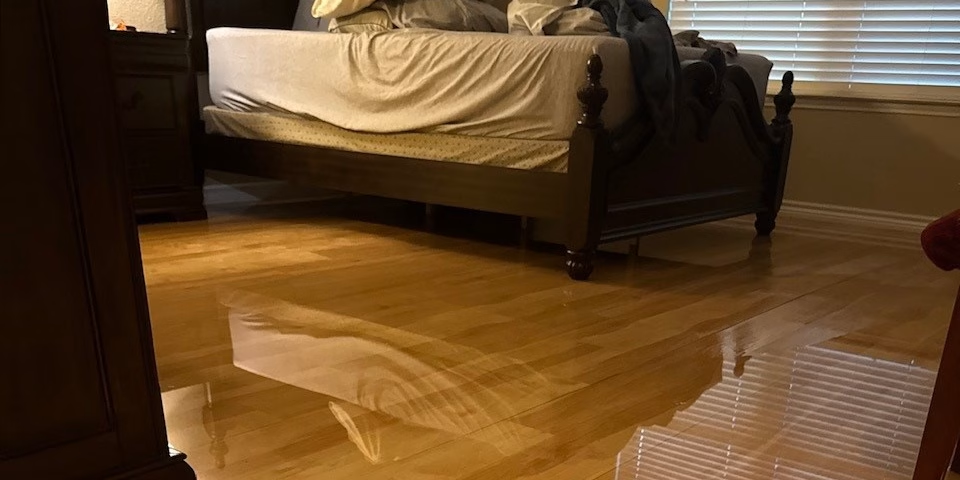
Engineering News-Record reported in June 2026 that plumbing-related water losses remain a major concern on construction projects, while leak-monitoring and automatic shutoff systems are increasingly being used to limit disruption and prevent smaller incidents from becoming larger losses. Building owners are often the first to deal with the consequences: damaged walls and floors, interrupted operations, emergency repairs, drying work and reconstruction.
A Restoration Professional Builds a Connected Model
Elnard Khozha-Akhmedov, owner and managing director of Texas-based Intensa Dry Mold & Water Restoration, has developed InstaWaterShield, a model that links leak detection and automatic shutoff with digital alerts and professional restoration response in one planned process. He has more than 20 years of business and operational leadership experience, and has managed projects involving water mitigation, structural drying, mold remediation, fire and smoke cleanup, and reconstruction. He is also a Texas Licensed Mold Remediation Contractor and holds professional certifications from the Institute of Inspection, Cleaning and Restoration Certification.
Why Shutting Off the Water Is Not Enough
His field experience shaped the idea. A shutoff device can stop more water from entering a property, but it cannot determine where moisture has already traveled through flooring, insulation, or enclosed wall and ceiling cavities.
As an Applied Structural Drying technician certified by the Institute of Inspection, Cleaning and Restoration Certification (IICRC), the industry body that sets professional standards for restoration work, Elnard deals with moisture that has moved beyond the visible leak. “The device can tell you that water is present, but I still want to know where it went,” he says. “If it reached insulation, subflooring, or a closed wall cavity, turning off the supply has stopped the source. It has not finished the job. Someone still has to determine what is wet and what can be dried in place.”
How InstaWaterShield Works
InstaWaterShield connects that professional assessment with the earlier stages of prevention.
Sensors installed at high-risk points detect water and can trigger an automatic shutoff of the main supply line. The system’s mobile platform gives owners real-time alerts, system diagnostics and access to emergency restoration support.
Elnard built the approach around partnerships with established smart-water manufacturers, avoiding the need to produce the hardware in-house. Using established hardware and local licensed service providers is also intended to make the model replicable across multiple markets without centralized manufacturing.
A Response Network Behind the Hardware
The final element is the response network. Elnard’s model also connects each operating market with qualified restoration professionals who can assess and stabilize water damage after an alert. As InstaWaterShield expands, he plans to standardize that response so owners have a defined path from detection and shutoff to professional assessment and drying.
Early Installations in Texas
The concept has already been implemented, with early InstaWaterShield systems installed at properties in Plano and Garland, Texas. Elnard is using those installations to gather operating experience before broader expansion.
Proactive Restoration
He describes the broader approach as “proactive restoration”: moving part of the restoration process ahead of a major loss by installing protection before an emergency occurs and establishing what happens when the system detects water.
“I have seen property owners deal with a leak and then start figuring out whom they need to call,” he says. “They may need a plumber first, then a restoration company, and sometimes an environmental specialist or another trade. I want those responsibilities worked out before the building has a problem. An emergency is a bad time to start assembling the process.”
Where the Model Fits Best
Elnard’s model is designed for settings such as multifamily buildings, hotels, schools, senior living facilities and commercial properties, where a relatively small plumbing failure can affect several rooms, units or floors before it is discovered. Water may escape in spaces that remain unattended for hours, then move through floors, walls, or ceilings before visible damage appears. In new construction, owners and developers can also decide where to install sensors, how to access and maintain shutoff equipment, and who should receive alerts before the building is occupied.
Shortening the Time to Response
The value of the model lies in shortening the time between detecting a leak, stopping the water supply and beginning professional restoration response. By connecting those steps in advance, InstaWaterShield is designed to limit how far water can spread before the affected areas are assessed and drying begins. Earlier intervention can help reduce the amount of material that has to be removed or replaced and, in turn, limit the scope and cost of restoration.
A Clearer Way to Judge Value
This approach could give building owners a clearer way to judge the value of water-loss prevention. Instead of treating leak detection, shutoff equipment and restoration as separate services, the InstaWaterShield model puts them into one planned sequence.
“A fast alert is useful, but I look at the whole sequence,” Elnard Khozha-Akhmedov says. “How quickly can the water stop? Who checks the building? How soon can drying begin if it is needed? If we start designing those answers into the property before the leak happens, we have a much better chance of keeping a small plumbing failure small.”