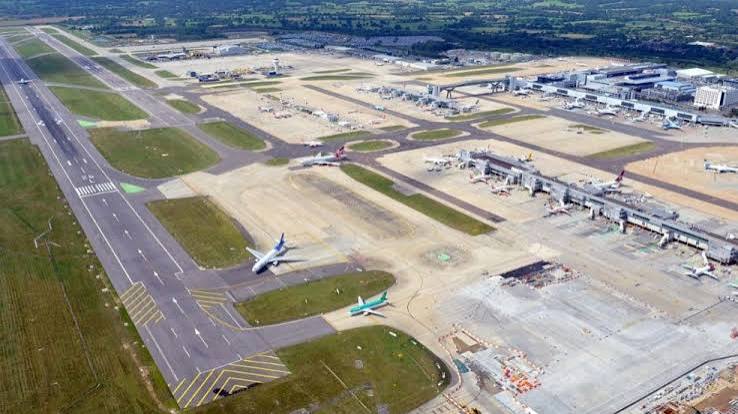
Gatwick second runway construction has moved closer to delivery after the UK Court of Appeal dismissed the final legal challenge against the airport expansion project. The ruling removes the last significant legal obstacle facing the estimated £2.2 billion development. As a result, the project can advance into its next delivery phase. The expansion will increase airport capacity, improve regional connectivity, and support long-term economic growth while meeting environmental and planning conditions.
The judgment concludes years of legal proceedings that followed government approval of the Development Consent Order. Campaign group Communities against Gatwick Noise Emissions (CAGNE) and campaigner Peter Barclay sought permission to overturn an earlier High Court decision. However, the Court of Appeal rejected their appeal, allowing the expansion project to proceed.
The project will transform Gatwick’s northern standby runway into a fully operational runway. Engineers will relocate the runway by about 12 metres to satisfy international safety standards for dual-runway operations. In addition, the scheme includes new taxiways, aircraft stands, terminal improvements, airfield infrastructure, drainage systems, and highway upgrades.
Gatwick second runway construction clears final legal hurdle
The court ruling gives the project team certainty ahead of procurement and construction activities. Although ministers had already approved the scheme, the legal challenge delayed progress. Consequently, Gatwick Airport can now move forward with detailed engineering, contractor appointments, and enabling works.
The airport expects the expansion to accommodate about 100,000 additional aircraft movements each year. Furthermore, annual passenger capacity could increase by approximately 13 million, raising total capacity to around 80 million passengers by the late 2040s.
Government officials welcomed the decision, describing the expansion as nationally significant infrastructure. They argued the project would strengthen the UK’s aviation network while supporting economic growth. Meanwhile, campaign groups expressed disappointment and pledged to monitor environmental compliance throughout construction and future operations.
The judgment also strengthens investor confidence because it removes uncertainty surrounding the project’s legal status. Consequently, procurement activities can accelerate as contractors prepare for the next delivery stages.
Also read: Heathrow Third Runway Construction Project Faces Rival $67 billion Expansion Bids
Gatwick second runway construction to support jobs and investment
Construction will create thousands of jobs across engineering, civil works, logistics, and specialist aviation services. Moreover, the completed expansion could support around 14,000 additional jobs across the wider region. The project could also contribute about £1 billion annually to the UK economy through increased business activity and tourism.
Unlike many large airport developments, Gatwick’s expansion will upgrade existing infrastructure instead of constructing an entirely new runway. Therefore, the project requires less land acquisition while making greater use of existing airport assets. This approach should reduce construction complexity and improve delivery efficiency.
The project will remain privately financed without direct taxpayer funding. Investors continue to support the expansion because of growing passenger demand and the airport’s strategic role within the UK’s aviation sector.
Contractors will also face complex operational challenges during construction. They must complete airside works while maintaining safe airport operations and minimizing disruption to passengers and airlines. Therefore, phased construction planning will play a critical role throughout delivery.
The legal victory allows the project to enter its implementation stage after nearly eight years of planning and court proceedings. Subject to final delivery schedules, major construction activities are expected to gather pace before the upgraded runway becomes operational around 2030.
The project also reflects a broader trend of airport infrastructure investment across Europe, where operators are expanding capacity to meet rising passenger demand. Similar efforts are underway in Ireland through the planned redevelopment of Dublin and Cork airports, which focuses on modernizing terminals, improving passenger facilities, and increasing operational efficiency.

Also read: Heathrow Expansion Plans £2.6 billion Car Park in Wider £24 billion Program
Project fact sheet
Project: Gatwick Second Runway Construction
Location: London Gatwick Airport, West Sussex, England, United Kingdom
Estimated cost: £2.2 billion
Project type: Airport expansion
Current status: Court of Appeal dismissed the final legal challenge
Funding: Privately financed
Target completion: Around 2030
Main works:
- Relocate the northern runway by approximately 12 metres
- Convert the standby runway into an operational runway
- Construct new taxiways
- Develop additional aircraft stands
- Upgrade terminal facilities
- Improve drainage and utilities
- Upgrade supporting road infrastructure
Additional aircraft movements: Approximately 100,000 annually
Additional passenger capacity: Around 13 million passengers annually
Estimated regional jobs: About 14,000
Estimated annual economic contribution: £1 billion
Project team
Project owner: Gatwick Airport Limited
Airport operator: London Gatwick Airport
Major shareholder: VINCI Airports
Planning authority: UK Department for Transport
Development consent authority: UK Secretary of State for Transport
Regulatory authority: Planning Inspectorate
Judicial authority: UK Court of Appeal
Environmental stakeholders: Communities Against Gatwick Noise Emissions (CAGNE)
Delivery partners: Engineering, aviation infrastructure, and civil construction contractors to be appointed during procurement.



Leave a Reply