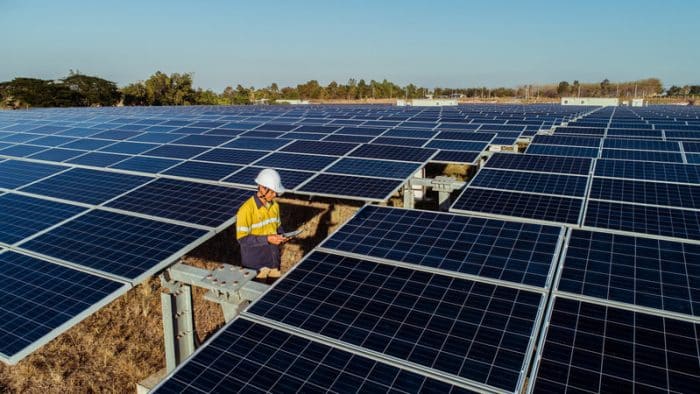
US solar storage project, valued at $3.5 billion, has secured major financing that accelerates construction across multiple utility-scale renewable sites in the United States. Additionally, the funding package strengthens one of the largest combined solar and battery storage pipelines in the country. Cypress Creek Renewables structured the capital raise to support long-term buildout and grid integration. Moreover, the transaction reflects growing investor confidence in hybrid clean energy infrastructure. Consequently, the project advances at a critical moment for US decarbonisation targets.
Furthermore, the financing covers a diversified portfolio of solar generation assets paired with energy storage systems. However, the scale places it among the most significant renewable energy funding deals in recent years. According to Reuters, the structure supports both operational assets and late-stage development projects. Additionally, the deal enhances liquidity for continued construction activity through 2026 and beyond.
US solar storage project financing accelerates construction rollout
US solar storage project financing now enables faster deployment across multiple US states, where grid demand continues to rise. Moreover, construction sequencing has been prioritized to optimize transmission access and interconnection timelines. Cypress Creek Renewables has aligned contractors and equipment suppliers to reduce project delays. Consequently, engineering and procurement activities are being scaled in parallel with financing release.
Additionally, battery storage integration remains central to the construction strategy. These systems stabilize intermittent solar generation and improve dispatch reliability. However, supply chain constraints still influence equipment lead times across inverter and battery modules. Furthermore, developers are mitigating risks through multi-vendor procurement strategies.
Meanwhile, the project supports regional job creation across construction, electrical engineering, and logistics sectors. Local subcontractors are actively engaged across multiple sites. Consequently, economic benefits extend beyond energy production into industrial supply chains.
US solar storage project strengthens grid-scale renewable capacity
US solar storage project development significantly expands utility-scale renewable capacity across key US markets. Moreover, the portfolio supports state-level renewable portfolio standards and federal clean energy incentives. According to Reuters, the financing positions the assets among the largest hybrid solar-storage pipelines in the country.
Furthermore, Cypress Creek Renewables has structured long-term power purchase agreements to stabilize revenue flows. However, market volatility in power pricing still requires careful hedging strategies. Additionally, storage assets improve peak shaving and grid balancing capabilities.
Consequently, utilities benefit from improved reliability during peak demand periods. Meanwhile, grid operators increasingly rely on distributed solar-plus-storage systems to reduce congestion. Furthermore, the project aligns with broader US energy transition goals targeting carbon reduction.
Construction outlook and project execution strategy
US solar storage project execution continues through phased construction schedules across multiple states. Moreover, engineering teams are prioritizing sites with advanced permitting status. Cypress Creek Renewables is coordinating with transmission authorities to ensure interconnection readiness. Consequently, construction risks are being reduced through early-stage grid alignment.
Additionally, environmental compliance and land-use planning remain integral to project delivery. However, permitting timelines vary depending on jurisdictional requirements. Furthermore, community engagement programs support local acceptance and stakeholder coordination.
Meanwhile, procurement strategies focus on securing long-lead equipment early. This approach reduces exposure to global supply chain disruptions. Consequently, project timelines remain largely on track despite market pressures.
The project strengthens the broader clean energy supply chain that includes large-scale battery manufacturing developments such as the Koreplex Battery Manufacturing Plant. While Cypress Creek Renewables focuses on utility-scale deployment of solar and storage systems, the Koreplex project represents the upstream industrial capacity required to supply advanced lithium-ion batteries for such grid-scale applications.
Additionally, both projects reflect accelerating investment in US energy resilience, where manufacturing and deployment are increasingly integrated. However, supply chain alignment remains critical as demand for battery energy storage systems continues to rise. Consequently, projects like Koreplex are expected to support future solar-plus-storage portfolios similar to Cypress Creek’s multi-state development pipeline.
Moreover, this interconnected growth highlights how US federal incentives and private capital are jointly scaling both production and deployment infrastructure across the renewable energy sector.
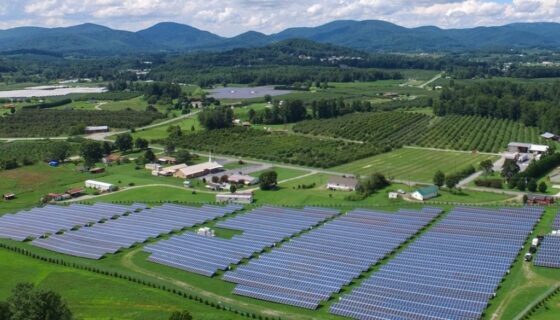
Project Fact Sheet
Project Name: US Solar Storage Project Portfolio (Cypress Creek Renewables)
Total Financing: $3.5 billion
Developer: Cypress Creek Renewables
Technology: Utility-scale solar + battery energy storage systems (BESS)
Geographic Scope: Multiple states across the United States
Project Type: Hybrid renewable energy generation and storage construction portfolio
Construction Stage: Active development and phased construction
Funding Structure: Debt and project financing package
Offtake Strategy: Long-term power purchase agreements (PPAs)
Project Team
Cypress Creek Renewables — Project developer and portfolio lead
Investment lenders and infrastructure debt providers — Senior financing partners
Independent power purchasers (utilities and corporates) — Offtake agreement partners
Engineering, Procurement and Construction (EPC) contractors — Responsible for solar and storage buildout
Battery technology suppliers — Provide utility-scale energy storage systems
Solar module manufacturers — Supply photovoltaic components
Transmission and interconnection authorities — Grid integration and approvals
Environmental and permitting consultants — Regulatory compliance and impact assessments



Leave a Reply