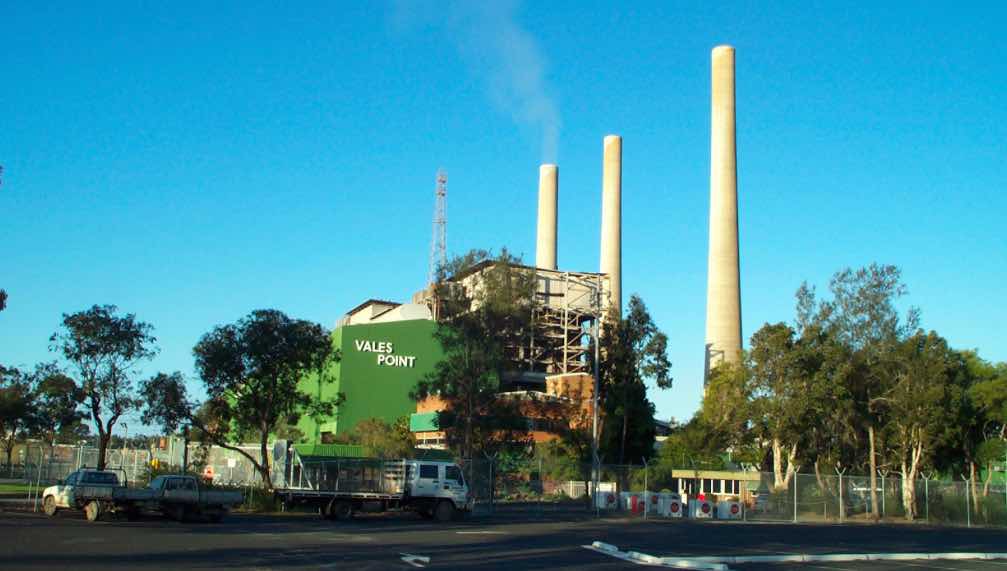
The proposed Vales point BESS project represents a major step towards repurposing ageing coal infrastructure in New South Wales, Australia. Delta Electricity and Samsung C&T have submitted plans for a 400MW battery energy storage system (BESS). The facility will provide 800MWh of storage capacity, supplying electricity for approximately 250,000 homes over two hours.
The development will occupy part of the existing Vales Point Power Station site in the Hunter-Central Coast Renewable Energy Zone. The application now moves the project into formal state planning assessment, following 18 months of technical and environmental investigations. It also advances Delta’s plans to extend the site’s electricity infrastructure beyond conventional coal-fired generation.
The project has a significant industrial redevelopment dimension because it will utilize an established electricity generation site. Furthermore, existing transmission infrastructure offers a connection advantage for the proposed battery installation.
Delta and its development partner have lodged a State Significant Development Application (SSDA) and supporting Environmental Impact Statement (EIS). They submitted the documents to the New South Wales Department of Planning, Housing and Infrastructure.
The application follows community engagement involving residents, businesses, community organizations and other stakeholders. The planning submission also follows extensive technical and environmental investigations conducted over approximately 18 months.
Vales Point BESS Project targets two-hour electricity storage
The proposed installation will deliver 400MW of power output and 800MWh of energy storage. Consequently, the system will discharge electricity at full capacity for approximately two hours.
Delta estimates that the battery could supply around 250,000 homes during this period. The calculation uses an average household electricity load of approximately 1.6kW.
The facility will store electricity when generation exceeds immediate demand. It will subsequently release stored energy during periods of higher consumption.
Moreover, the installation will help balance fluctuations associated with increasing renewable electricity generation. Solar and wind facilities depend on weather conditions, creating variations in electricity supply.
Battery storage provides a mechanism for managing these fluctuations. It can also support grid reliability by supplying electricity when demand increases.
The project will include battery installations and supporting infrastructure. Its scope covers construction, operation, maintenance and eventual decommissioning or potential repowering.
The development will also operate alongside the existing electricity network. Delta intends to use the site’s established infrastructure to support the battery’s connection and operation.
The project adds to a growing pipeline of large-scale energy storage developments across New South Wales. In the Hunter region, AirTrunk and European Energy Australia are advancing a separate A$1.5 billion renewable energy partnership targeting more than 1GW of combined generation and storage capacity.
The proposed development includes a 260MW solar farm, an 800MWh-plus battery installation and a wind project of up to 350MW. This complements the region’s wider energy infrastructure expansion, including the 1GW Hunter renewable energy project. Together, the developments position the Hunter region as an increasingly important centre for renewable generation and battery storage in NSW.
Vales Point BESS Project repurposes an ageing coal generation site
The proposed development will occupy the Vales Point Power Station property near Mannering Park. The facility sits on the southern shore of Lake Macquarie, approximately 130km north of Sydney.
The site’s electricity generation history dates back several decades. Construction of Vales Point A began in 1959, with generation commencing in 1963.
The original A station stopped operating in 1989 and underwent demolition completed in 2014. However, Vales Point B continues generating electricity through two 660MW coal-fired units.
The B station commissioned its generating units in 1978 and 1979. Together, these units provide approximately 1,320MW of installed generation capacity.
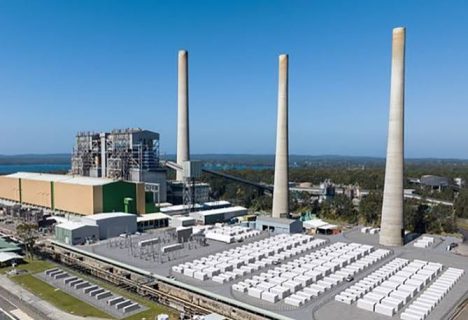
The proposed battery therefore introduces another use for the wider industrial property. It will utilize the former A-Station footprint rather than require an entirely new electricity generation location.
Additionally, the project benefits from proximity to existing transmission infrastructure. The location also sits within the Hunter-Central Coast Renewable Energy Zone.
These characteristics could reduce the need for extensive new transmission development. They also position the installation within a region undergoing significant electricity infrastructure transformation.
The development could generate employment and procurement opportunities across the Hunter and Central Coast economies. Delta also identifies the site’s existing skilled workforce as an advantage.
However, the project must complete the statutory planning process before construction can proceed. The NSW planning portal currently identifies the development’s assessment stage as preparation of the EIS.
The department will subsequently exhibit the environmental assessment for public submissions. Authorities will then consider submissions, responses and relevant technical assessments before determining the application.
Delta and Samsung C&T previously indicated that a final investment decision would follow completion of environmental assessment. Their published project information identifies late 2026 as the expected decision period, subject to planning approval.
The Vales Point Battery Project therefore represents an important development in Australia’s electricity infrastructure transition. Its proposed construction would extend the site’s industrial purpose while supporting additional renewable energy integration.
Project Fact Sheet
Name: Vales Point Battery Energy Storage System (BESS).
Location: Vales Point Power Station, Mannering Park, New South Wales, Australia.
Category: Energy infrastructure and battery energy storage.
Development type: State Significant Development.
Project capacity: 400MW.
Energy storage capacity: 800MWh.
Storage duration: Two hours at maximum rated output.
Estimated household supply: Approximately 250,000 homes for two hours.
Project site: Former A-Station footprint within the existing Vales Point Power Station property.
Supporting infrastructure: Battery installations, power conversion systems, grid connection and associated ancillary infrastructure.
Renewable energy zone: Hunter-Central Coast Renewable Energy Zone.
Estimated project cost: Not publicly disclosed. No verified USD construction budget is available.
Planning status: State Significant Development Application and Environmental Impact Statement submitted.
Planning authority: NSW Department of Planning, Housing and Infrastructure.
Construction commencement: Subject to planning approval and final investment decision.
– Expected investment decision: Late 2026, according to Delta’s published project information.
Project purpose: Strengthen electricity reliability, support renewable energy integration and repurpose existing industrial infrastructure.
Project Team
Developer and project proponent: Delta Electricity
Development and technology partner: Samsung C&T Corporation
Project owner/operator: Delta Power & Energy (Vales Point) Pty Ltd, trading as Delta Electricity.
Parent investment group: Sev.en Global Investments
Environmental and planning authority: New South Wales Department of Planning, Housing and Infrastructure
Environmental assessment consultant: Umwelt Environmental and Social Consultants – previously engaged for environmental and social investigations and planning documentation.



Leave a Reply