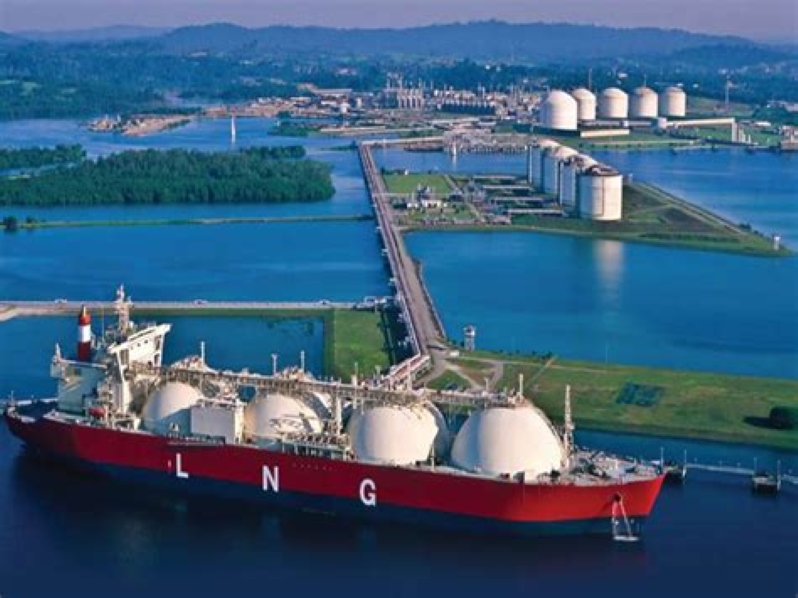
Pakistan plans a major expansion of its natural gas infrastructure through a US-backed $4.4 billion LNG terminal, storage and pipeline project at Port Qasim. The development would be Pakistan’s first large-scale LNG storage facility. It would also establish a 1,100km LNG pipeline to transport gas to inland markets.
A consortium of US-linked energy and investment companies is proposing to invest up to $4.4 billion in the liquefied natural gas (LNG) project in Pakistan.
The development is led by Global Vision Energy Partners (GVEP) and Khanjee Holdings, alongside General Mediterranean Holding.
Additionally, Pakistan’s first LNG storage facility will be developed in two phases. The first phase will focus on a new LNG terminal and storage facility at Port Qasim, near Karachi. The second phase would extend the infrastructure inland through a 1,100km natural gas pipeline.
Port Qasim LNG terminal to feature four storage tanks
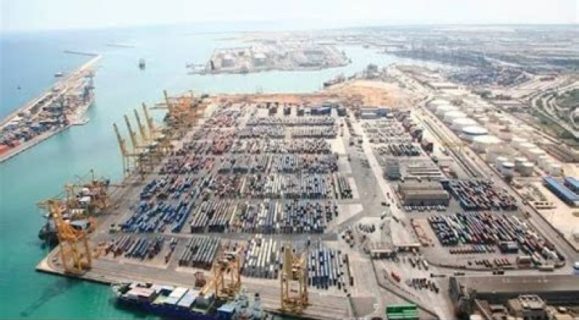
The first phase of the proposed Pakistan LNG project involves an estimated $1.7 billion investment in a gas import, storage and regasification terminal at Port Qasim.
The facility is planned to include four LNG storage tanks. Each will have a capacity of approximately 140,000 cubic meters, This will provide a combined static storage capacity of 560,000 cubic meters.
The terminal is expected to handle approximately 35 billion cubic feet (BCF) of LNG annually. It will also have an estimated throughput of 35.6 BCF based on three inventory turnover cycles per year.
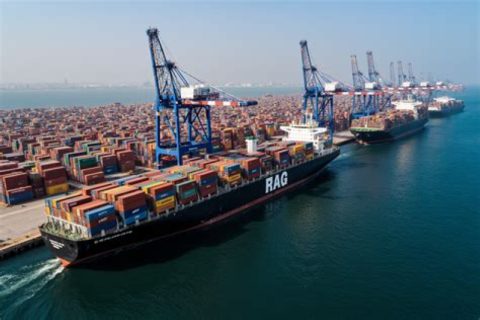
Importantly, the proposed LNG facility would address a significant gap in Pakistan’s energy infrastructure. The country currently lacks dedicated LNG storage capacity, leaving its regasified LNG supply chain heavily dependent on imported cargoes, shipping schedules and international market conditions.
By introducing substantial onshore storage capacity, the development could provide greater flexibility in managing LNG inventories. It will also help with the receiving of cargoes and the supply of gas to domestic consumers.
Port Qasim has been selected partly because of its established port infrastructure and access to maritime routes used by LNG carriers. Its location outside the Strait of Hormuz is also considered strategically important for international LNG shipping and regional energy trade. This is due to the long-standing US-Iran-Israel war.
1,100km gas pipeline project to connect Pakistan LNG imports with inland markets
The second phase of the project will involve constructing a1,100km natural gas transmission pipeline, with a proposed diameter of between 42 and 48 inches.
The pipeline will have a capacity of approximately 1.2 billion cubic feet per day (BCFD). This will allow for gas transport from the coastal terminal to consumers in Pakistan’s inland markets.
The pipeline component will bring the total estimated project investment to approximately $4.4 billion.
The development also revives interest in large-scale north-south gas transmission infrastructure in Pakistan. The government had previously pursued a similar pipeline initiative in cooperation with Russia, although that proposal did not progress to construction.
The combination of coastal LNG infrastructure and long-distance transmission capacity would also establish a new integrated gas supply corridor. This will potentially change how imported natural gas is stored, transported and marketed across Pakistan.
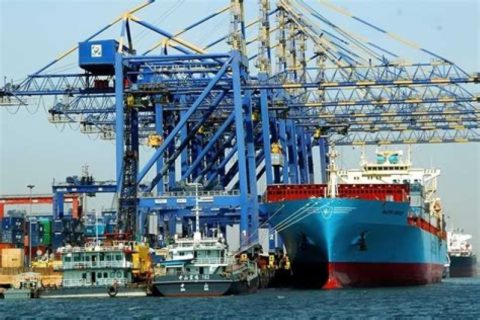
Pakistan LNG terminal and pipeline project: Financing and commercial structure
The proposed $4.4 billion Pakistan LNG project cost is also expected to follow a 70:30 debt-to-equity financing structure. Debt will account for 70% of the project financing and equity contributing the remaining 30%.
Under the proposed ownership arrangement, GVEP is expected to hold a 26% stake, while General Mediterranean Holding would own 24%. Khanjee Holdings and strategic co-investors would each hold 20%. Local Pakistani investors will be offered the remaining 10% equity participation in the first phase.
The consortium is also reportedly seeking local investors willing to commit indicative investments starting at $50 million per investor.
Potential institutional investors identified by the sponsors include Grey Rock Investment Partners, Kohlberg Kravis Roberts (KKR), Blackstone, Saudi Arabia’s Public Investment Fund and the Kuwait Investment Authority. However, their participation remains subject to due diligence, investment approvals and definitive agreements. No binding equity commitments from these institutions have been confirmed.
USTDA approves $4.4 billion Pakistan LNG project for consideration
The billion-dollar liquefied gas development has also been approved for consideration under the US Trade and Development Agency’s (USTDA) project preparation program. This opens a window for it to receive partial financing from the US International Development Finance Corporation (DFC).
Additionally, the US Export-Import Bank could provide export credit guarantees covering technology, equipment and services required for the development.
The sponsors intend to establish a special purpose vehicle (SPV) that will develop, own and operate the infrastructure. This is important because it will separate the project’s assets and liabilities from those of its sponsors.
Merchant-based operating model and proposed tariffs
Most LNG infrastructure projects rely heavily on long-term government-backed purchase agreements. Unlike most, the proposed Pakistan LNG terminal and pipeline project is structured as a merchant infrastructure platform.
Under this arrangement, the SPV would generate revenue through LNG storage, regasification, gas transmission, tolling and transshipment services. The facility would also serve domestic industrial consumers. This is while providing services for international LNG suppliers, particularly those from the U.S. and the Middle East.
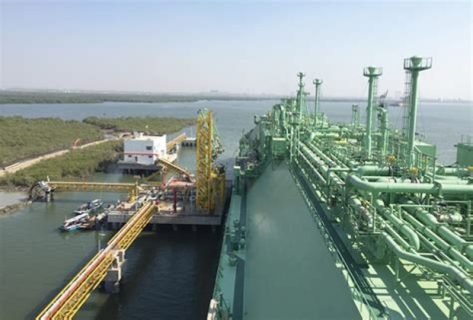
Additionally, the proposed commercial structure combines long-term storage and tolling agreements, transshipment arrangements and take-or-pay commitments where appropriate. The remaining capacity is available for merchant trading activities.
The consortium has also proposed a terminal and storage tolling tariff of $4.93 per million British thermal units (mmBtu). Gas transmission through the proposed pipeline would attract a separate tariff of $1.91 per mmBtu during the first 10 years of operation.
These rates are projected to decline to $2.20 per mmBtu for terminal and storage services and $0.92 per mmBtu for transmission thereafter.
Domestic regasification tariffs will also require approval from Pakistan’s Oil and Gas Regulatory Authority (OGRA). Other commercial services are expected to operate under market-based pricing arrangements.
Project approvals and development outlook
The proposed development has reportedly secured consent from the Port Qasim Authority for its intended site. The sponsors have also submitted an application to OGRA for a provisional license.
Government facilitation has also been communicated through Pakistan’s Ministry of Maritime Affairs and the Petroleum Division under the Ministry of Energy.
However, the project remains at the proposal and development-preparation stage. The consortium has yet to finalize its engineering, procurement and construction (EPC) contracts, construction agreements and equipment supply arrangements.
Consequently, the final investment cost will depend on the outcome of these agreements.
The development also follows the withdrawal of Energas, an earlier consortium involving the Lucky Group and Qatari state-owned QatarEnergy, from a comparable LNG terminal proposal at Port Qasim. Energas cited changes in Pakistan’s energy policies and requirements, alongside unresolved fiscal and policy issues, in its decision to abandon the project.
The new US-backed consortium’s ability to advance the project will depend on securing financing and regulatory approvals. The ability will also be affected by how reliably the consortium can establish a commercially sustainable framework for LNG imports, storage, transmission and sales.
If realized, the proposed Pakistan LNG project would be a significant addition to the country’s gas infrastructure. It could also position Port Qasim as a regional LNG trading center and logistics hub, connecting international suppliers with Pakistan’s domestic energy market and potentially wider South Asian markets. This also comes amid UAE’s AD Ports development efforts at Karachi Port aimed at strengthening cargo-handling capacity and logistics infrastructure.
Pakistan Integrated LNG Terminal and Gas Pipeline Project: Fact Sheet
Location: Port Qasim, Karachi
Total investment: US$4.4 billion
Phase 1 investment: US$1.7 billion
Phase 2 investment: US$2.7 billion
Project developer: Special Purpose Vehicle (SPV) established by US-backed consortium
Lead consortium members: Global Vision Energy Partners and Khanjee Holdings
Other sponsor: General Mediterranean Holding
LNG storage capacity: 560,000 cubic meters
Storage tanks: Four, each with 140,000 cubic meters capacity
Annual LNG throughput: 35-35.6 BCF
Pipeline length: 1,100km
Diameter: 42-48 inches
Pipeline capacity: 1.2 BCFD
Financing structure: 70% debt and 30% equity
Proposed terminal and storage tariff: $4.93/mmBtu for the first 10 years
Proposed transmission tariff: $1.91/mmBtu for the first 10 years
Regulatory authority: Oil and Gas Regulatory Authority (OGRA)
Development support: US Trade and Development Agency
Financing support: US International Development Finance Corporation and US Export-Import Bank
Current status: Proposed. Site consent has been secured. Provisional license application has also been submitted.
Who is behind the billion-dollar Pakistan LNG terminal and pipeline project?
- Global Vision Energy Partners (GVEP) – Lead project sponsor and proposed 26% equity shareholder.
- Khanjee Holdings – Project sponsor and proposed 20% equity shareholder.
- General Mediterranean Holding – Project sponsor and proposed 24% equity shareholder.
- Local Pakistani investors – To take up to 10% equity in the first phase.
- Port Qasim Authority (PQA) – Authority responsible for the proposed project site.
- Oil and Gas Regulatory Authority (OGRA) – Body handling the provisional licensing process. Will also oversee domestic tariff approvals.
- Ministry of Maritime Affairs, Pakistan
- Petroleum Division, Pakistan
- US Trade and Development Agency (USTDA) – Project preparation program support.
- US International Development Finance Corporation (DFC) – Potential project financing institution.
- US Export-Import Bank (EXIM) – Potential export credit guarantee provider.
Grey Rock Investment Partners, KKR, Blackstone, Saudi Arabia’s Public Investment Fund and Kuwait Investment Authority as potential institutional investors.




Leave a Reply