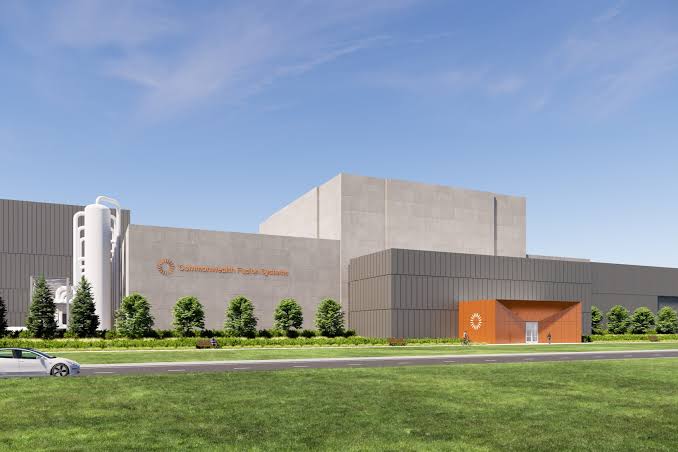
ARC fusion power plant development has gained industrial momentum after Hyundai Motor Group invested in Commonwealth Fusion Systems’ latest $1 billion raise. The investment strengthens plans for a grid-scale fusion facility in Chesterfield County, Virginia.
The investment forms part of CFS’s July 2026 equity financing round. That round brought the company’s total capital raised to $4 billion.
Hyundai has not disclosed the value of its individual investment. However, the partnership creates opportunities for engineering and industrial cooperation on future ARC plants.
Bill Gates previously invested in CFS through its 2021 Series B funding round. Gates Frontier also remained among CFS investors during its 2025 financing.
The latest backing therefore combines major industrial participation with established technology investment. It also strengthens CFS’s push toward commercial fusion deployment during the 2030s.
ARC fusion power plant development advances toward commercial construction
CFS plans the ARC facility at its Fall Line Fusion Power Station in Chesterfield County. The company targets electricity generation during the early 2030s.
The project uses a tokamak system to generate electricity through controlled nuclear fusion. Tokamaks use magnetic fields to confine extremely hot plasma inside a toroidal chamber.
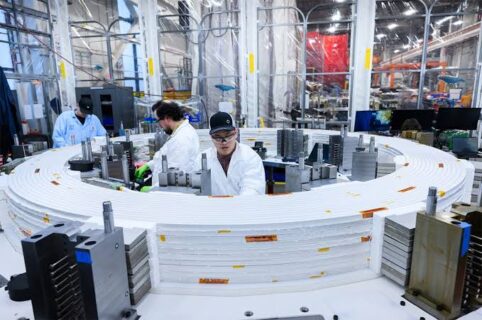
CFS’s approach relies on high-temperature superconducting magnets developed through its SPARC program. These magnets can generate stronger magnetic fields within a relatively compact reactor design.
SPARC currently undergoes assembly at CFS’s 60-acre campus in Devens, Massachusetts. The demonstration machine should establish the technical basis for the larger ARC facility.
In June 2026, CFS published peer-reviewed research supporting key physics assumptions behind the ARC design. The company said the findings validated its core plasma-physics approach.
The ARC plant could produce approximately 1.1 gigawatts of fusion power. CFS expects that output to support approximately 400 megawatts of net electricity for the grid.
However, CFS has not publicly disclosed the plant’s construction cost. Industry reporting has previously described ARC as a multi-billion-dollar project.
ARC fusion power plant gains grid and commercial partnerships
CFS has already submitted an interconnection application to PJM Interconnection. PJM operates the largest wholesale electricity market in the United States.
The application represents an important infrastructure milestone for commercial fusion deployment. It also moves the project closer to integration with existing high-voltage transmission infrastructure.
Meanwhile, Dominion Energy supports site development for the Virginia facility. Google and Italian energy company Eni have also committed to purchasing ARC electricity.
Google signed an agreement covering 200 megawatts of ARC’s planned electricity output. Eni separately signed an offtake agreement worth more than $1 billion.
Furthermore, Hyundai brings experience in industrial engineering, infrastructure and power-plant construction. The companies will explore potential cooperation as CFS develops its ARC power-plant business.
The partnership could therefore extend beyond financing into future construction and industrial supply chains. Hyundai also sees fusion as a potential response to rising global electricity demand.
CFS expects its latest funding to accelerate commercialization and industrialization. The company has raised $4 billion since its 2018 formation.
The ARC project forms part of a broader US push to develop new nuclear technologies for growing electricity demand. Meanwhile, Amazon’s Cascade Advanced Energy Facility in Washington is pursuing small modular reactors for reliable, carbon-free power. The project will initially target 320MW before potentially expanding to 960MW.
Project Fact Sheet
Project: ARC commercial fusion power plant
Type: Grid-scale nuclear fusion power generation facility
Location: Fall Line Fusion Power Station, Chesterfield County, Virginia, USA
Developer: Commonwealth Fusion Systems
Technology: Magnetic-confinement nuclear fusion
Reactor design: Tokamak
Magnet technology: High-temperature superconducting magnets
Planned fusion power: Approximately 1.1GW
Planned net electricity: Approximately 400MW
Target operation: Early 2030s
Grid connection: PJM Interconnection
Current stage: Development and commercialization
Demonstration technology: SPARC fusion machine
Latest funding: $1 billion equity financing
CFS total capital raised: $4 billion
Individual Hyundai investment: Not disclosed
Major commercial partners: Google and Eni
Site-development partner: Dominion Energy
Power purchase commitments: Google and Eni
Development objective: Commercial-scale fusion electricity generation
Project Team
Developer: Commonwealth Fusion Systems
Industrial investor and potential collaborator: Hyundai Motor Group
Site-development partner: Dominion Energy
Power purchaser: Google
Power purchaser and strategic partner: Eni
Grid interconnection operator: PJM Interconnection
Technology research partner: Massachusetts Institute of Technology
Demonstration program: SPARC
Commercial plant program: ARC
Project location: Fall Line Fusion Power Station, Chesterfield County, Virginia
Leave a Reply