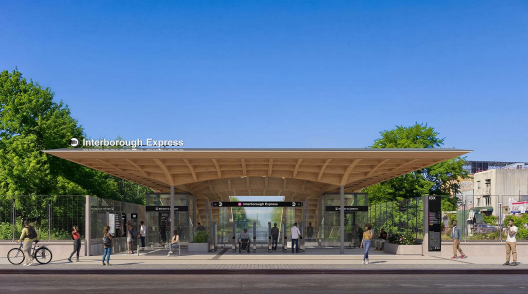
New York is advancing the $5.5 billion Interborough Express (IBX), with the Metropolitan Transportation Authority preparing to release the project’s design and Draft Environmental Impact Statement (DEIS) earlier than planned.
The proposed light rail line will connect Brooklyn and Queens along an existing freight rail corridor. It will provide a direct transit connection between the two boroughs while serving communities that currently lack convenient cross-borough rail service.
The MTA expects to release the DEIS in the fourth quarter of 2026, marking a major milestone in the project’s design and environmental review.
The agency is also advancing accessibility improvements at subway stations that will connect with the future IBX. Those upgrades will create accessible transfer points between the new line and the existing subway network.
Four Connecting Stations Receive Accessibility Work
The MTA is prioritizing accessibility improvements at four existing subway stations along the planned IBX route.
At Broadway Junction, upgrades will provide ADA access across the A, C, J, Z and L services. The MTA expects the work to finish by the end of 2027.
At Junius Street, the project will add ADA access and a new connection to the Livonia Avenue L station. The MTA expects completion by the end of 2026.
The agency also plans accessibility improvements at Avenue I on the F line, with completion expected in early 2028.
At Wilson Avenue on the L line, the MTA has accelerated accessibility work through its 2025–2029 Capital Plan. The agency expects to award the construction contract by mid-2027.
These upgrades will complement the IBX’s own station design. All 18 planned IBX stations will incorporate full accessibility from the outset.
Planned features include wider fare gates, elevators with wider cabs, level boarding, tactile flooring, improved lighting, digital signage and audio wayfinding systems.
IBX Design Moves Toward Environmental Review
The MTA launched the current IBX design and engineering phase after awarding a design contract in October 2025. The phase is expected to take about two years.
The upcoming DEIS will examine the project’s potential environmental effects before the MTA advances toward later stages of development.
The agency has already conducted extensive community engagement along the proposed corridor. Project officials held nearly 30 pop-up events during the summer, generating more than 7,000 community engagements.
The project team has also held approximately 140 events since the planning process began. In the spring, officials met with all 14 community boards along the corridor and held design workshops that drew more than 425 participants and generated about 6,000 feedback responses.
Public meetings will follow the DEIS release, giving residents in Brooklyn and Queens another opportunity to comment on the project.
$5.5B Transit Project Could Reshape Brooklyn and Queens
The IBX will run between Brooklyn and Queens without requiring passengers to travel through Manhattan. The MTA expects the line to cut the end-to-end trip to about 32 minutes.
The project could serve more than 900,000 residents living near the planned corridor and attract an estimated 160,000 weekday riders.
The line will connect with 17 subway lines, 51 bus routes and the Long Island Rail Road, creating new transfer opportunities across the two boroughs.
The projected ridership would make IBX larger than any light rail system currently operating in the United States, according to the MTA.
The project would also mark a significant expansion of New York City’s rail network. IBX would become the city’s first new end-to-end rapid-transit line built entirely within the five boroughs since the IND Crosstown Line, now the G, fully opened in 1937.
The planned Queens stations would also represent the first new transit stations in the borough since the Archer Avenue extension opened in 1988.
Funding Supports Next Phase
The MTA estimates the IBX will cost $5.5 billion to complete. Governor Kathy Hochul secured $45 million for the current design phase through New York’s FY 2026 budget and the MTA’s capital program.
The MTA’s 2025–2029 Capital Plan includes $2.75 billion for the project.
With design work underway and the DEIS approaching, the project is moving through the planning and environmental stages needed before major construction can begin.
For Brooklyn and Queens, the next major milestone will be the release of the environmental statement, followed by public review and further development of the proposed 18-station line.
New York’s transit expansion also extends beyond the Interborough Express. The MTA is also advancing the $6.97 billion Second Avenue Subway Phase 2 in Manhattan, which will add three stations in East Harlem and connect the line with the Lexington Avenue subway and Metro-North at 125th Street. The project has also moved into major construction, adding another major subway investment to New York’s expanding transit network.
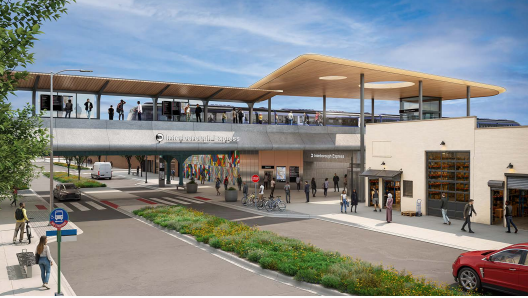
Interborough Express Factsheet
- Project: Interborough Express (IBX)
- Location: Brooklyn and Queens, New York City
- Project type: Light rail / rapid transit
- Estimated project cost: $5.5 billion
- Project agency: Metropolitan Transportation Authority (MTA)
- State leadership: Governor Kathy Hochul
- Planned stations: 18
- End-to-end travel time: Approximately 32 minutes
- Projected weekday ridership: More than 160,000
- Residents served: More than 900,000
- Subway connections: 17 subway lines
- Bus connections: 51 bus routes
- Rail connection: Long Island Rail Road (LIRR)
- Accessibility: All 18 IBX stations planned as fully accessible
- Current phase: Design and engineering
- Design contract: Awarded October 2025
- Environmental milestone: Draft Environmental Impact Statement expected in Q4 2026
- Design-phase funding: $45 million
- MTA Capital Plan funding: $2.75 billion
- Broadway Junction accessibility: Completion expected by end of 2027
- Junius Street accessibility: Completion expected by end of 2026
- Avenue I accessibility: Completion expected in early 2028
- Wilson Avenue accessibility contract: Expected by mid-2027
- Historical significance: First new end-to-end rapid transit line built entirely within New York City since the IND Crosstown Line fully opened in 1937
- Primary benefit: Direct travel between Brooklyn and Queens without requiring passengers to travel through Manhattan

Leave a Reply