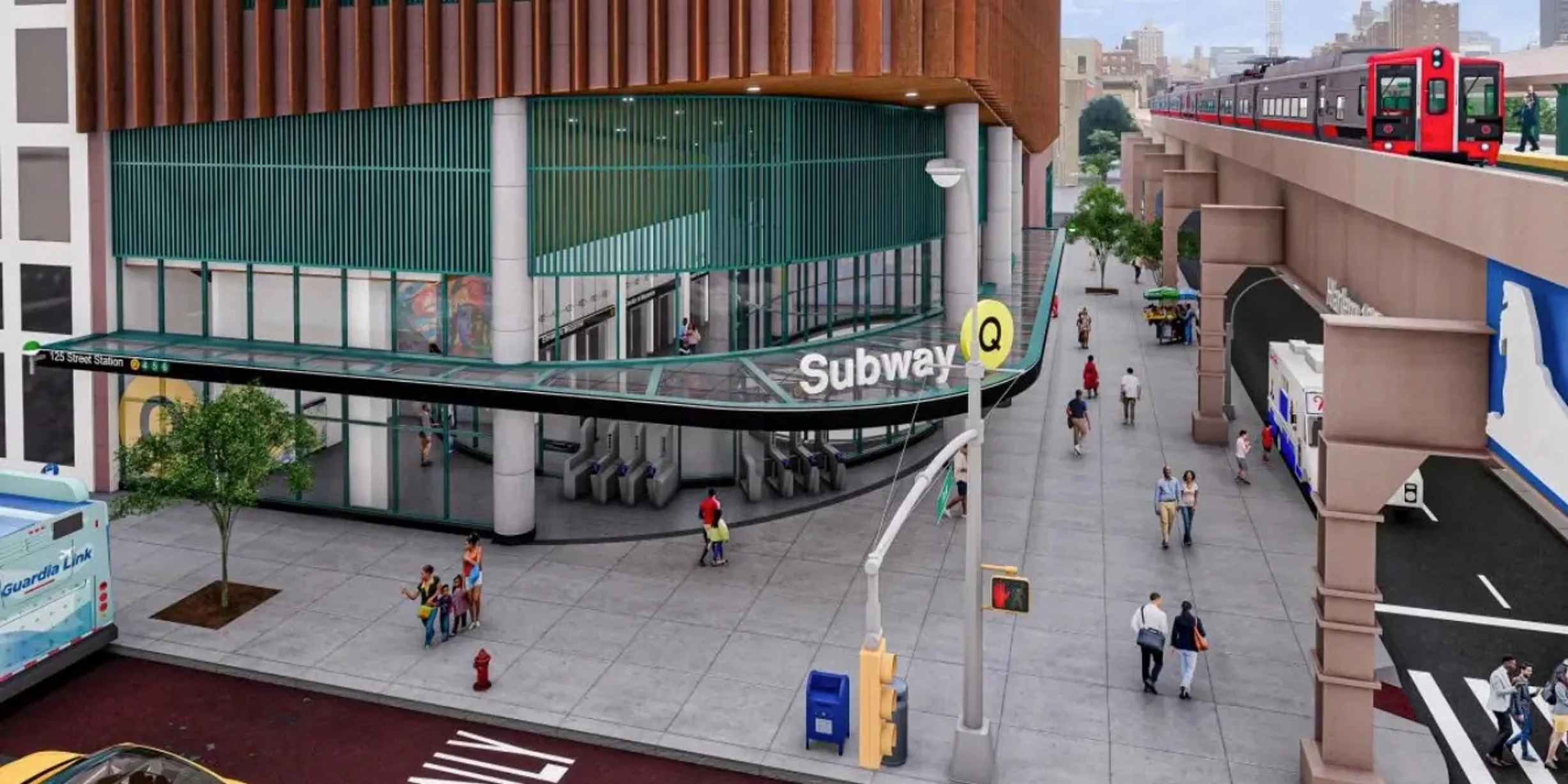
New York’s $7 billion Second Avenue Subway Phase 2 has entered its major construction phase, moving the 1.5-mile East Harlem extension toward underground excavation and station construction.
The Metropolitan Transportation Authority (MTA) broke ground on the major construction phase in June 2026. Work now includes utility relocation, infrastructure preparation, building demolitions and street-level construction along the project corridor.
The extension will carry the Q line north from its current terminus at 96th Street toward 125th Street. It will add three new stations and create new connections to existing subway and commuter rail services.
MTA Advances Tunnel Construction
The MTA has awarded the project’s major construction contracts as work progresses toward tunnel excavation.
Connect Plus Partners will handle the heavy tunnel work between 116th and 125th streets. The contract also covers excavation for the future 125th Street Station.
The Skanska-Walsh-Traylor joint venture will construct the structural shell of the 106th Street Station. Crews will use cut-and-cover construction for the station.
Earlier utility and infrastructure work under Contract 1 has also cleared parts of the corridor for the major construction phase.
TBMs Will Begin Tunneling in 2027
The next major underground milestone will come in early 2027, when the MTA plans to lower massive tunnel boring machines into a construction site near 120th Street.
Each machine weighs more than 1.5 million pounds. The TBMs will mine toward 125th Street and Malcolm X Boulevard as crews extend the subway through East Harlem.
The tunneling work will also incorporate tunnel sections constructed during the 1970s. Those structures formed part of an earlier Second Avenue Subway plan that never reached completion.
Three New Stations Will Extend the Q Line
Phase 2 will add three fully accessible stations along the extension:
106th Street and Second Avenue
116th Street and Second Avenue
125th Street and Lexington Avenue
The 125th Street station will provide transfers to the existing 4, 5 and 6 subway lines. It will also connect passengers with Metro-North Railroad services.
The project will extend the Q line north from 96th Street and provide new transit access across East Harlem.
Construction Is Changing East Harlem
Construction activity is already creating visible changes along the project corridor.
Crews are carrying out utility shifts, building demolitions and traffic modifications. The MTA is also conducting controlled production blasting near 125th Street and Lexington Avenue as underground work progresses.
The construction program includes localized changes to traffic patterns and bus stops around active work zones.
Meanwhile, the MTA and New York State have begun preliminary engineering and design scoping for a potential future extension. That proposal would take the Q line farther west along 125th Street toward Broadway.
$7B Subway Extension Targets 2032 Opening
The Second Avenue Subway Phase 2 project is targeting revenue service in 2032.
Once complete, the 1.5-mile extension will add three stations and extend the Q line farther into East Harlem. The project also represents the next major construction stage of a subway corridor that dates back decades.
For now, the focus remains on building the stations, relocating infrastructure and preparing for the start of large-scale tunnel boring in 2027.
The Second Avenue Subway is not the only major transit expansion moving forward in New York. The MTA is also advancing the $5.5 billion Interborough Express, a proposed light rail line linking Brooklyn and Queens. The project is now in design and environmental review, with its Draft Environmental Impact Statement expected in late 2026.
Design
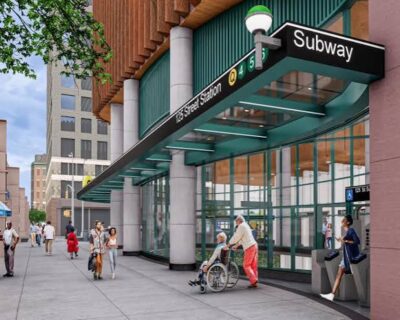
New York City, New York – Global engineering and design firm Cowi has is the lead designer for Phase 2 of the Second Avenue Subway. The project , valued at nearly US$2 billion, will extend the Q Line north from 96th Street to 125th Street in East Harlem. The extension restores subway service to East Harlem for the first time in more than 80 years, helping reduce crowding on the Lexington Avenue 4-5-6 line.
Route, Scale & Teamwork
The extension will include three new stations and 1.5 miles of twin tunnels. Cowi will report to the joint venture Connect Plus Partners, a collaboration between Halmar International and FCC Construction, which holds the $1.97 billion design-build contract. The plan also reuses an existing tunnel built in the 1970s to cut costs. This project forms part of a broader wave of ongoing rail projects in the USA, reflecting the country’s increasing investment in modern rail infrastructure and sustainable urban connectivity.
Above-ground elements will include electrical, mechanical, and ventilation buildings. There will also be space in some ground-floor areas for retail and community-oriented uses.
Project Factsheet – Second Avenue Subway Phase 2 Extension
Designer: Cowi
Contracting JV: Connect Plus Partners (Halmar International + FCC Construction)
Project Cost: Approximately $1.97-2.0 billion
Route: Extend Q Line from 96th Street north to 125th Street, East Harlem
Distance & Tunnels: Approximately 1.5 miles of twin tunnels
Stations: Three new stations
Additional Work: Reuse of 1970s tunnel, ventilation & mechanical systems, retail ground floor
Start of Construction: Early 2026
Tunnel Boring Start: 2027
Target Completion: 2030
Riders Impacted: Over 100,000 daily riders; reduce pressure on Lexington Avenue lines 4-5-6
When It Will Happen & What to Expect
Work begins in early 2026, with tunnel boring set to start in 2027. Completion is targeted for 2030. Authorities say the extension will significantly improve transit access and relieve congestion on nearby lines.
Why the Extension Matters
This subway extension marks a major milestone for New York’s transit infrastructure, especially as East Harlem has gone more than eight decades without direct subway service. Once complete, the project is expected to deliver faster and healthier commutes for over 100,000 daily riders who currently rely on alternate, overcrowded routes. Alongside initiatives like USDOT and Amtrak’s $7 billion redevelopment plan for New York Penn Station, the effort underscores the city’s push to modernize and expand its transportation backbone for the future.
It also illustrates how urban areas facing capacity overload are choosing major investment in underground transit over surface fixes. Designing with reuse of old tunnel segments and adding community-friendly features shows how big infrastructure can be cost-efficient and socially beneficial.
Comparisons & Context in U.S. Transit Growth
While many U.S. cities debate suburb or highway expansion, New York continues pushing core urban transit. Comparisons emerge with other major transit expansions like LA’s Purple Line, Seattle’s Light Rail, or Boston’s Green-Line Extension. New York’s choice to build deep transit tunnels again places it among cities doubling down on underground transit.
Budget discipline appears baked into this project: reuse of earlier tunnels, lead designer selection already done, and a firm timeline. These are often challenge points in large transit projects. The successful execution of Phase 2 could serve as a model, much like how New York regulators’ approval of a power link to support Micron’s $100 billion semiconductor plant demonstrates efficient coordination across agencies for major infrastructure undertakings.
This extension project stands out for its blend of civic benefit, smart reuse of older infrastructure, and strong timeline commitment. It highlights how big-city transit authorities are pushing beyond incremental upgrades, aiming instead for transformative transit.

Leave a Reply