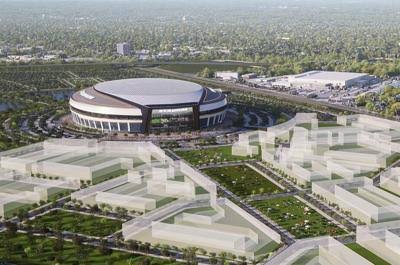
The Chicago Bears stadium project is facing renewed political pressure as Illinois lawmakers consider legislation supporting a new domed stadium. However, neighbouring suburbs want representation in decisions affecting transportation, infrastructure and public safety.
The proposed development centers on the Bears’ 326-acre former Arlington International Racecourse property in Arlington Heights.
Illinois is considering a municipal stadium authority to facilitate construction and ownership arrangements. The framework also contemplates approximately $855 million in public infrastructure support. Nevertheless, Rolling Meadows and Palatine want formal representation before lawmakers approve the proposed arrangement.
Their demands introduce another layer of negotiations as Illinois attempts to retain the NFL franchise. The proposed stadium could anchor a wider mixed-use development, creating additional demands on surrounding communities.
Chicago Bears Stadium Project and suburban representation
The proposed legislation centers on House Bill 958, known as the Municipal Stadium Authority Act. The Illinois Senate passed the measure on June 1, 2026. However, the proposal still requires approval from the House of Representatives.
Under the framework, an eligible municipality could establish an authority to finance, acquire, construct and manage professional sports facilities. The authority could also issue bonds and own the completed stadium. This arrangement would allow the Bears to pay annual lease payments instead of conventional property taxes.
However, the proposed governance structure has raised concerns among neighboring municipalities. Rolling Meadows and Palatine jointly requested amendments on November 12. They want representation on the authority responsible for overseeing the development.
Their priorities include traffic management, emergency services and infrastructure planning. Both municipalities argue that stadium operations would affect residents beyond Arlington Heights. Therefore, they want local governments included before construction decisions advance.
Rolling Meadows Mayor Lara Sanoica said neighboring communities deserve representation in decisions affecting their residents. Palatine Mayor Jim Schwantz also emphasized the importance of involving surrounding municipalities.
He clarified that Palatine does not seek control over the development. Instead, the municipality wants its infrastructure and public safety concerns considered early. Meanwhile, both councils are pursuing formal support for their proposed legislative amendments.
Chicago Bears stadium project faces infrastructure financing questions
The infrastructure package represents a major consideration in the proposed development. The Bears have requested approximately $855 million in public support. The funding would cover roads, sewer systems, utilities and transportation improvements. It would also support upgrades around the Arlington Heights property. However, the proposed public contribution would not finance stadium construction itself. The Bears intend to finance the stadium through private funding.
The stadium construction estimate stands at approximately $6.6 billion, according to reporting on the team’s development proposal. Consequently, the overall financial arrangement requires scrutiny beyond the stadium’s construction budget. Lawmakers must consider infrastructure expenditure, property taxation and long-term municipal revenue.
Governor JB Pritzker has indicated support for infrastructure assistance. Nevertheless, he insists that Illinois taxpayers must receive economic benefits. Those benefits should include revenue supporting schools and local governments.
Bears Chairman George McCaskey has also raised concerns about construction inflation. He explained that the team expects to borrow most of its stadium construction contribution.
Therefore, prolonged negotiations could increase borrowing requirements and overall project costs. The chairman warned that construction inflation remains a significant concern. Meanwhile, the Bears continue evaluating their Illinois and Indiana options.
The proposed Chicago development also reflects wider investment in major American sports infrastructure. In Oklahoma, the $990 million Continental Coliseum development has reached an important structural milestone, with contractors beginning elevated concrete deck installations. The Oklahoma City arena construction project demonstrates how cities are investing in modern sporting venues to strengthen their entertainment infrastructure and long-term economic potential.
Chicago Bears stadium project enters critical legislative phase
Illinois lawmakers began their autumn veto session on November 17. They will meet again from December 1–3 to consider outstanding legislation. Consequently, the coming weeks could determine whether the stadium proposal advances.
Front Office Sports reports that lawmakers expect votes during the second half. However, negotiations could extend into the legislative lame-duck session.
The Bears also face competition from Hammond, Indiana. Indiana has already established a public sports authority to facilitate its stadium proposal. The state has presented financial incentives to attract the franchise.
Meanwhile, Illinois is attempting to restore momentum through its proposed municipal authority framework. The Bears have not publicly committed to either location.
Governor Pritzker believes the proposed framework could provide acceptable terms. However, he maintains that the General Assembly must approve the necessary legislation. He also wants the arrangement to protect taxpayers and generate sustainable public revenue.
Meanwhile, the Bears continue examining the long-term implications of both locations. The outcome will determine whether Arlington Heights advances towards construction.
The proposed development therefore faces interconnected challenges involving financing, governance and regional infrastructure.
Although Illinois wants to retain the franchise, neighboring municipalities want meaningful participation. Resolving these concerns could help establish a framework for the next construction phase. Nevertheless, construction cannot advance without the necessary legislative and municipal approvals.
The proposed stadium development highlights the growing financial and infrastructure challenges surrounding major sports construction projects in the United States. Similar questions have emerged in Washington, DC, where the District is considering a $380 million renovation of Nationals Park. The proposed National Ballpark Renovation would modernize ageing stadium infrastructure, improve spectator facilities and expand premium hospitality spaces. Both developments involve substantial public infrastructure or financing commitments, alongside expectations of wider economic benefits. While the Bears are seeking $855 million in public funding for surrounding infrastructure, Washington officials are considering bond financing backed by ballpark-related revenues.
Project Fact Sheet
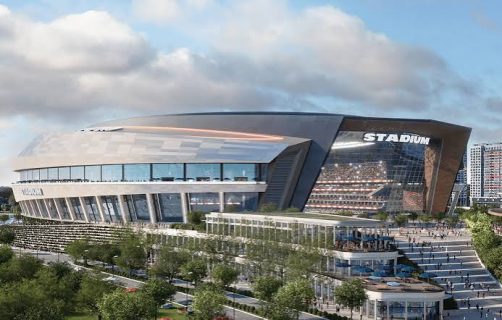
Name: Chicago Bears Arlington Heights Stadium Development.
Type: New fixed-roof professional football stadium and mixed-use development.
Location: Former Arlington International Racecourse, Arlington Heights, Illinois, United States.
Site area: Approximately 326 acres.
Stadium construction estimate: Approximately $6.6 billion.
Proposed public infrastructure contribution: Approximately $855 million.
Infrastructure scope: Road improvements, sewer systems, utilities and surrounding transportation upgrades.
Development components: Fixed-roof stadium, residential accommodation, hospitality, retail, commercial space and entertainment facilities.
Proposed mixed-use components: Approximately 1,150 residential units, 400 hotel rooms, 300,000 square feet of retail space and 200,000 square feet of office space.
Ownership structure: Proposed municipal stadium authority ownership, with the Bears paying annual lease payments.
Financing arrangement: Private stadium construction financing alongside proposed public infrastructure investment.
Legislative framework: House Bill 958, the proposed Municipal Stadium Authority Act.
Legislative status: Passed the Illinois Senate on June 1, 2026; awaiting House action.
Current development status: Planning and legislative negotiations; stadium construction has not commenced.
Key outstanding issues: Property taxation, public infrastructure financing, municipal representation and traffic management.
Main objective: Develop a multipurpose stadium capable of hosting NFL games and major sporting and entertainment events.
Project Team
Developer and proposed stadium operator: Chicago Bears Football Club
Stadium architect: Manica Architecture
Master planning and design: Hart Howerton
Local planning authority: Village of Arlington Heights
Neighbouring municipal stakeholders: Rolling Meadows and Palatine

Leave a Reply