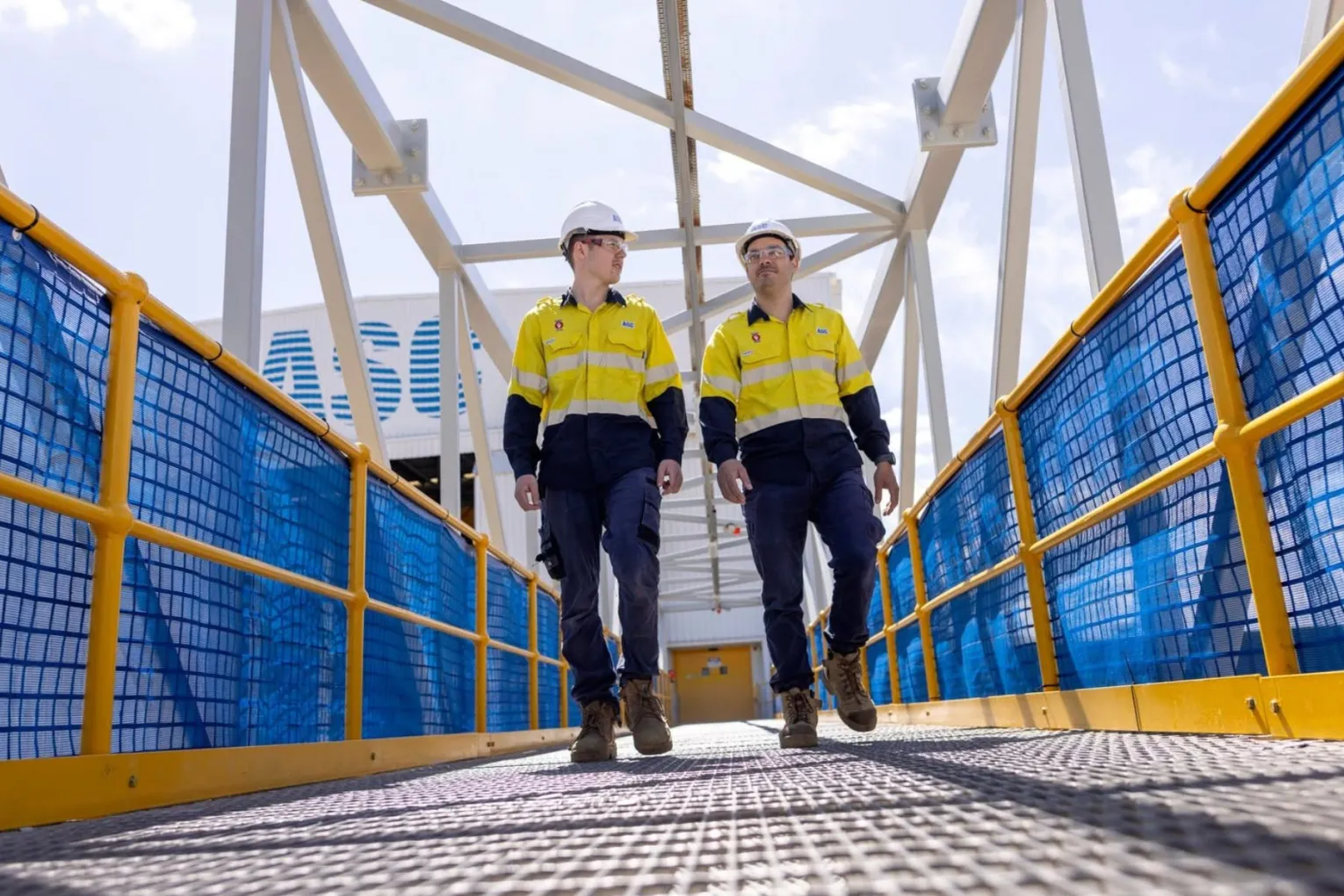
Osborne nuclear submarine shipyard construction has entered a major phase as Australia develops facilities for its future SSN-AUKUS fleet. The project forms part of Australia’s AUKUS submarine pathway with the United Kingdom and United States. Australia expects the new facility to support sovereign submarine construction and sustainment for decades. The government has committed A$8.5 billion, equivalent to about $6.1 billion.
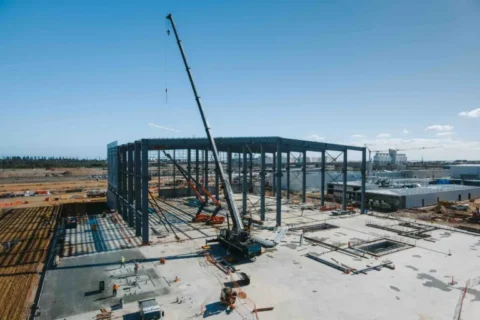
Construction has started on a major warehouse that will support future submarine production at Osborne. The development will expand the existing Osborne Naval Shipyard north of Adelaide on the Lefevre Peninsula. More than 50 buildings will eventually form the Nuclear-Powered Submarine Construction Yard.
These facilities will include fabrication halls, outfitting areas, offices and worker amenities. The construction program represents one of Australia’s largest industrial infrastructure undertakings. It will create approximately 600,000 square meters of floor space across the expanded precinct.
That scale makes the new development about ten times larger than the existing Osborne South Development project. Moreover, the project will require approximately 126,000 tones of structural steel.
Osborne nuclear submarine shipyard takes shape
The largest building will be a 420-metre-long Fabrication Hall for submarine production. The hall will stretch about two-and-a-half times the length of Adelaide Oval. Overall construction will require approximately 66 million work hours across the development program.
Around 1,100 workers currently support construction and related projects at the site. The workforce could increase to about 4,000 people during peak construction activity. Furthermore, the broader submarine program could create thousands of additional skilled jobs across South Australia.
Enabling works have also progressed around the future construction yard. A new overpass now improves access to the developing precinct and surrounding infrastructure. Construction continues on a Skills and Training Academy Campus and Production Demonstration Facilities. These facilities will help develop the workforce and industrial capabilities needed for submarine production.
Osborne nuclear submarine shipyard advances AUKUS capability
The Australian Government announced another A$4.6 billion investment in July 2026. That commitment followed the A$3.9 billion announced earlier in February. Together, those commitments bring federal investment in the construction yard to A$8.5 billion.
Australian Naval Infrastructure leads delivery of the construction yard and supporting infrastructure. In July, ANI appointed a Laing O’Rourke and Amentum joint venture as its Capability Partner. The partnership will support development and delivery of the nuclear-powered submarine construction facility.
Meanwhile, ASC and BAE Systems will form an incorporated joint venture for submarine construction. The partnership will build Australia’s conventionally armed, nuclear-powered SSN-AUKUS submarines at Osborne. Construction of the first Australian-built SSN-AUKUS should begin before the end of this decade. The government expects delivery of the first Australian-built submarine in the early 2040s.
The construction yard received environmental approval under Australia’s federal environmental assessment framework in February 2026. South Australian planning approval also cleared the development in December 2025.
However, questions remain about the eventual management and storage of nuclear waste. That issue has generated legal scrutiny as Australia develops its nuclear-powered submarine capability.
The Osborne nuclear submarine construction yard also builds on wider upgrades at Australia’s naval infrastructure hub. Earlier, the Australia’s Ship Lift Facility Project advanced after authorities awarded a construction contract for its major upgrade works. The project will strengthen shipbuilding and maintenance capacity at Osborne, complementing the new nuclear submarine construction facilities.
Project Fact Sheet
Name: Osborne Nuclear-Powered Submarine Construction Yard.
Location: Osborne, Lefevre Peninsula, South Australia, approximately 19 kilometres north of Adelaide.
Project value: A$8.5 billion, approximately $6.1 billion.
Wider program value: Around A$30 billion for the broader construction-yard program.
Purpose: Build infrastructure for Australia’s future SSN-AUKUS nuclear-powered submarines.
Development scale: Approximately 600,000 square metres of floor area.
Buildings: More than 50 buildings across the construction yard.
Fabrication Hall: Approximately 420 metres long.
Structural steel: Approximately 126,000 tonnes.
Construction effort: Approximately 66 million work hours.
Current workforce: Approximately 1,100 construction workers.
Peak construction workforce: Up to approximately 4,000 workers.
First submarine: Construction expected to begin before the end of the 2020s.
First Australian-built submarine delivery: Planned for the early 2040s.
Access infrastructure: New overpass completed to support the future construction yard.
Supporting facilities: Skills and Training Academy Campus and Production Demonstration Facilities.
Strategic framework: Australia-United Kingdom-United States AUKUS partnership.
Environmental approval: Federal approval granted in February 2026.
Planning approval: South Australian development approval granted in December 2025.
Project Team
Owner and delivery entity: Australian Naval Infrastructure.
Government agency: Australian Submarine Agency.
Federal funding authority: Australian Government.
State government partner: Government of South Australia.
Capability Partner: Laing O’Rourke Construction Australia and Amentum Australia joint venture.
Future submarine builder: ASC and BAE Systems incorporated joint venture.
Strategic partners: Australian Government, United Kingdom and United States under AUKUS.
Existing shipyard operator: ASC.
Future submarine program: SSN-AUKUS.


Leave a Reply