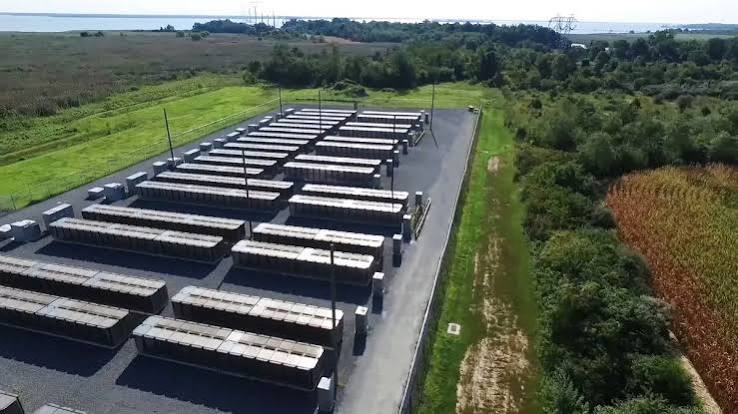
American Electric Power (AEP) plans to invest approximately $4 billion in a 702-megawatt (MW) fuel cell power generation facility near Cheyenne, Wyoming, to supply electricity to Google under a 20-year power purchase agreement, adding another major generation project to the infrastructure planned for the technology company’s growing presence in the state.
The facility, to be developed by Cheyenne Fuel Cell LLC, is expected to begin construction in 2026 and enter full operation by the end of 2028. AEP owns and controls approximately 92% of the project company, while funds advised by Basalt Infrastructure Partners hold nearly 8%. Bloom Energy will supply the solid oxide fuel cell technology.
The announcement follows an earlier equipment commitment by AEP. In January 2026, the company disclosed an agreement worth approximately $2.65 billion to purchase a substantial portion of its option for additional Bloom Energy fuel cells for a generation facility planned near Cheyenne. AEP also disclosed a 20-year agreement to purchase the facility’s entire expected electricity output, although the customer was not identified in that filing.
The latest announcement identifies Google as the customer and establishes the planned facility’s capacity at 702 MW, providing further detail on a project that had been taking shape through the equipment procurement and long-term power arrangements.
Google’s Planned Data Center Brings New Generation Investment
The fuel cell project comes as Google advances plans for a major data center campus in Laramie County, near Cheyenne. The company’s proposed Project Tembo campus was reported in September 2026 as a $17 billion development, with local discussions covering electricity supply, water use, construction, employment and environmental impacts.
Securing enough electricity for the campus has become a central part of the development. Data centers require substantial and consistent power, while the construction of new grid infrastructure and conventional generation can take years. Dedicated generation projects offer another route for supplying large customers as their electricity requirements grow.
AEP’s planned 702 MW facility is one part of that emerging power supply picture. The 20-year agreement gives Google a long-term arrangement for the facility’s output, while AEP is expanding its business with large electricity users beyond its traditional utility service territory.
AEP said the project will use fuel cell technology that can be deployed to provide on-demand electricity. The company has previously described its wider Bloom Energy initiative as a way to serve large customers while the grid is expanded to accommodate growing demand. In November 2024, AEP announced an agreement to secure up to 1 gigawatt of Bloom Energy solid oxide fuel cells for data centers and other large energy users.
$2.65 Billion Equipment Deal Preceded Project Announcement
The January equipment agreement provides a clearer view of the procurement behind the Cheyenne development.
AEP’s earlier agreement with Bloom Energy, signed in November 2024, covered an initial 100 MW of solid oxide fuel cells and included an option for an additional 900 MW. In January 2026, an AEP subsidiary exercised a substantial portion of that option through an unconditional purchase agreement valued at approximately $2.65 billion. The equipment was intended for a fuel cell generation facility near Cheyenne.
The $2.65 billion commitment is part of the project’s development history and should not be added to the newly announced $4 billion investment as if the two figures represented unrelated projects. The available disclosures do not provide a complete breakdown of the overall investment or establish how all project costs will be allocated.
The ownership structure places AEP in control of Cheyenne Fuel Cell LLC, with Basalt Infrastructure Partners’ advised funds holding the minority interest. Google will purchase the electricity under the long-term agreement, while Bloom Energy’s technology will form the core of the generation facility.
The arrangement brings together a utility developer, an infrastructure investor, a fuel cell manufacturer and a large electricity customer under a project intended to deliver substantial power capacity on a defined schedule.
Fuel Cells and Planned Carbon Capture
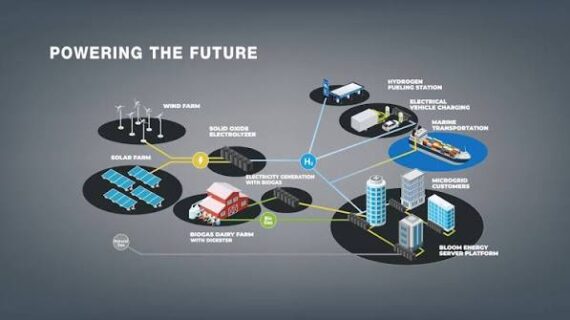
The proposed facility will use Bloom Energy’s solid oxide fuel cells, which generate electricity through an electrochemical process rather than by burning natural gas to drive a conventional turbine.
According to the project announcement, the system will generate electricity without natural gas combustion. Plans also call for integrating carbon capture technology, with the stated objective of providing reliable, near-zero-emissions electricity.
The emissions outcome will depend on the final design, the fuel used and how the carbon capture system is implemented. The announcement does not, by itself, establish the capture system’s capacity, capture rate or expected overall emissions performance.
Those details will be important in assessing the project’s environmental claims as engineering and development plans advance. The information currently available also does not establish the precise construction footprint, the engineering and construction contractors, or the facility’s expected construction and permanent operating workforce.
Black Hills Advances a Separate Power Project for Google
AEP’s investment is not the only major generation development associated with Google’s planned Cheyenne data center.
Black Hills Corporation announced in October 2026 that it had entered into agreements to serve the planned campus. The arrangements, effective September 30, extend through 2048 and cover electricity service and the management of additional energy resources.
Black Hills plans to invest approximately $1.8 billion between 2027 and 2029 to add 564 MW of natural gas-fired generation at its existing Cheyenne Prairie Generating Station site. The company also plans to provide up to 590 MW of grid-connected electricity service, supported by company-owned generation and market energy purchases.
Separately, Black Hills will manage the output of approximately 2.1 GW of third-party contracted resources through a privately managed microgrid. The overall resource mix planned to serve the data center is approximately 2.7 GW, including reserve margins. Electricity service is expected to begin in late 2027, with the campus load projected to ramp up toward its peak in 2030.
The Black Hills and AEP developments have different ownership structures and generation technologies. Black Hills’ planned 564 MW addition will use natural gas-fired generation, while AEP’s project will rely on Bloom Energy fuel cells and include plans for carbon capture.
The two investments therefore should not be treated as a single power plant or combined into one project budget. They represent separate arrangements within the broader effort to supply Google’s planned data center.
Construction Timeline and Outstanding Details
AEP and its partners plan to start construction of the fuel cell facility in 2026, with full operations expected by the end of 2028. That schedule places the project between the anticipated start of Google’s electricity service under the Black Hills agreements in late 2027 and the expected ramp-up of the data center’s peak load in 2030.
The project’s next milestones will include construction progress and further disclosure of the facility’s technical and environmental arrangements. Details still requiring confirmation include the precise site, the status of applicable permits, the construction contractors and the configuration of the proposed carbon capture system.
For AEP, the development advances a strategy of using dedicated generation to meet the requirements of large electricity customers. For Google, it adds another planned source of power capacity as the company develops its presence in Wyoming.
The project’s significance will ultimately depend not only on its planned 702 MW capacity and $4 billion investment, but also on whether it can be delivered on schedule and how its fuel cell and carbon capture systems perform once operational.
Bloom Energy’s fuel cell technology is also gaining attention as data center developers seek reliable, on-site power solutions to meet rising electricity demand. A similar approach is relevant to Oracle’s Project Jupiter in New Mexico, which has drawn attention for its plans to use on-site power generation to support a large-scale data center campus. Both developments highlight the growing role of dedicated power infrastructure in the expansion of AI computing, with Bloom Energy’s solid oxide fuel cell technology offering an alternative to conventional grid-dependent power arrangements.
Project Factsheet: AEP’s 702 MW Cheyenne Fuel Cell Power Project
- Project Type: Fuel cell electricity generation facility
- Location: Near Cheyenne, Wyoming, United States
- Developer: Cheyenne Fuel Cell, LLC
- Majority Owner: American Electric Power (AEP)
- Minority Investor: Funds advised by Basalt Infrastructure Partners LLP
- Technology Provider: Bloom Energy
- Power Purchaser: Google
- Planned Generating Capacity: 702 MW
- Estimated Investment: Approximately $4 billion
- Power Purchase Agreement: 20 years
- Planned Construction Start: 2026
- Expected Completion: By the end of 2028
- Ownership Structure: Approximately 92% AEP and nearly 8% funds advised by Basalt Infrastructure Partners
- Generation Technology: Solid oxide fuel cells
- Emissions Technology: Plans to integrate carbon capture technology
- Primary Purpose: Supply electricity to support Google’s growing energy requirements in the greater Cheyenne area
- Equipment Procurement: AEP disclosed an approximately $2.65 billion fuel cell equipment purchase commitment in January 2026
- Related Development: Black Hills Corporation is separately investing approximately $1.8 billion in new natural gas-fired generation to support Google’s planned Cheyenne data center.

Leave a Reply