
Alberta is attempting to establish itself as a major AI data center destination while trying to maintain its oil sands industry. It is juggling this together with the expansion of natural gas-powered electricity generation and growing environmental community concerns.
Alberta’s changing energy and infrastructure priorities
Alberta is entering a new phase of infrastructure development as the global AI boom creates unprecedented demand for electricity, natural gas, land and water. The Canadian province is seeking to capitalize on this demand by attracting hyperscale data center developers while continuing to support its established oil and gas industry.
However, balancing these priorities is becoming an increasingly complex undertaking. The province is facing mounting concerns over electricity availability and environmental impacts. Questions are also being asked the infrastructure required to support large-scale AI computing operations.
The latest indication of this balancing act came on November 18, 2026, when the Alberta government introduced new legislation proposing stricter rules for large data center projects. It also moved to repeal its statutory oil sands emissions limit.
The proposed changes are contained in Bill 42, the Energy, Environment and Utilities Statutes Amendment Act, 2026. The legislation reflects Alberta’s attempt to establish clearer conditions for data center investment without abandoning its ambitions to expand conventional energy production.
Alberta tightens rules for large AI data center projects
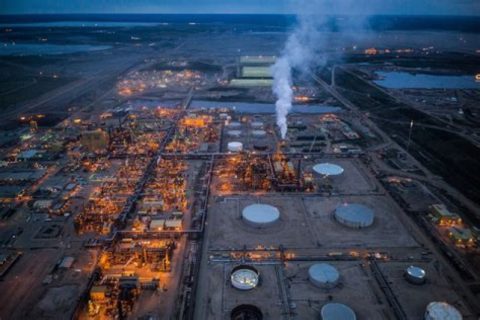
Under Bill 42, data centers with electricity requirements of at least 10MW would be subject to a proposed minimum setback of 600 meters from the nearest residential property.
The legislation would also restrict qualifying developments from being built on Alberta’s highest-quality agricultural land and currently irrigated land. In addition, the government intends to establish a province-wide water-use standard aimed at reducing consumption by data center operators.
The Alberta Utilities Commission (AUC) would become the principal provincial regulator for data centers with electricity requirements of 10MW or more. This will strengthen oversight of developments that could otherwise place considerable pressure on local infrastructure and surrounding communities.
Furthermore, the proposed restrictions follow public concerns raised during community consultations and town hall meetings. The locals’ concerns were mainly over the potential effects of large data center campuses on residential areas, agricultural land, water resources and electricity affordability.
Importantly, the legislation is not intended to halt the province’s data center expansion. Rather, Alberta is attempting to establish clearer development conditions while retaining its appeal to international technology investors.
AI data center demand creates a new electricity infrastructure challenge
Alberta’s ambitions are supported by its substantial natural gas resources and its established energy infrastructure. The cool climate and competitive investment environment are also relative factors.
The province’s Artificial Intelligence Data Centers Strategy: Powering the Future of Artificial Intelligence strategy identifies power capacity, sustainable cooling and economic growth as its three main pillars.
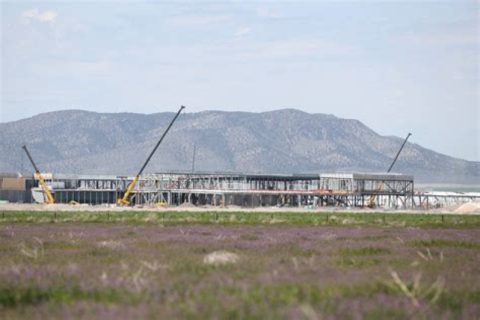
It also envisages a combination of dedicated off-grid generation, grid-connected electricity supply, natural gas, renewable energy and carbon capture technologies to accommodate the anticipated growth in AI computing demand.
However, the scale of proposed developments is already highlighting the limitations of existing electricity infrastructure.
According to Alberta’s electricity system operator, companies had requested approximately 19,565MW of new data center electricity connections as of July 30, 2026. This compares with the province’s first-stage allocation of 1,200MW for new large-load connections, which has already been fully allocated.
The requested capacity is particularly significant when compared with Alberta’s record peak electricity demand of approximately 12,800MW.
Although connection requests do not represent approved or guaranteed projects, the figures illustrate the scale of the potential infrastructure challenge facing the province.
Alberta has consequently been encouraging data center developers to bring their own generation capacity. The government has also encouraged them to finance the associated electricity infrastructure rather than shifting additional costs onto existing electricity consumers.
Meta’s $13 billion Sturgeon AI data center highlights Alberta’s ambitions
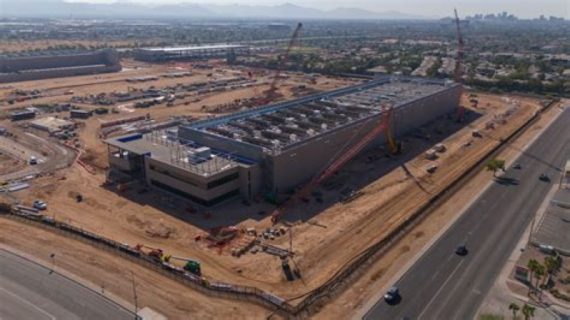
One of the most significant developments demonstrating Alberta’s ambitions is Meta’s Sturgeon County AI Data Center.
Announced in July 2026, the project represents an investment exceeding C$13 billion (approximately US$9.5 billion) and marks Meta’s first data center development in Canada.
Located in Sturgeon County, north of Edmonton, the 1GW AI data center campus is expected to create more than 3,000 construction jobs at peak activity and over 300 permanent operational positions.
The project also highlights the close relationship between data center expansion and new electricity generation infrastructure.
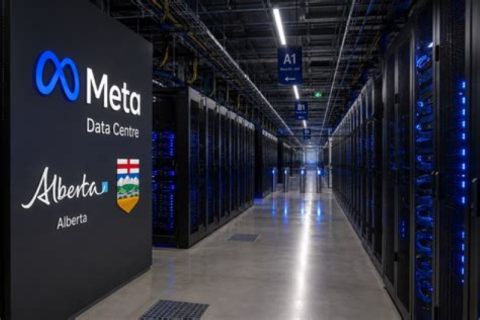
Meta‘s development is associated with the Greenlight Electricity Center, a planned 932MW natural gas-fired power generation facility intended to provide electricity for the data center. The development demonstrates how Alberta’s AI infrastructure ambitions could stimulate additional investment in natural gas production, power generation and supporting infrastructure.
The project is also particularly important because it illustrates the type of privately financed, energy-intensive development Alberta hopes to attract as it competes with other North American jurisdictions for hyperscale computing investment.
Alberta moves to repeal its oil sands emissions cap
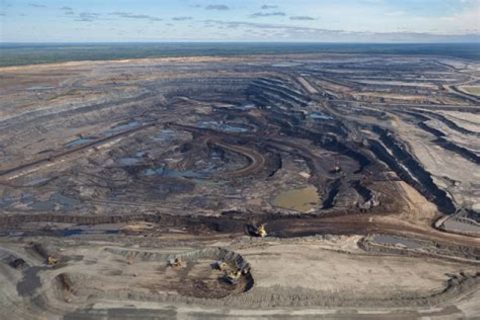
Alongside the proposed data center restrictions, Bill 42 would repeal the province’s Oil Sands Emissions Limit Act. The act established a statutory ceiling of 100 million tons of greenhouse gas emissions annually from Alberta’s oil sands industry.
Introduced in 2016, the emissions limit formed part of the climate policy framework under former premier Rachel Notley. However, it was never implemented through regulation.
Alberta’s government argues that the statutory limit is redundant, given the province’s existing industrial carbon pricing framework. The framework maintains an alternative mechanism for encouraging emissions reductions.
The repeal would therefore remove the statutory emissions ceiling without immediately changing the emissions requirements currently applicable to oil sands facilities.
The distinction is important. According to federal data, oil sands emissions were approximately 84 million tons in 2023, remaining below the proposed 100-million-tonne ceiling.
Nevertheless, removing the statutory limit has wider implications for Alberta’s long-term energy and environmental policy. This is especially so as the province seeks to encourage additional oil and gas investment alongside emerging technology industries.
Natural gas could become a critical link between AI and Alberta’s energy industry
The expansion of AI data centers could strengthen the relationship between Alberta’s technology and conventional energy industries.
Unlike some jurisdictions that are attempting to meet rising data center electricity demand primarily through renewable energy, Alberta is positioning natural gas as a major component of its future power supply.
This approach also creates opportunities for gas producers, pipeline developers, power generation companies, turbine manufacturers and electricity infrastructure contractors.
Furthermore, large-scale data center campuses require dependable electricity supplies, often around the clock. Dedicated gas-fired generation offers developers a way to secure power independently of the constraints associated with connecting additional large loads to an already heavily subscribed electricity grid.
However, this approach also creates additional infrastructure requirements. The developers will need to include possible power plants, pipeline networks, transmission connections and potentially carbon capture facilities in their development plans.
The province’s challenge will be ensuring that these supporting investments are delivered in time to meet the construction and operational schedules of proposed data center developments.
It must also address the environmental implications of expanding gas-fired generation. This is while continuing to support an oil sands industry that remains a major contributor to provincial greenhouse gas emissions.
Alberta’s reliance on its conventional energy industry to support AI infrastructure expansion contrasts with the approach being pursued in Australia’s island state of Tasmania. There, the government is attempting to attract AI data center investment while leveraging its renewable electricity resources. This has raised questions about whether additional wind generation, battery storage and transmission infrastructure can keep pace with anticipated computing demand. The data center debate in Tasmania also portrays a different angle of the infrastructure challenge facing different countries as they compete to attract hyperscale technology investment.
What next for Alberta’s energy infrastructure strategy?
Alberta’s latest legislative proposals highlight the difficult balance facing energy-producing jurisdictions seeking to capitalize on the AI infrastructure boom.
On one hand, the province wants to attract billions of dollars in data center investment, strengthen its technology sector and create new demand for its abundant natural gas resources.
On the other, it must address concerns over land use, water consumption, electricity affordability and environmental protection while maintaining the competitiveness of its established oil and gas industries.
The introduction of Bill 42 suggests that Alberta is moving towards a more selective approach to data center development. The province plans to put greater emphasis on project location, resource requirements and the responsibilities of developers.
However, the longer-term success of this approach will depend on whether the province can deliver the supporting energy infrastructure. This is without creating new challenges or shifting the costs of industrial expansion onto communities and existing electricity consumers.
Ultimately, Alberta’s AI data center ambitions and oil sands strategy are part of a much larger infrastructure question. And, the answer could offer important lessons for other regions attempting to position themselves as global destinations for AI infrastructure investment.
Key points
Main policy development: Bill 42, introduced November 18, 2026.
Proposed data center setback: 600 meters from the nearest home for facilities of at least 10MW.
Land restrictions: Highest-quality agricultural land and irrigated land.
Water: Province-wide data center water-use standard proposed.
Electricity demand: Approximately 19,565MW in requested new data center connections as of July 30, 2026.
Initial grid allocation: 1,200MW, already fully allocated.
Oil sands policy: Repeal of the statutory 100-million-tonne emissions cap. This legislature was however never fully implemented through regulation.
Major project: Meta’s C$13 billion Sturgeon County AI data center.
Supporting energy infrastructure: Greenlight Electricity Center, a planned 932MW natural gas-fired power facility.
Key stakeholders involved
-
Meta Platforms – Developer and operator of the Sturgeon County AI data center.
-
Pembina Pipeline Corporation – Developer associated with the Greenlight electricity generation project.
-
Morgan Stanley Infrastructure Partners – Greenlight project development partner.
-
Kineticor – Greenlight project development partner.
-
Alberta Electric System Operator (AESO) – Electricity system operator and grid planning authority.
-
Alberta Utilities Commission (AUC) – Provincial electricity and utilities regulator.
-
Alberta Ministry of Technology and Innovation
-
Alberta Ministry of Energy and Minerals

Leave a Reply