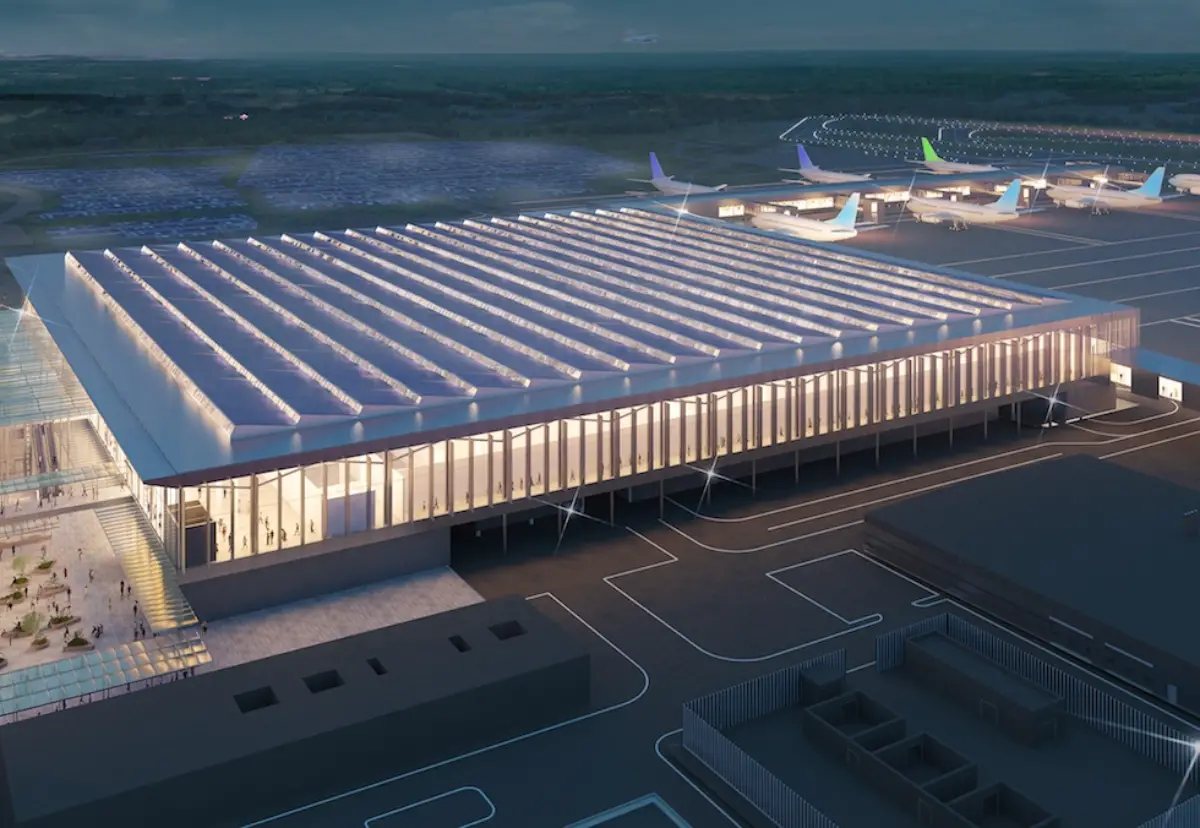
London Luton Airport expansion has reached a significant delivery milestone after the £2.4 billion scheme cleared its remaining legal challenge in 2026. The project will increase annual passenger capacity from 18 million to 32 million by 2043. It will also introduce a second terminal, expand existing facilities and upgrade supporting airport infrastructure. The latest legal development removes a major obstacle to implementation and shifts attention toward detailed planning and construction delivery.
The UK Government granted development consent for the expansion in April 2025. However, campaigners subsequently challenged the decision through the courts. The Supreme Court declined permission for a final appeal on July 31, 2026. Consequently, the development can now proceed without further legal challenges to the consent decision.
The project represents one of the UK’s major airport infrastructure programs. It will expand capacity without constructing a second runway, instead making greater use of the existing runway.
London Luton Airport expansion moves into delivery phase
The London Luton Airport expansion will increase the airport’s permitted capacity from 18 million to 32 million passengers annually. The scheme includes a new terminal alongside improvements to the existing terminal.
The development also includes additional taxiways and new airside infrastructure. Furthermore, the plans provide landside support buildings and expanded passenger facilities.
Surface-access improvements form another major part of the construction program. The project includes changes to roads, parking facilities, bus infrastructure and airport access arrangements.
The expansion will also support further development of the Luton DART. The automated transit system connects Luton Airport Parkway station with the airport terminal.
Unlike proposals at some competing UK airports, the Luton scheme does not require a new runway. Instead, the project uses the existing runway to support higher passenger volumes.
The development consent application originally entered the planning process in February 2023. The Planning Inspectorate accepted the application for examination the following month.
After a six-month examination, the examining authority submitted its recommendations to the Secretary of State in May 2024. The Transport Secretary subsequently granted development consent on April 3, 2025.
The government decision differed from the examining authority’s recommendation. Nevertheless, the consent order established the legal framework for the expansion.
London Luton Airport expansion targets capacity growth
The project will support a phased increase in passenger capacity as demand develops. This approach allows the airport to expand infrastructure progressively rather than deliver every element immediately.
Luton Rising expects the development to generate up to 11,000 jobs. The project could also contribute up to £1.5 billion in additional annual economic activity.
The construction program will create opportunities across civil engineering, airport systems, building services and transport infrastructure. It will also require extensive terminal, airfield and landside works.
Project documents anticipate different construction phases as passenger demand increases. Early works focus on incremental terminal capacity, while major terminal construction follows later in the program.
The project also incorporates environmental controls through its Green Controlled Growth framework. The framework sets limits for carbon emissions, air quality and noise and surface-access impacts.
In March 2026, the government issued a correction order addressing errors in the original Development Consent Order. The correction order came into force on March 21, 2026.
With the legal process now exhausted, project stakeholders can focus on implementation. The next stage will involve detailed design, procurement and construction planning and phased delivery.
The expansion also fits within wider investment plans for Luton. The council’s 2025-2032 economic strategy identifies the airport expansion as a major source of future employment and economic growth.
The London Luton Airport expansion therefore moves into a new phase following several years of planning and legal scrutiny. Its delivery will now determine how quickly the airport can accommodate its planned 32 million passengers.
The development also strengthens Luton Airport’s position within Britain’s expanding airport infrastructure network. Alongside Heathrow Expansion and Gatwick, the project forms part of a broader push to increase UK aviation capacity.
Read Also: Plans for The Lighthouse at Great Jackson Street, the tallest structure outside of London, unveiled
London Luton Airport expansion plan
An extensive consultation programme that lasted more than four years helped to shape the proposals. The Development Consent Order application for Luton Airport consists of 198 documents and more than 25,000 detailed pages of plans and proposals.
“We’re pleased to bring forward these proposals for the expansion of London Luton Airport,” said Graham Olver, chief executive officer of Luton Rising. “We aim to enhance economic activity in and around Luton. The project will also provide numerous community benefits and make the airport a leader in sustainable aviation.
“We are currently anticipating the Inspectorate’s decision on moving on to the DCO process’ examination stage. We hope that this will usher in the next stage of our commitment to expanding London Luton Airport. Thus, Luton and the surrounding communities will have much-deserved employment, prosperity, and positive social impact.”

Project fact sheet
Project: London Luton Airport expansion
Location: London Luton Airport, Bedfordshire, United Kingdom
Project value: Approximately £2.4 billion
Project owner: Luton Rising
Airport operator: London Luton Airport Operations Limited
Airport operating partners: Aena and InfraBridge
Current permitted capacity: 18 million passengers annually
Target capacity: 32 million passengers annually
Target capacity date: 2043
Runway strategy: Expansion will use the existing runway
New runway: None proposed
Terminal development: New Terminal 2
Existing terminal: Expansion of Terminal 1
Airside works: Additional taxiways and associated facilities
Landside works: Support buildings, parking and passenger facilities
Surface access: Road and transport infrastructure improvements
Public transport: Further Luton DART integration and improvements
Development consent: Granted April 3, 2025
Legal status: Supreme Court declined final appeal permission in July 2026
2026 status: Legal hurdles cleared; project moving toward delivery
Correction order: Issued March 20, 2026
Correction order effective: March 21, 2026
Economic impact: Up to £1.5 billion additional annual economic activity
Employment impact: Up to 11,000 new jobs
Environmental framework: Green Controlled Growth
Environmental controls: Carbon, air quality, noise and surface access
Construction approach: Phased expansion linked to passenger demand
Main construction scope: Terminals, taxiways, airfield works, roads and supporting infrastructure
Project team
Project owner: Luton Rising
Ownership structure: Luton Rising is a Luton Council company established for community benefit
Airport operator: London Luton Airport Operations Limited
Airport operating partners: Aena and InfraBridge
Project applicant: Luton Rising, trading as London Luton Airport Limited
Airport concession: Long-term concession held by Aena and InfraBridge
Government authority: UK Department for Transport
Transport Secretary: Heidi Alexander, who granted development consent in April 2025
Planning authority: Planning Inspectorate
Development consent framework: Planning Act 2008
Local authority: Luton Borough Council
Surface-access stakeholder: Central Bedfordshire Council
Project management framework: London Luton Airport
Project management supplier: Turner & Townsend
Previous project infrastructure partners: VolkerFitzpatrick and Kier delivered the Luton DART
Terminal delivery: Detailed construction appointments to be confirmed as procurement progresses
Environmental oversight: Green Controlled Growth framework
Community stakeholder: Luton Council and local communities
Current delivery phase: Post-consent planning, procurement preparation and phased project delivery




Leave a Reply