
Argentina has approved the US$50.75 billion Argentina LNG project for inclusion in its Large Investment Incentive Regime (RIGI). This marks a major step forward for the liquefied natural gas export development, led by YPF, Eni and XRG. The project will tap into gas resources in the Vaca Muerta formation. It will also establish an integrated LNG supply chain covering production, processing, transportation and export. The development also reflects growing investment in large-scale LNG export infrastructure, following Baker Hughes’ involvement in the US$44 billion Alaska LNG project through equipment supply and investment.
The approval was announced on November 20, 2026, by Argentina’s Economy Minister, Luis Caputo. It marks a key regulatory milestone for the project. In addition, the development is expected to attract approximately US$25 billion in investment between 2027 and 2030.
Total investment is projected to reach US$50.75 billion by 2050. Meanwhile, the project partners are targeting a Final Investment Decision (FID) on November 30, 2026. This decision would formally move the development towards implementation.
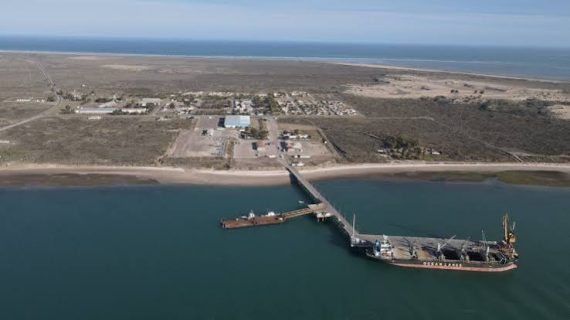
Project Scope and LNG Infrastructure
The Argentina LNG project will establish an integrated natural gas export system using resources from the Vaca Muerta shale formation in Neuquén Province. The development will cover several key components, including upstream gas production, processing facilities and dedicated pipelines. In addition, it will feature coastal infrastructure and two floating liquefied natural gas (FLNG) units to support LNG exports.
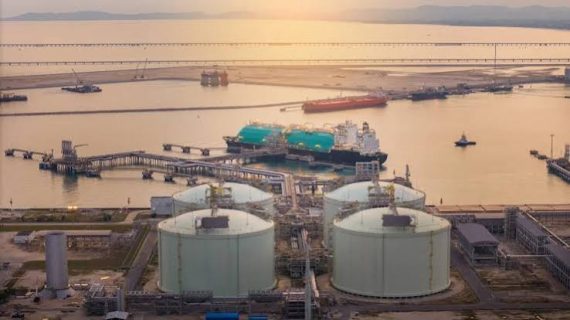
The initial phase will provide 12 million tonnes per annum (MTPA) of LNG liquefaction capacity. To achieve this, the project will deploy two floating LNG units, each with a planned capacity of 6 MTPA. Both units will be located offshore Río Negro Province.
The infrastructure programme will also include gas treatment facilities, condensate processing plants and export infrastructure. In addition, it will require pipeline connections between the producing fields and liquefaction units. The project is expected to involve approximately 524 kilometres of gas transportation pipelines. A separate condensate pipeline will also connect the upstream facilities to the coastal export infrastructure.
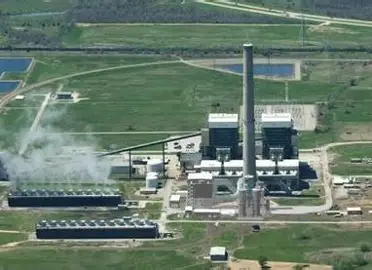
Vaca Muerta Gas Development
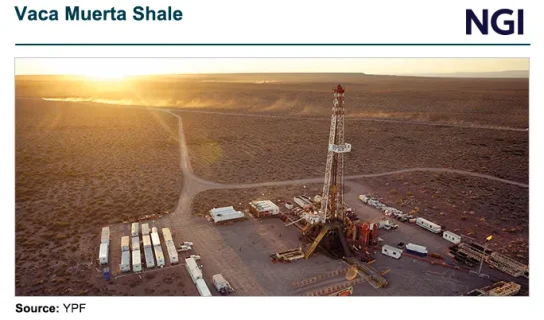
The upstream component will develop gas resources in the Vaca Muerta basin to supply the LNG facilities. To achieve this, YPF, Eni and XRG are advancing development plans for the Meseta Buena Esperanza, Aguada Villanueva and Las Tacanas blocks.
Meanwhile, the integrated gas treatment plant is planned for Neuquén Province. The initial phase will include gas gathering infrastructure, processing units, utilities and supporting industrial facilities.
The infrastructure will be delivered in phases. Meanwhile, upstream production and processing capacity will be aligned with the commissioning of the floating liquefaction units.
Investment and RIGI Approval
The project’s inclusion in RIGI also gives it access to Argentina’s investment incentive framework for large-scale developments. The regime offers tax, customs, foreign-exchange and regulatory benefits. These incentives also aim to attract long-term investment in strategic infrastructure and industrial projects.
Additionally, the partners plan to invest approximately US$25 billion between 2027 and 2030. Meanwhile, total investment is expected to reach US$50.75 billion by 2050.
Once operational, the project is expected to generate substantial export revenues. LNG and associated liquids exports could also contribute approximately US$9 billion to US$10 billion annually, depending on production levels and market conditions.
In addition, the development is expected to create significant employment opportunities. Construction could support around 20,000 jobs annually, with peak workforce numbers potentially reaching 40,000. Once operational, the project is also expected to sustain thousands of direct and indirect jobs.
Argentina’s LNG Export Strategy
The Argentina LNG project aims to turn the country’s natural gas resources into a large-scale export industry. It will expand production from the Vaca Muerta formation, one of the world’s major shale gas reserves. In addition, the development will support international LNG supply.
The project will use floating liquefaction units to produce and export LNG. This approach will reduce reliance on conventional onshore liquefaction facilities. Furthermore, it will connect inland gas production to offshore export facilities, enabling shipments to international markets.
The development is expected to strengthen Argentina’s position in global energy markets. It will also boost foreign-exchange earnings and attract further investment in gas production, pipelines and related infrastructure.
With RIGI approval secured, the project is moving towards its next major milestone: the Final Investment Decision (FID). This decision will determine when the project moves from development and engineering into full-scale implementation.

Leave a Reply