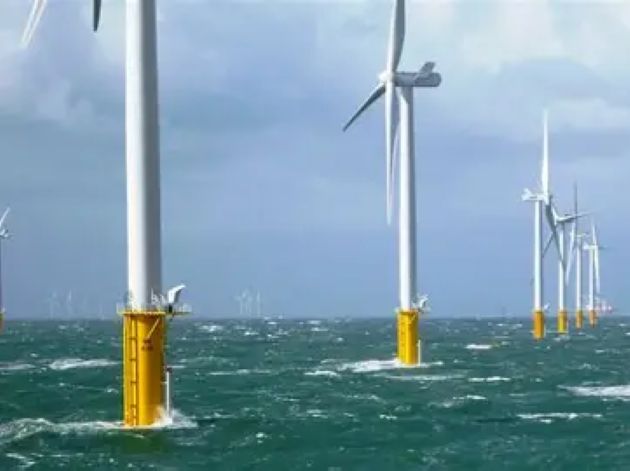
The Belgium offshore wind farm has received a major financial boost after the European Commission approved a €2.04 billion Belgian state-aid scheme to support its development in the North Sea. The planned 735MW project, located in the Princess Elisabeth Zone, is expected to strengthen Belgium’s renewable electricity capacity. Furthermore, the approval, announced on November 10, 2026, provides a financial framework for advancing the project as the country seeks to expand offshore wind generation and improve its long-term energy security.
The scheme is intended to support both the construction and operation of the wind farm through a two-way contract for difference (CfD). Under this mechanism, the project will receive a variable premium when the agreed reference electricity price falls below the winning bid price. Conversely, when the reference price exceeds the bid price, the project will make payments to the Belgian authorities. Therefore, the arrangement is designed to improve revenue certainty for investors while limiting excessive returns when market prices are high.
The Commission approved the measure under its Clean Industrial Deal State Aid Framework (CISAF), adopted on June 25, 2025. The framework allows EU member states to support strategic investments. Additionally, it aims to accelerate decarbonisation, strengthen industrial competitiveness and advance the transition to a net-zero economy. However, the approval only confirms that Belgium’s scheme meets EU state-aid requirements. It does not mean the offshore wind farm is complete or generating electricity.
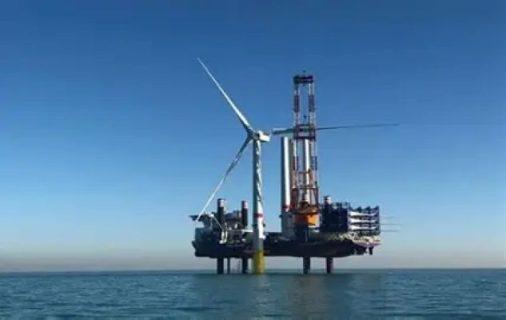
Belgium Offshore Wind Farm Targets 2.6TWh of Annual Clean Power
The Belgium offshore wind farm will be built in the Princess Elisabeth Zone in the North Sea. This is Belgium’s designated offshore wind development area. With a proposed capacity of 735MW, it is expected to generate up to 2.6 terawatt-hours (TWh) of clean electricity annually. Consequently, the project will contribute to Belgium’s electricity supply and reduce reliance on fossil-fuel-based generation.
Offshore wind farms use turbines installed at sea to convert wind energy into electricity. Additionally, their construction requires foundations, inter-array cables and offshore electrical infrastructure. Export cables then transmit the generated power to the onshore grid. However, the state-aid approval announcement did not specify the turbine models, foundation design or cable lengths. It also did not confirm the installation schedule or final engineering details for the 735MW project.
Consequently, the approved funding framework represents an important financial and regulatory milestone, but further development work will be needed before the project’s full construction scope and delivery timetable can be confirmed.
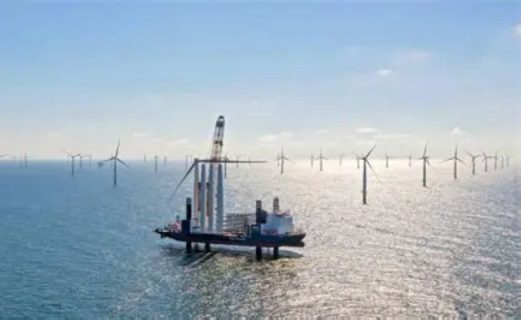
Two-way Contract for Difference Provides Revenue Certainty
The €2.04 billion scheme will use a two-way contract for difference (CfD). Under this mechanism, payments will depend on the difference between the agreed bid price and the reference electricity market price. Additionally, the monthly variable premium will be calculated using the bid price, market reference price and the wind farm’s monthly capability.
When the market reference price falls below the agreed bid price, the scheme provides support to cover the difference. Consequently, this helps reduce exposure to electricity price fluctuations. It also gives developers and lenders greater certainty when assessing project revenues. However, when the market price exceeds the bid price, payments flow back to the Belgian authorities under the two-way arrangement.
For a capital-intensive offshore wind project, predictable revenues can support investment decisions. These include turbine procurement, marine construction and grid connections. Additionally, they can help secure financing for electrical equipment. However, the project’s final costs will depend on financing terms, equipment prices and construction expenses. Delivery schedules and tender conditions will also influence its overall economics.
The approval does not mean the full €2.04 billion will be disbursed immediately. Instead, payments will follow the scheme’s approved terms and project implementation milestones.
Princess Elisabeth Zone Forms Part of Belgium’s Wider Energy Expansion Strategy.
The 735MW project sits within Belgium’s broader strategy to increase offshore renewable electricity generation. The country’s Federal Public Service Economy states that Belgium had 2,261MW of operational offshore wind capacity and aims to develop an additional 3.15GW to 3.5GW in the Princess Elisabeth Zone. If delivered, the additional capacity would bring total Belgian offshore wind capacity to approximately 5.4GW–5.8GW.
The zone’s development will depend on adequate electricity transmission infrastructure. Meanwhile, Elia Transmission Belgium is developing the Princess Elisabeth Island artificial energy hub about 45km off the Belgian coast. The island will connect new offshore wind farms to the onshore grid. Additionally, it could support future electricity interconnections with neighbouring countries.
In September 2026, the European Investment Bank announced a €1 billion green credit facility for the island’s second development phase. The electrical infrastructure will include a 220kV substation and 66kV switching facilities. It will also feature transformers and six three-phase 220kV alternating-current cables connecting the island to an onshore substation. Consequently, the island is expected to support connections for the first offshore wind farms in the Princess Elisabeth Zone from 2031 onwards.
These transmission investments are important because offshore wind generation cannot contribute fully to the electricity system without adequate connections to the mainland grid. Therefore, the timing and coordination of the wind farm, export cables and grid infrastructure will be important to the project’s eventual delivery.
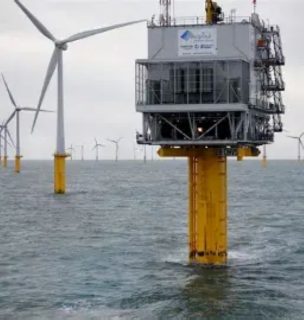
Construction and Implementation Outlook
The European Commission’s decision clears the way for Belgium to implement the approved state-aid scheme. However, the wind farm’s next steps will depend on the national tender and procurement process. These include selecting a developer and securing financing. Additionally, the project will require permits, detailed engineering and coordination with offshore transmission infrastructure.
Once operational, the Belgium offshore wind farm is expected to contribute to Belgium’s domestic electricity supply and support the European Union’s wider decarbonization objectives. However, its actual contribution will depend on completion of the wind farm, availability of grid connections and the volume of electricity generated under operating conditions.
Belgium Offshore Wind Farm Project Fact Sheet
Project: Princess Elisabeth offshore wind farm
Location: Princess Elisabeth Zone, Belgian North Sea
Planned capacity: 735MW
Approved state-aid scheme: €2.04 billion
Expected annual electricity generation: Up to 2.6TWh
Support mechanism: Two-way contract for difference
Regulatory milestone: European Commission state-aid approval, November 10, 2026
Project stage: Development and support-framework stage
Associated transmission infrastructure: Princess Elisabeth Island and connections to the Belgian onshore grid
Principal Organisations
European Commission : Assessed and approved the Belgian state-aid scheme under EU rules.
Belgian federal government : Responsible for offshore renewable energy policy and development in the Belgian part of the North Sea.
Federal Public Service Economy, SMEs, Self-Employed and Energy : Provides official information on Belgium’s offshore wind strategy and development framework.
Elia Transmission Belgium : Developing transmission infrastructure to connect future offshore wind generation to the onshore grid




Leave a Reply